

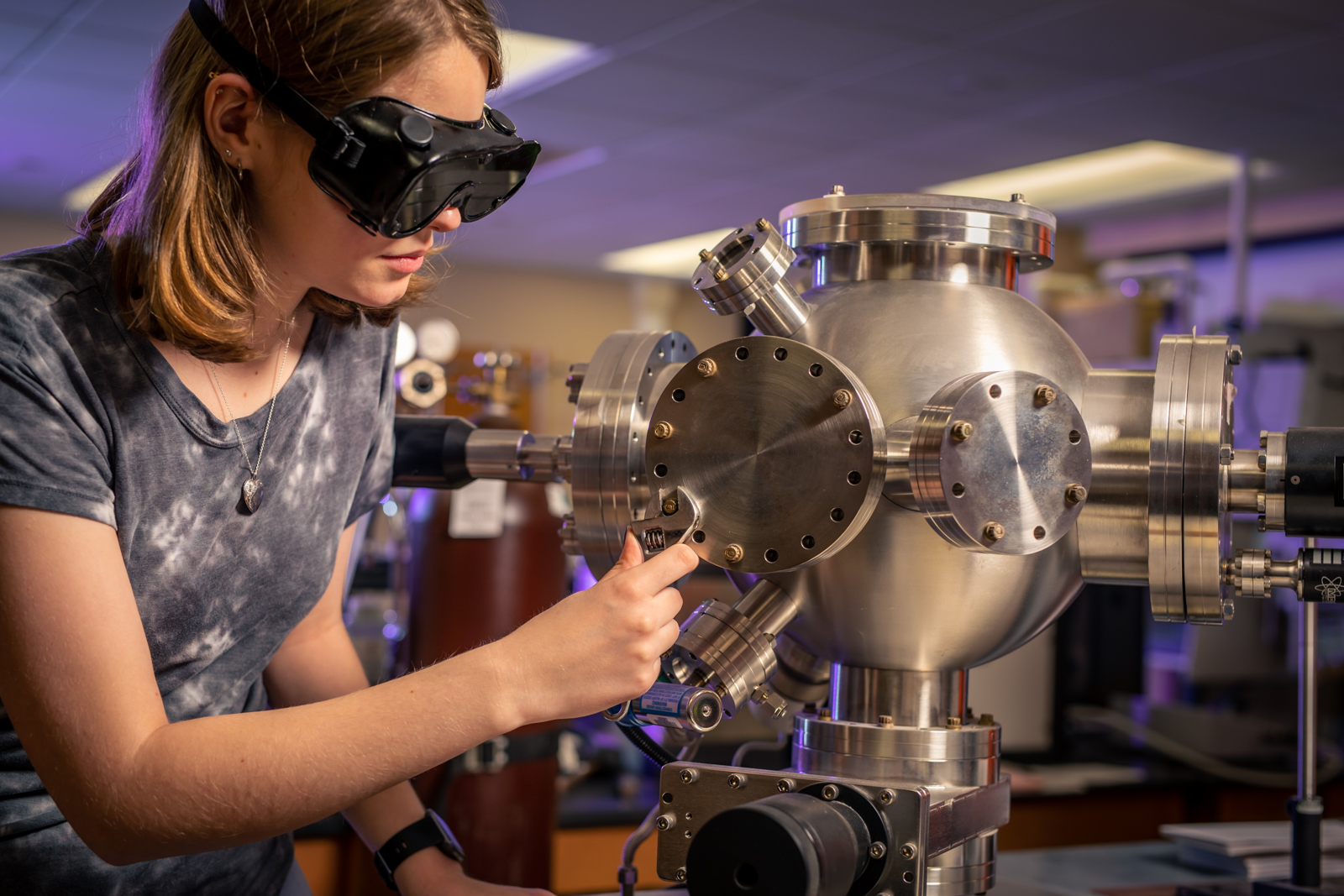
A Versatile Degree with Professional-Grade Opportunities
- Alumni network. We keep strong ties to our alums and invite them regularly to share experience and advice. We host 3-5 alums per year, representing a wide spectrum of career outcomes.
- Local outreach. We reach out to local businesses and museums to partner in projects and visits.
- National internships. We alert you of national opportunities and mentor you through the application process. About 5-10 students travel to internships every year to sites such as Jefferson Lab, Los Alamos National Lab, Fermilab, Princeton Plasma Physics Lab, Argonne Lab, and NSF-funded REU sites across the country.
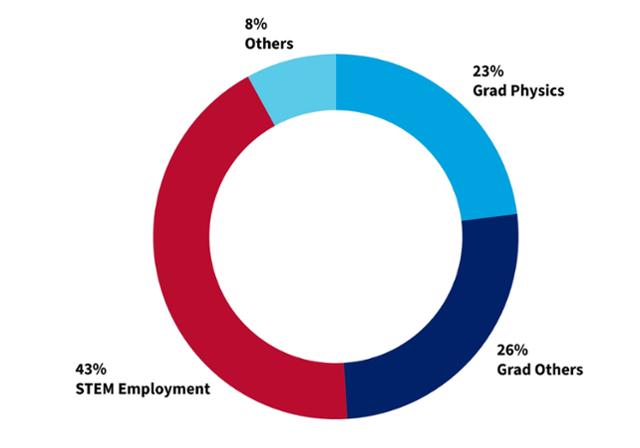
Duquesne Physics Post-Graduation Outcomes
You can be confident of having post-bachelor choices. Within one year after graduation, the recipients of a Duquesne bachelor's degree in physics have been employed in STEM jobs (43%), or have started a PhD program in physics (23%), or have started a graduate program in a field other than physics (26%), or were engaged in other outcomes, such as the military or non-STEM jobs (8%). These figures represent the graduates whose outcomes are known to us: 86% of all graduates between 2015 and 2024.
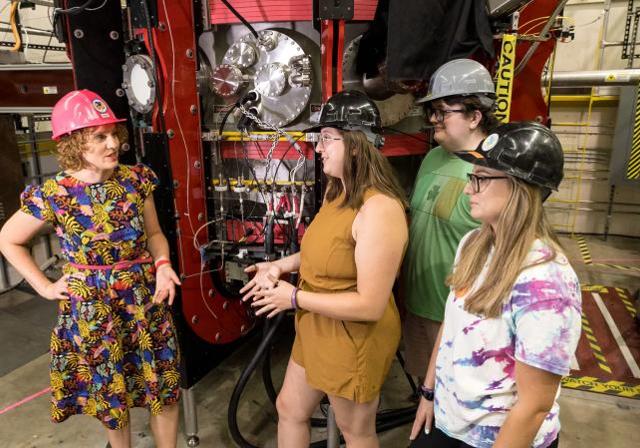
Earning A Paycheck In STEM Employment
Your physics degree is a valuable credential for prominent companies in defense, industry, energy, finance and retail who have hired Duquesne physics bachelors in the last ten years, including BAE Systems, Westinghouse Nuclear, Stitchfix, Raytheon Technologies, Bettis Atomic Lab and PNC Bank, as well as smaller businesses in the Pittsburgh region.
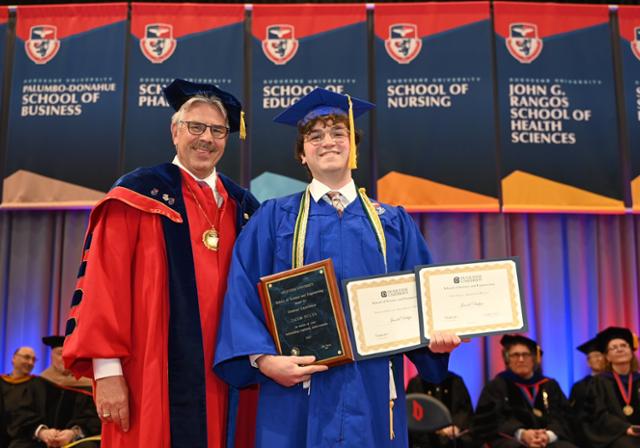
Thriving In Graduate Programs
See yourself in a PhD program such as those attended by Duquesne physics bachelor recipients of the last ten years: Michigan State U, the Chicago Institute of Technology, U of Connecticut, Duke U, Northeastern U and Rice U. Or if you have broader goals, picture receiving a professional master's degree in medical physics at Columbia U, international relations at U of Denver or data science at U of Virginia, like recent Duquesne bachelor's recipients.
From Future Teacher to Plasma Physicist
When Emma Landefeld arrived at Duquesne University, she planned to become a high school physics teacher. Instead, she discovered a passion that would take her beyond the classroom and into plasma physics research. Encouraged to explore new opportunities, Emma pursued hands-on experiences that reshaped her path. A pivotal moment came during a summer internship, where she built an electron beam to excite plasma. “I challenged myself to understand every part of the system,” she said. “When I finally found the issue and fixed it, I saw the most beautiful blue glow—the first plasma I ever created.”
That breakthrough sparked a deeper curiosity and a drive to solve complex problems. Back at Duquesne, Emma found a supportive, close-knit department where faculty mentorship helped her grow both academically and personally. “I’ve become a more mature scientist and person,” she said. “I truly feel prepared for what’s next.” With guidance from faculty, she gained confidence, overcame challenges like imposter syndrome, and developed independence in her work.
Emma expanded her experience through research at national labs and collaborative projects, including work on magnetic reconnection in plasma. These opportunities reinforced the importance of teamwork in science and connected her with a network of mentors and peers. She also gave back to Duquesne by developing a plasma experiment for the advanced lab course. “I’m so excited for Duquesne students to experience plasma,” she said.
With a strong technical foundation and multiple research experiences, Emma is ready for the next step: pursuing a Ph.D. in plasma physics at Cornell University. Reflecting on her journey, she values both the relationships she built and the discoveries she made along the way. “Plasma has incredible applications—from fusion energy to space science,” she said. “I want more people to see that—and to get excited about it.”

From classroom to plasma lab
Bridging Learning With The Real World
Our Alumni Voices
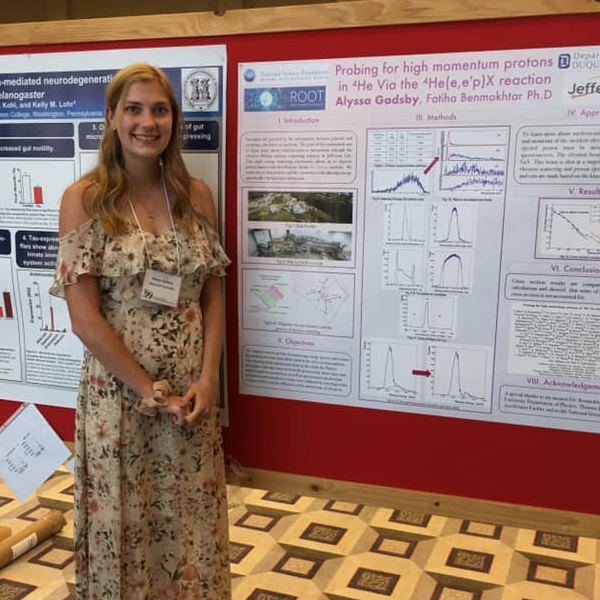
My experience as a Duquesne physics student was truly transformative. The rigorous coursework, hands-on research, and faculty support prepared me for graduate studies in medical physics at Columbia University. From building leadership skills to gaining real-world experience, every opportunity played a critical role in shaping my academic and professional path.