A physics degree prepares you for a variety of careers that rely on the ability to think out of the box. Physicists investigate, understand and innovate wherever they find themselves. The value of the physics degree is in the mindset, more than the content. And the way to train for mindset is through the physics content. We offer two degrees with a major in physics: the bachelor of arts and the bachelor of science.
Curricular Comparison
If you’re considering a major in physics, you can choose between two degrees that differ in the number of prescribed credits. The Bachelor of Science has more prescribed credits, while the Bachelor of Arts offers more open credits. Both degrees include an embedded minor in math.
Skill-Infused Curriculum
Whichever path you choose, you’ll complete courses in math, computer science and most lab requirements. Your math coursework will cover calculus, differential equations and linear algebra—enough to earn you a minor in mathematics along with your physics major. After your first year, you’ll explore advanced labs in circuits and microcontrollers, optics and a capstone project.
You’ll train with industry-grade optical and electronics instrumentation, and all lab courses include embedded programming expectations. You’ll graduate with the skills employers want, no matter which degree you pursue. By the end of your sophomore year, you’ll be eligible for a wide range of skill-based internships. Many of our students land summer research experiences in national labs.
Flexibility
You’ll follow the same core sequence during your first two years, building a strong foundation in physics and math. This shared pathway gives you flexibility and removes the pressure of choosing a degree too early. Through close mentorship, you’ll stay informed and confident as you prepare for key decision points in your curriculum.
Small Class Size
In physics classes of just five to 15 students, you’ll enjoy unmatched personal attention. Because we don’t have graduate programs, our faculty are fully focused on undergraduates like you. You’ll be eligible for opportunities typically reserved for grad students elsewhere—such as tutoring, lab assistantships, teaching assistantships and research roles. These experiences will strengthen your résumé and prepare you for your next step.
Student Commons
You’ll have access to comfortably furnished common spaces where you can relax between classes and connect with other physics majors. Many lifelong friendships begin while tackling a challenging problem together in our welcoming department spaces.
BS Physics
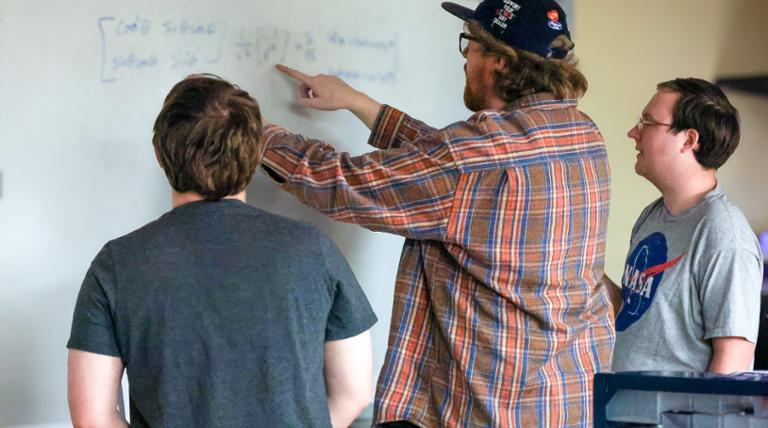
The Bachelor of Science (BS) program combines a strong mathematics foundation with an intense physics curriculum. Our approach emphasizes undergraduate research and hands-on skills (particularly in instrumentation, optics and electronics), as well as computing skills.

BA Physics
The Bachelor of Arts (BA) degree combines the basic physics foundation with the flexibility to choose advanced coursework that appeals to you and plenty of room for unrestricted electives.

Physics/Engineering
A 3+2 accelerated curriculum leading to a bachelor of arts in physics and a bachelor of science in the engineering major of your choice, concurrently.
Physics/Law
A pre-law major that challenges your ability to think out of the box, especially suited to patent law, intellectual property law, environmental law or in-house counseling for chemical and life-science companies.

Minor
A micro-credential that is certain to appeal to potential employers.
Teaching Certification
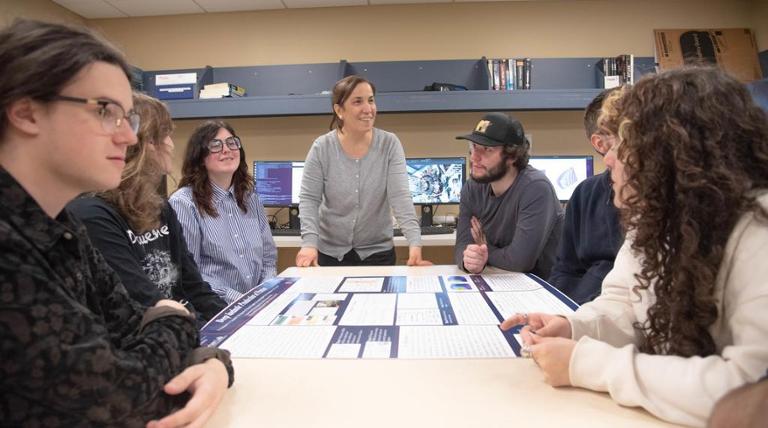
An accelerated path to receive a degree that qualifies you to teach physics in high school.
The Physics Student Experience
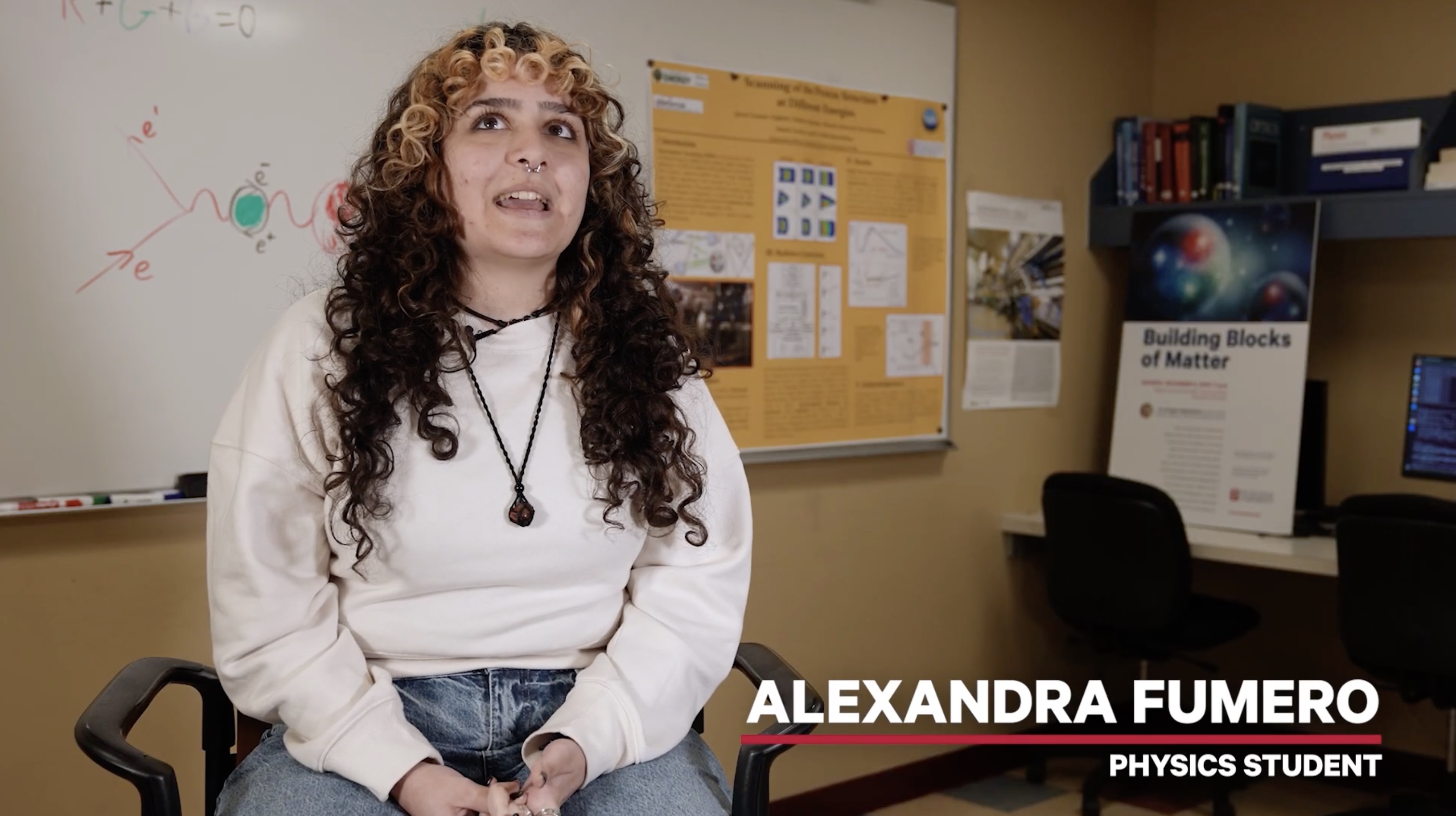
Inside the Physics Program
Discover what it’s like to study physics at Duquesne—straight from the students themselves.

Why Physics at Duquesne?
Learn how Asia’s passion for science, combined with support from faculty, made all the difference.

Life As A Physics Major
Our students share why they chose Duquesne—and how the program prepared them for what’s next.

From the Classroom to the Cosmos
In this video, Alyssa opens up about the opportunities and rewards of being a physics major.
Frequently asked questions about majoring in Physics Absolutely. The Duquesne physics curriculum is designed to match the depth and breadth of physics
bachelor degrees in all major physics programs in the country. The teaching is as
rigorous as can be had and is supported by a strong synergy with our research programs.
This ensures that students will be prepared for graduate coursework when they leave. Caltech, Catholic U of America, Chicago Institute of Technology, C of William and
Mary, U of Connecticut, Duke U, Lehigh U, Michigan State U, Northeastern U, Ohio U,
Oregon State U, Rice U, and others. Our physics degree is a valuable credential for prominent companies in defense, industry,
energy, finance and retail who have hired Duquesne physics bachelors in the last ten
years, including BAE Systems, Westinghouse Nuclear, Stitchfix, Raytheon Technologies,
Bettis Atomic Lab and PNC Bank, as well as smaller businesses in the Pittsburgh region. While we do not have data-driven astrophysics projects in site, we fully prepare you
for and assist you in the pursuit of external research experiences in data-driven
astrophysics. This includes opportunities in observatories and in other universities
with large astronomy programs which specifically recruit from small departments like
ours. Yes, both in coursework and also through direct mentoring with one of our faculty
members with general relativity expertise. Our Gravitational Astrophysics class is
a great primer for candidates considering pursuing black-hole physics as a career. Physics faculty collaborate with faculty in the department of chemistry and biochemistry,
and with faculty in the environmental science program through projects that utilize
cross-over expertise. These projects are open to undergraduate recruits. Yes! Recent Duquesne bachelor’s recipient have been admitted to varied graduate programs
such as master’s in medical physics at Columbia U, master’s in international relations
at U of Denver, PhD in nuclear engineering at U of Wisconsin-Madison, master’s in
data science at U of Virginia, and others. It varies with the year, but an average over several years is about 35%. Yes! But do not transfer credits for physics courses. Transfer only for all other courses
such as math, chemistry and general education. While math is the easiest second major to add to a physics degree, it is possible
to get a second major in non-science disciplines if the candidate is able to transfer
a significant amount of AP credits. In our most recent experience, a student received
a degree in physics with a second major in Spanish. Minoring in a non-science discipline
is very accessible. Physics Program FAQs