

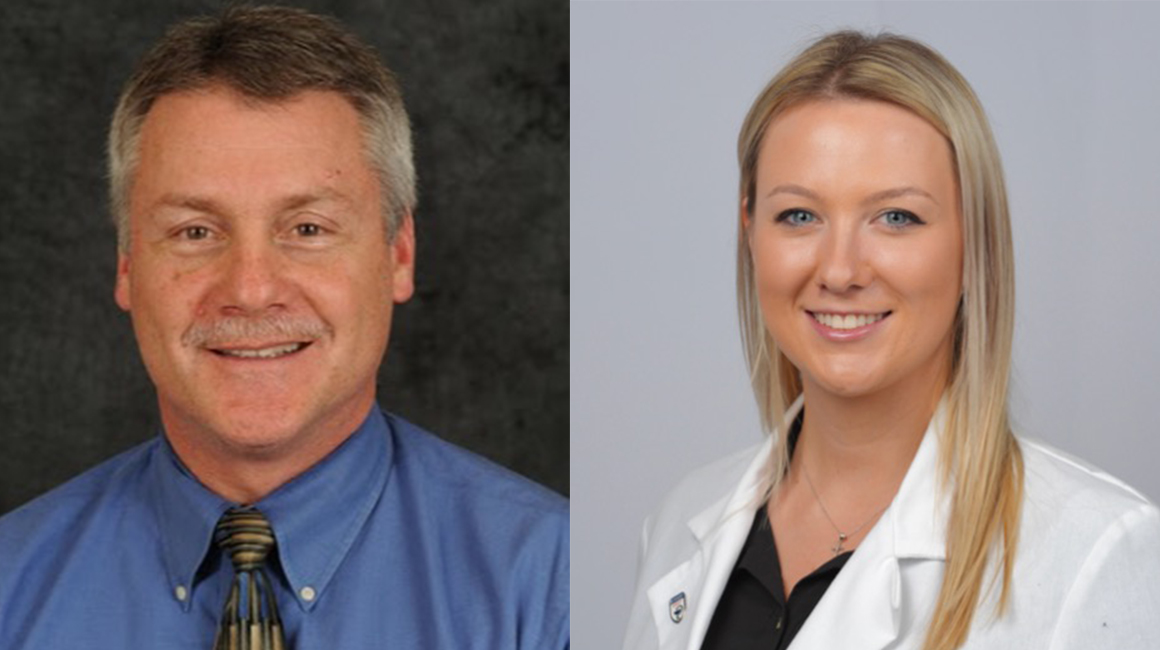
Dan Krinsky, Owner at EduCare4U, was a preceptor for Celeste Dinzeo as part of the APPE curriculum. Dinzeo gained pharmacogenomics and business management experience.
Preceptor, Dan Krinsky
How did you become interested in pharmacogenomics and precision medicine?
“I have a background in pharmacokinetics, and it seemed like pharmacogenomics was the next level of being able to personalize a patient's medication. I had read a few articles about pharmacogenomics and became very interested in the topic. I started doing some research into how I could become more educated in pharmacogenomics and found the Test2Learn program through the University of Pittsburgh. Since I was on faculty at a school of pharmacy and had volunteered to explore how to add pharmacogenomics into curriculum, I was able to arrange attending the Test2Learn Train the Trainer program in September of 2016, which provided me with a foundational education that helped me better understand pharmacogenomics, how it can be taught, how it can be applied to patient care. That led to me meeting my future business partner, incorporating PGx into our curriculum, and starting our PGx101 business that is focused on delivering a PGx certificate training program to over 600 pharmacists so far. The rest is history. ‘Follow your passion.’”
What is unique about EduCare4U?
“My business is focused on two aspects of health that I think are extremely important- the first being education and the second is patient care. My business is not just focused on traditional pharmacy student education, but education in general- I help patients better understand their meds; I help the community better understand the role of pharmacists; and, I help other healthcare providers better understand how pharmacists need to be an integral member of the healthcare team. I’m passionate about education. The second aspect, the care piece, is something I’m also very passionate about - I help pharmacists better understand the importance of caring for their patients. I am involved in projects helping pharmacists deliver better care to their patients through everything from medication counseling to comprehensive disease management programs. Whether through remotely-delivered, pharmacist-centric COVID-19 treatment programs, to a new project in Native American health where we are helping design pharmacies to optimize the level of care and clinical care programs, I have been/am involved in some really neat pharmacist-driven initiatives. Care is the most important thing that should be in the forefront of our minds as we go to work every day and fulfill our role as pharmacists. So that’s where EduCare came from, and the 4U is for my clients, for my customers, for my colleagues- I want to deliver EduCare 4 U.
What do you hope students gain from your rotation?
- The passion that I feel for the profession: I hope some of that rubs off on the students so they also develop that passion through utilizing the knowledge and skills they obtain in school and apply it in their practice in the care of their patients.
- Gain more self-confidence: I want my students to feel confident in their abilities, to gain the desire I have for them to succeed and be more successful in their practice than I was able to achieve. I want the next generation to have it better than I ever had it.
- Appreciate the responsibility that comes with this role: yes, being a pharmacist comes with tremendous responsibility, but it can be very fun, rewarding and fulfilling. It’s also important to not take that responsibility lightly but accept it, cherish it, and be humbled by it.
- Demonstrate you care! I tell my students that I know they are smart, because if they weren’t smart, they wouldn’t be in their APPE rotations in a highly respected School of Pharmacy, but what I want is for them to show me that they care. Never stop caring - care for yourself, your friends, your colleagues, your family, and your patients.
- I like to provide students with another 4 letter word I think is important - hope. There is a black or grey cloud over the profession of pharmacy with all of the issues that we are facing. We all know what they are, but you have to have hope, focus on the positives and opportunities that are right in front of us. And I think I can provide hope through sharing my experiences and setting up meetings with individuals in my network who are also willing to share their experiences and why it’s important to have hope. If you don’t have hope or a positive outlook, what’s the point in getting a degree and a job? I want to help instill that hope, and I believe we have a lot for which we should be hopeful.
What do you like most about precepting pharmacy students?
- The opportunity to share things that we don’t have time to discuss in the classroom. Providing opportunities for students to ask me questions, share the concerns they have, and scheduling time for open discussions. Despite some of the bad you might be hearing, there is hope and a future in our profession!
- Having those types of discussions about the future, the importance of advocacy and having conversations with lay persons about the role and value of their pharmacist, and dispelling some of the rumors. Also, taking time to ask how you are doing and seeing the benefits of that; to see that everything you have done so far will pay positive dividends, where you will be able to utilize your skills, knowledge, and passion when you get into the next phase of your career, whether that’s a residency or a position in a community pharmacy.
- Setting the record straight: helping to put things into perspective – we can’t do this in school because the academic calendar is very structured and there is not a lot of time for open discussion. Precepting students on rotation provides us with these opportunities for more dialogue. As a preceptor, I feel obligated to have those discussions because I think it’s important. It’s important to hear from the students; it can’t just be about what I think, it’s important for me to hear what my students are thinking, for them to share their hopes and dreams and to help them realize they are achievable. And I remind them that I am here to help them realize their dreams, see them become a reality.
- Lastly, to develop a relationship that goes beyond a rotation. Five years, 10 years, whenever, I want my students to feel comfortable giving me a call to bounce off ideas or to share with me their successes.
What advice do you have to make remote rotations successful?
- Structure, frequent communications, paying attention to the importance of having confidence in students that they can work independently
- Working with students before the rotation to determine goals, objectives, and make sure they are built into the rotation and those are things discussed on a regular basis
- These types of rotations are not for every student
- Demonstrating to the experiential team that you are capable and have experience in the areas of focus (in this case, entrepreneurship and pharmacogenomics); and instilling confidence in them that you can do this and the students will have positive experience
APPE Student, Celsete Dinzeo
What was your favorite part of this rotation?
I had an extremely positive experience with Professor Krinsky on this elective rotation. While learning to write up business plans and learning to incorporate pharmacogenomics into patient care plans were valuable experiences and important to the future of my career, I have to say my favorite part was having open discussions with my preceptor. From legislation to patient care to the current problems that exist in pharmacy to the future of the profession, Professor Krinsky would pick my brain and make me think in ways I never did in school. It’s hard to think outside the box sometimes, but he truly instills the entrepreneurial spirit in his students.
Who else should pursue this rotation?
If you have the slightest interest in pharmacogenomics or entrepreneurship, you should absolutely pursue this rotation. Professor Krinsky makes it clear that he wants you to learn, and more importantly he wants you to care.
What was your experience with remote learning?
Remote learning is not for everyone and does require self-discipline, however Professor Krinsky provides a structured calendar and assignments/due dates so that it is easy to stay on task. Even though the rotation is remote, he set up over 15 meetings with people in his network, including the CEO Emeritus of APhA, for us to gain valuable insights on the profession of pharmacy from those who have played an amazing role in the profession. He is also passionate about community service, and while we live in different areas of the country, he was able to help us find opportunities for serving in our areas.
How will your experience from this rotation impact your future?
I have learned how to write a business plan, I have expanded my network through my preceptor (we always hear how important networking is!), I have learned more about pharmacogenomics and how to implement it into patient care, and I have gained confidence in myself and my future. I know that pharmacogenomics is going to play a huge role in our time as pharmacists, and I am so excited that I was able to learn more about it and become more comfortable with it on this rotation.
News Information