Top Program for Future Certified Athletic Trainers
Athletic Training
Duquesne University’s Athletic Training Program is built on the university’s strong
liberal arts tradition and excellence in the Health Sciences. Our curriculum gives
students a complete athletic training education grounded in biology, anatomy, physiology,
and other health science courses. We focus on teaching students how to provide evidence-based, patient-centered care, which means using the best research and clinical skills to help people safely stay
active and healthy.
For more than 30 years, Duquesne has offered a high-quality program that prepares
students to think critically, make strong clinical decisions, and succeed in today’s
fast-changing healthcare world.
A 5-Year Accelerated Degree Path
Students in our accelerated program earn two degrees in five years:
Bachelor of Science in Health Sciences (BSHS)
Master of Science in Athletic Training (MSAT)
Years 1–3: Pre-Professional Phase Students take a full range of health and exercise science classes. These courses build
the scientific and academic foundation needed to begin athletic training coursework.
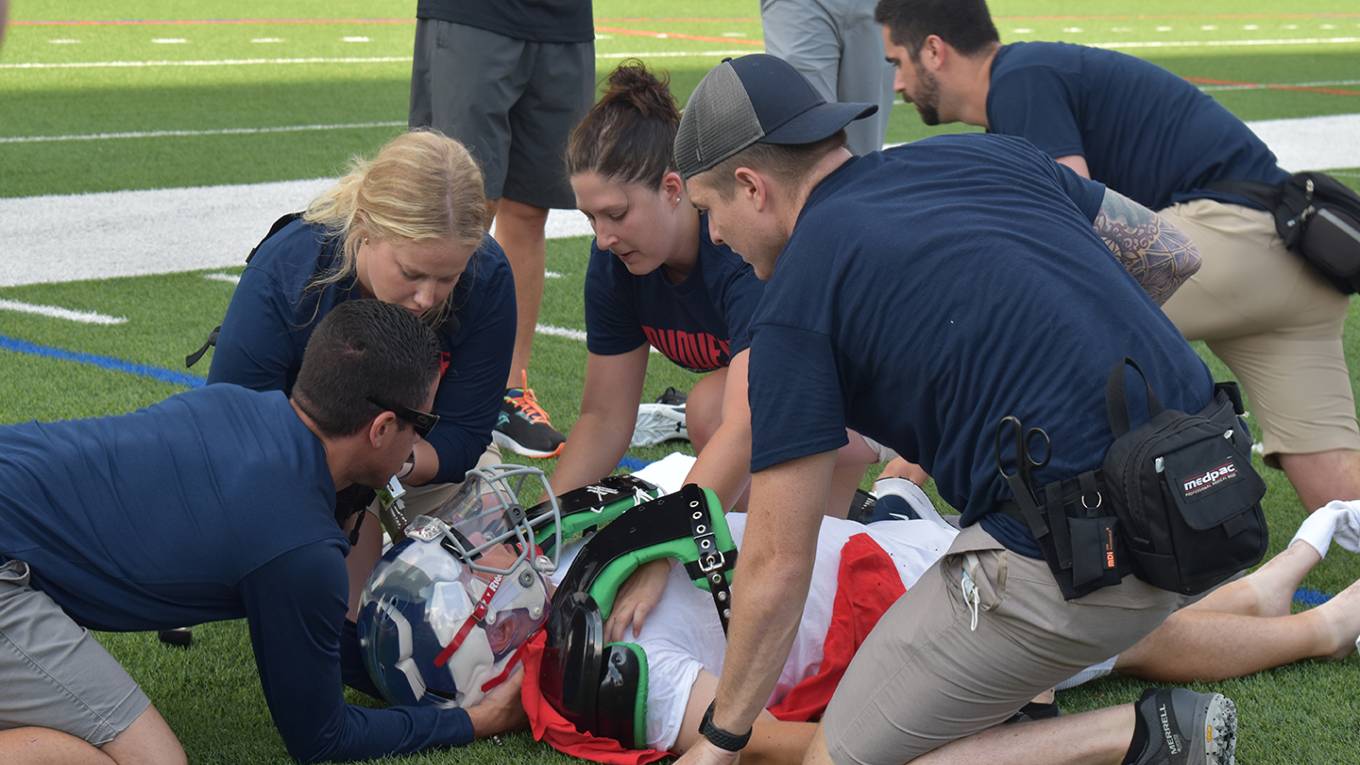
Years 4–5: Professional Phase Students focus completely on athletic training. They learn advanced clinical skills,
build hands-on experience with athletes and physically active individuals, and work
directly with certified athletic trainers. Classroom learning is combined with rich
clinical experiences so students feel confident and prepared.
CAATE Accreditation, BOC Success, and Career Preparation
Duquesne University’s Athletic Training Program prepares students to become Board of Certification (BOC)-certified athletic trainers through rigorous academics, clinical education, and evidence-based
healthcare training.
Students in Duquesne University’s CAATE-accredited Athletic Training Program benefit
from hands-on clinical experiences, strong preparation in the health sciences and
liberal arts, faculty mentorship, and evidence-based learning that integrates classroom
and clinical education. Graduates are prepared for athletic training careers in settings
including high schools, colleges and universities, sports medicine clinics, hospitals,
and healthcare systems.
Our program believes in setting high standards. We expect excellence, constantly look
for ways to improve, and encourage students to reach their full potential. We also
strongly support research and evidence-based practice, helping students understand and contribute to the science that guides athletic training
and other health professions.
Program Information
Earn your Master of Science in Athletic Training (MSAT) at Duquesne University in
Pittsburgh. Accelerated 5-year pathway, clinical education, sports medicine preparation,
and evidence-based healthcare training.
97 credits Pre-Professional Phase / 66 credits Professional Phase
Modality
In-Person
Framework
Our Vision
The Department of Athletic Training is committed to engaging in contemporary practices
to promote and advance whole-person healthcare locally and globally.
Our Mission
The Department of Athletic Training is committed to providing a person-centered education
that empowers students to make evidence-informed decisions and engage in interprofessional
collaborative practice.
Our Goals
As a Department, we aim to develop competent and confident athletic trainers; foster
the development of clinical decision-making and critical thinking when dealing with
all aspects of patient-centered care; promote the importance of research through the
engagement and application of evidence in clinical practice; provide students with
opportunities to learn from, with, and about other healthcare professions as they
relate to patient care; prepare students to understand, integrate, and apply knowledge
related to the delivery of global healthcare.
Learning Outcomes
Patient Centered - Students will utilize evidence during clinical decision making to enact person
centered care.
Individual - Students will develop as autonomous clinicians through application of personal wellness
and leadership skills.
Global - Students will demonstrate awareness of the larger context of healthcare and the
ability to collaborate with other professionals.
We offer direct admission into both the Athletic Training Program as a freshman or
a 2-year post-baccalaureate program.
To receive a Bachelor of Science in Health Sciences, students in the five-year entry-level
program must satisfactorily complete a minimum of 120 credit hours and all requirements.
To receive a Master of Science in Athletic Training, students in the five-year entry-level
program must satisfactorily complete a total of 160 credit hours and all program requirements.
Our curricular areas of distinction include orthopedic injury management, manual therapy,
concussion & spine injury care, and interprofessional education and collaborative
practice. We have a strong science-based curriculum, including cadaver anatomy with
dissection.
There are four full-time faculty members with clinical expertise and specialty areas
are committed to developing competent and confident athletic training professionals
prepared to engage in clinical reasoning and provide optimal care.
The Pre-Professional Phase (Years 1-3) of the curriculum provides students with a
strong liberal arts & science foundation, and a Health Sciences experience that will
provide them with the knowledge and skills required to be successful during the Professional
Phase.
BIOL-111/L Biology I/Lab (4/0 credits)
PHIL-XXX Philosophy course (3 credits)
BRDG-101 Writing & Analysis (3 credits)
COMM-102 Public Speaking (3 credits)
PSYC-101 Introduction to Psychology (3 credits)
HLTS-120 Elements of HS, Info Lit & Term (3 credits)
BRDG-102 Writing & Literature (3 credits)
HLTS-115 Intro to Health & Exercise Science (1 credits)
HLTS-408W/L Physiology of Exercise/Lab (3/0 credits)
HLTS-410 BLS/EMT Practicum (3 credits)
THEO-253 Health Care Ethics: Theology or PHIL-252 Health Care Ethics: Philosophy (3 credits)
Elective (3 credits)
The Professional Phase (Years 4-5) provides students with a rigorous and stimulating
academic experience designed to prepare them to become certified athletic trainers.
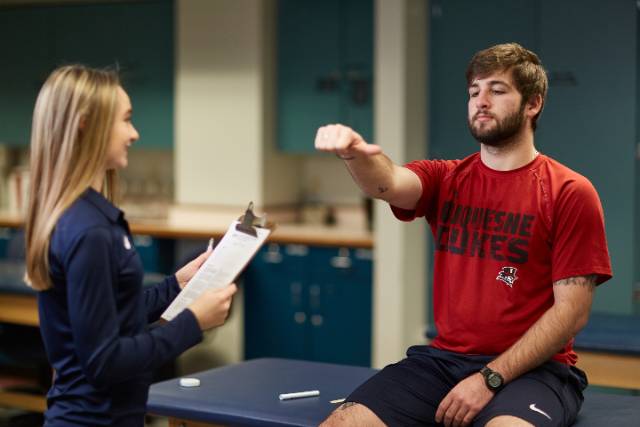
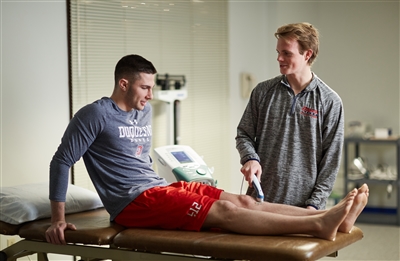
Through a combination of lecture, laboratory, and clinical education experiences,
students gain the knowledge and skills to be highly competent, patient-centered healthcare
providers.
ATHT-501/L Critical Incident and Emergency Care (4 credits)
ATHT-525 Evidence-Based Methods in Healthcare (2 credits)
ATHT-545/L Foundations of AT: Risk Assessment and Injury Prevention (3 credits)
ATHT-610 Research & Evidence Integration III (2 credits)
ATHT-612 Clinical Practicum IV (3 credits)
Students will engage in a series of clinical education experiences across their two
years in the Professional Phase with an extensive network of clinical education preceptors.
These experiences, including immersive experiences, are designed to provide students
with numerous opportunities to further develop, refine, and apply their knowledge
and skills in a clinical environment.
Program Details
Admissions Pathways, Requirements, and Cost of Attendance
Duquesne offers multiple admission pathways to earn your Athletic Training degree.
The majority of our students begin their AT journey with us as freshmen, however,
there is always room for transfer or post-baccalaureate students to join along the
way!
As a direct admit program, students are admitted directly into the athletic training
major in their first year. Admitted students must have a minimum high school QPA
of 3.0 (including 4 units in English; 1 unit in social studies or language, 7 units
in mathematics and science; and four elective units), evidence of extracurricular
activities during high school, and be able to meet all of the medical and performance/
technical standards of the program. As part of the application process, students
are required to complete a personal essay. With respect to our admissions process,
we are a test optional program and therefore SAT/ACT are not required as part of your
application. However, test scores will considered as part of the academic award/scholarship
process if submitted. International students must have a TOEFL score of at least
550 and demonstrate the ability to communicate orally in English.
Students may also transfer into the Athletic Training Program prior to the professional
phase. Students interested in transferring into the program must have a minimum GPA
of 3.0 and have demonstrated “B” grades or better in science courses. Students must
also be able to meet medical technical standards of the program and will be required
to complete a personal essay describing their interest in athletic training and the
program.
During the pre-professional phase of the program Athletic Training, students are required
to acquire a minimum of 25 hours of clinical observation/experience in athletic training
before being admitted into the professional phase of the program. Students who meet
all pre-professional program requirements will be admitted into the professional program.
Students interested in pursuing our Athletic Training Program as a post-baccalaureate
Master's degree program must meet the following requirements for their application
to be reviewed. An undergraduate degree from a four-year, degree-granting institution,
a GPA of 3.0 or higher on a 4.0 scale and completion of pre-requisite course work
with no less than a "C" grade in all prerequisite courses which includes:
One course with lab in Biology and Chemistry
One course in Physics
Three (3) credits in Introduction to Biostatistics/Statistics
Three (3) credits in Psychology
A two course sequence (six [6] credits) in Anatomy/Physiology with labs
Kinesiology or Biomechanics (three [3] credits)
Exercise Physiology (three [3] credits)
Nutrition (three [3] credits)
Two professional references (references will not be accepted from a family member
or friend) Documentation of a minimum of 25 hours of athletic training shadowing experience.
These experiences must be with a licensed athletic trainer and should be documented
using the clinical observation form.
If offered admission, the following will also be required:
CPR certification (adult, infant, and child) for Health Care Providers
Verification of all Pre-Clinical Health Requirements
Duquesne University is more affordable than you might think. Don't just take our word for it. Independent sources - including U.S. News and World Report and Washington Monthly - all rank Duquesne as a Best Value university.
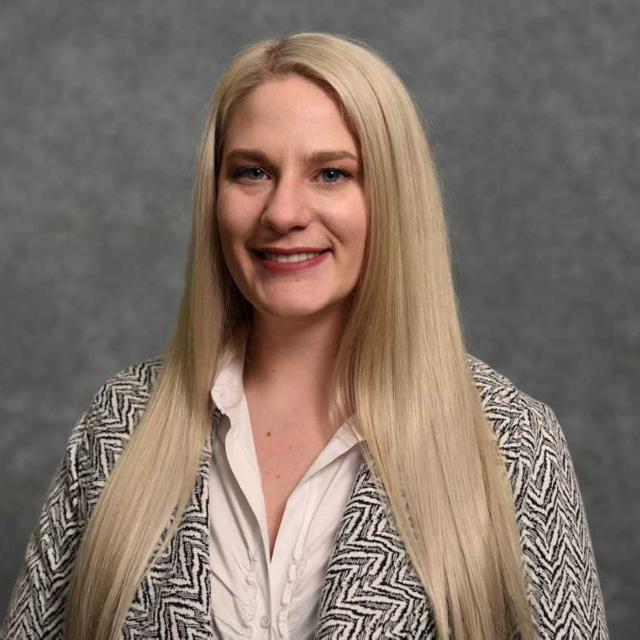
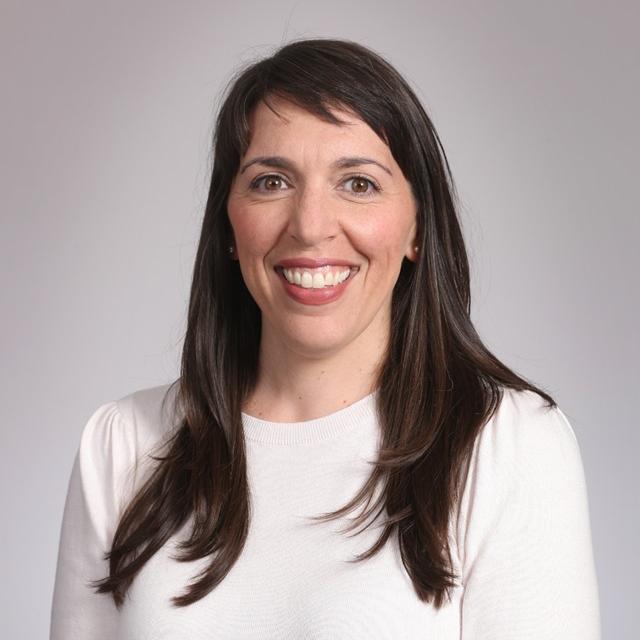
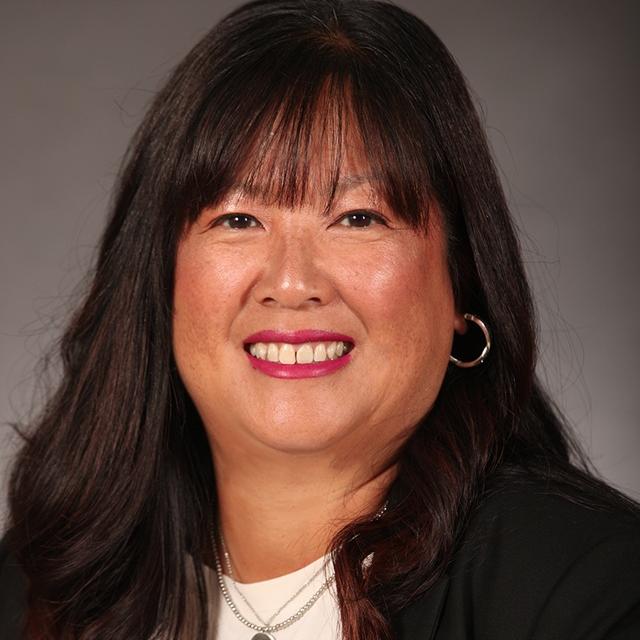
Assistant Professor, Clinical Education Coordinator
Kaitlin Gronski
Administrative Assistant II
Hear from Our Students and Alumni
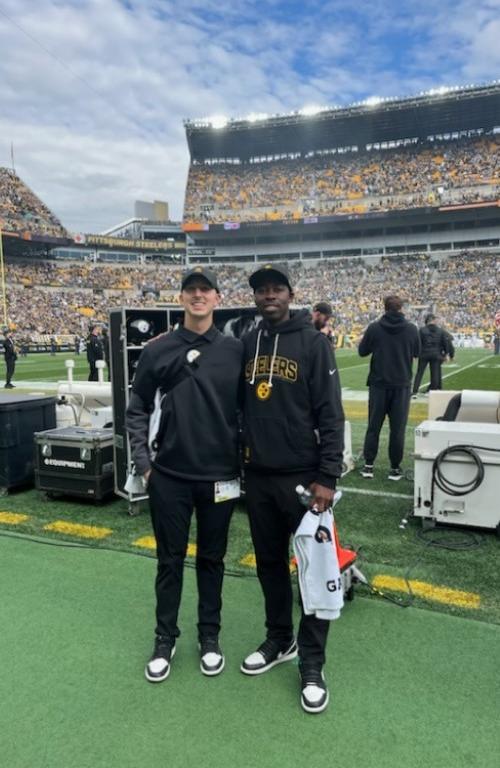
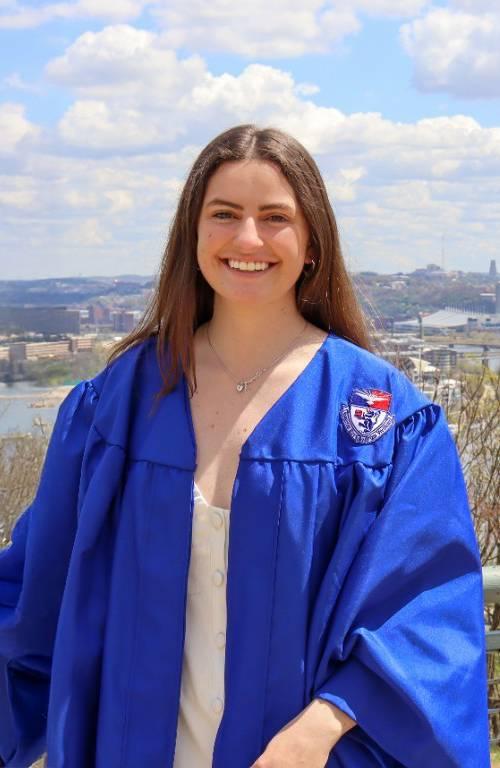
It’s been a dream come true to work with the Steelers. Their sports medicine
staff is among the best in the country, and their shared knowledge and insight into
working with elite-level athletes have provided me with countless opportunities for
growth. This clinical experience is something I will carry with me throughout my career.
Casey PadgettMSAT, 2026
The program is top-notch. The athletic training faculty and curriculum are better
than at other schools. We received so much hands-on training, and the internships...
During my time at Duquesne I was fortunate to have a clinical placement with
Pittsburgh Ballet Theatre which has helped me tremendously in my current role as an
Athletic Trainer working with Broadway shows.
There are no upcoming events to display for this calendar.
Accreditation
Commission on Accreditation of Athletic Training Education
Duquesne University's Athletic Training Program is accredited through the Commission
on Accreditation of Athletic Training Education (CAATE). The program was granted continuing
accreditation in 2017 and will undergo its next comprehensive review in the 2026-2027
academic year. The program applied for and was granted approval by the CAATE to change
the level of its degree to a Master's degree in 2021.
Board of Certification Results
Our Athletic Training students have historically achieved tremendous success on the
national board exam. Duquesne's Three-Year (2020-2022) Aggregate First Time Passing
Rate is 92% and the Three-Year Overall Passing Rate is 100%.
CAATE Accreditation Program
Additional information related to BOC passing rates/graduation rate/placement
rates