

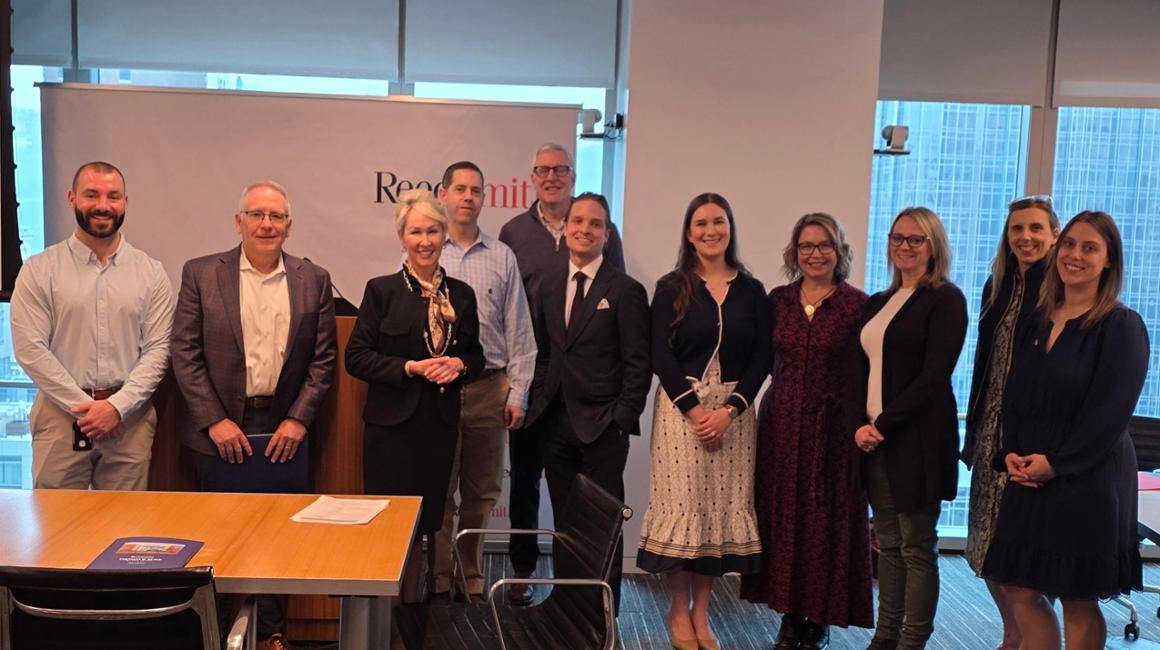
When the Thomas R. Kline School of Law of Duquesne University launched its AI and Law Collaboration last year, the goal was never simply to educate. It was to listen. Over the past year, Dean April Barton and Duquesne Kline Law faculty have met with attorneys and firms across the region, engaging in candid conversations about how artificial intelligence is reshaping the practice of law. What we heard has been illuminating, and we are pleased to share some of what we have learned.
The most encouraging news is that, compared to many law schools across the country, Duquesne Kline Law has built a genuinely robust curriculum for this moment. Our faculty bring a healthy breadth of expertise across law and technology, and our course offerings give students meaningful, hands-on exposure to AI tools as they are actually being used in practice. Equally important, our Legal Research and Writing Program and professional responsibility courses take the ethics of AI use seriously, not as an afterthought, but as a thread woven throughout the student experience. We are proud of what we have built, and the conversations we have had with practicing attorneys this past year have reinforced our confidence that we are preparing students for ethical application to allow them to succeed and thrive.
The profession is moving quickly, and AI competency has become a genuine hiring consideration. Attorneys and firm leaders made clear that candidates who can demonstrate familiarity with AI tools, speak to their uses and limitations, and articulate an understanding of the ethical dimensions of their application will have a meaningful advantage in interviews and in early career advancement. We are incorporating this insight directly into how we prepare students for the job market.
One area where we believe legal education must go further than a simple caution is in teaching students how to audit and verify AI-generated output. It is not sufficient to tell a student to "always check the AI's work." That instruction, without more, leaves them without the tools to do so effectively. At Duquesne Kline Law, we are committed to teaching students the specific skills required to critically evaluate what an AI tool produces: how to trace a cited case back to its source, how to identify when a legal argument has been subtly distorted or a holding mischaracterized, how to recognize the hallmarks of AI-generated error, and how to apply their own legal reasoning as an independent check on the output. Professional responsibility demands no less, and the firms we spoke with could not agree more. Attorneys who rely on AI output without truly understanding how to interrogate it are not using AI competently; they are simply delegating their judgment.
On the practice side, the landscape is varied. Larger firms have largely adopted dedicated legal AI platforms such as Thomson Reuters CoCounsel, Harvey, and Lexis+ AI Protege, often making significant investments in licensing and in training attorneys, paralegals, and professional staff. Smaller firms and solo practitioners are in a more mixed position, with adoption frequently depending on the enthusiasm and initiative of individual decision-makers. Cost remains a real barrier, and the calculus is not always straightforward.
What is clear across firm sizes, however, is that AI is generating new and complex questions that the profession is still working through. Billing practices and the scope of work are areas of active discussion: when AI substantially reduces the time required to complete a task, how should that work be valued and communicated to clients? Questions of confidentiality are equally pressing. Attorney-client privilege and the work product doctrine take on new dimensions when AI tools are in use, and the risks become particularly acute when clients themselves turn to open, consumer-facing platforms to research legal theories or develop positions before ever consulting counsel.
These are not abstract questions. They are the questions our graduates will face their first days in practice. The conversations we have had this year with the practicing bench and bar have deepened our understanding of that reality, and they will continue to shape how we teach, what we emphasize, and how we equip Duquesne Kline Law students to lead with both skill and integrity in the profession they are entering.
We are grateful to every firm, attorney, and judge who welcomed us and shared their perspectives so openly. We look forward to continuing this collaboration in the year ahead.
News Information