

When Kimberly Stafford arrived at Duquesne University, she knew she wanted to combine science, innovation and patient care in her future career. What she didn’t yet realize was that she would help shape a new academic pathway—one that reflects Duquesne’s commitment to horizon-expanding education and preparing students to make meaningful contributions to the world.
Kimberly began her studies in Duquesne’s Biomedical Engineering (BME) program as part of its inaugural class—known as the “plankers,” a group of students who helped build the program from the ground up. Inspired by her father, a mechanical engineer, she was drawn to engineering’s ability to solve complex problems through math and science. At the same time, she felt a strong pull toward the medical field.
During her sophomore year, Kimberly added nursing as a second major, becoming the first student to complete Duquesne’s BME/BSN dual-degree program.
“I was fascinated by the mechanics of biomedical engineering,” she said. “But I also wanted to understand the clinical ‘why’ behind the problems we were trying to solve.”
She recalls a lecture from Biomedical Engineering Department Chair Dr. John Viator on the fluid dynamics of a heart valve. While the engineering principles captured her attention, her curiosity quickly expanded beyond the mechanics.
“I kept thinking about the patient behind the condition—what led to the valve failure and what their experience would be like,” she said. “Adding nursing allowed me to see the full picture.”
The BME/BSN program reflects Duquesne’s horizon-expanding approach to education, encouraging students to cross traditional academic boundaries. Spanning more than 200 credits, the rigorous program required Kimberly to move seamlessly between engineering labs and clinical rotations, synthesizing technical knowledge and patient care in real time.
“That experience taught me to approach problems not just as an engineer or as a nurse,” she said. “It trained me to think through the integrated lens of a Nurse Engineer.”
Just as important was the collaborative spirit that defined Kimberly's experience. Faculty across the Schools of Science and Engineering and Nursing worked closely with her as the program evolved, reflecting Duquesne’s belief that learning happens best in community.
Kimberly credits Dr. Viator and Dean Mary Ellen Glasgow of the School of Nursing for their vision in creating the innovative dual-degree path.
“The engineering and nursing departments treated me as a true partner. They welcomed my feedback and used it to refine the curriculum. It was a powerful example of what it means to learn together.”
Today, Kimberly applies her interdisciplinary education in her role at ActivePure Medical, where she helps expand the company’s clinical evidence portfolio. She oversees clinical studies from design and implementation to publication, using advanced analytics to evaluate how the company’s technology—based on the science of photolysis—reduces pathogens on surfaces and in the air.
A critical part of her work involves translating complex scientific data into meaningful clinical outcomes.
“My role often involves bridging two worlds,” she said. “I translate technical data for clinicians and clinical realities for engineers. If you can speak both languages, you become the most valuable person in the room.”
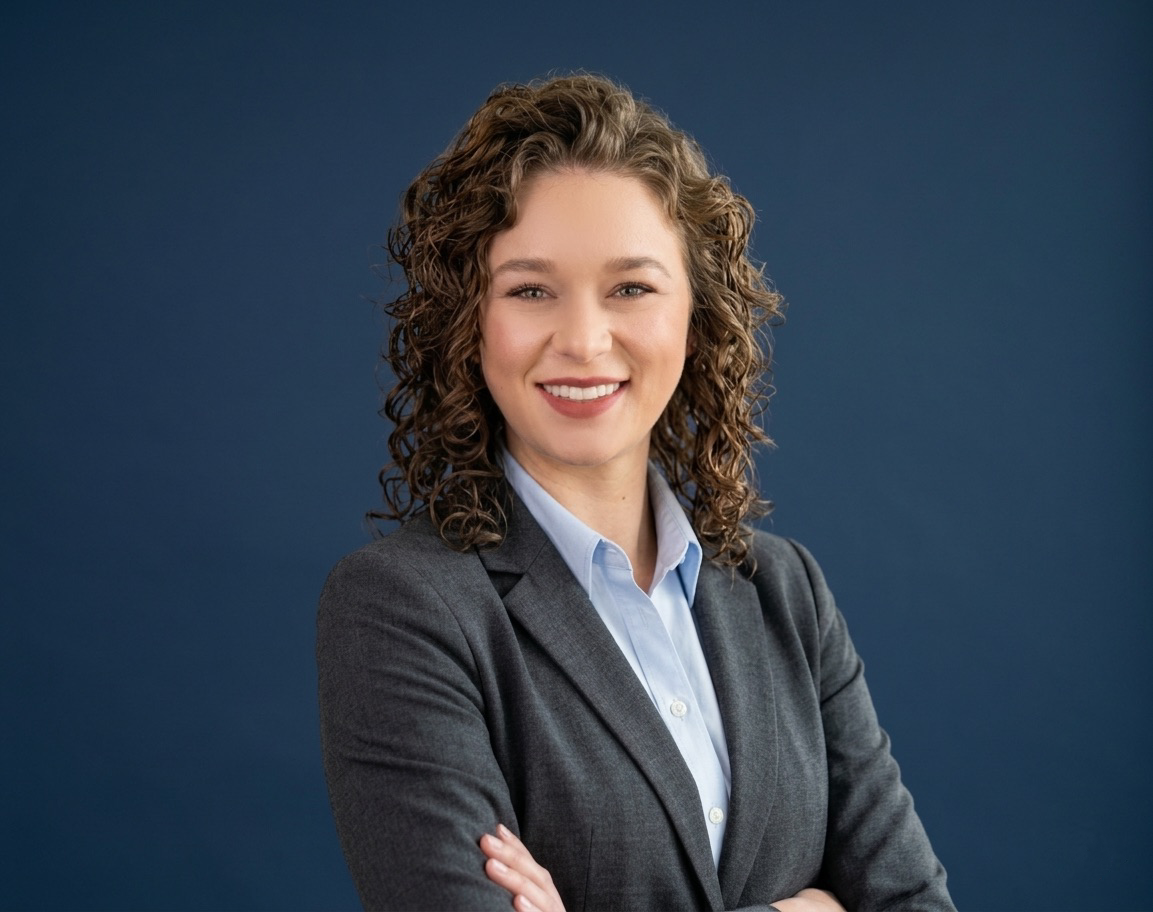
The demanding dual-degree program helped prepare Kimberly for exactly that kind of challenge. By learning to navigate two disciplines simultaneously, she developed the adaptability and interdisciplinary mindset needed to succeed in a rapidly evolving health care landscape.
Beyond academics, Kimberly says her time at Duquesne also helped shape her sense of purpose.
“My experience deepened my faith and helped me think about the bigger question of what we do with the gift of life we’re given,” she said. “Positioning both your personal path and your professional goals around serving others will always lead you in the right direction.”
For students considering the BME/BSN program, Kimberly encourages them to embrace the opportunity to connect disciplines rather than choose between them.
At first, you may feel like an engineer in the hospital and a nurse in the lab, but your value is in the overlap. You’re the bridge between the science of ‘how’ and a patient’s ‘why.’
News Information
Published
March 23, 2026