

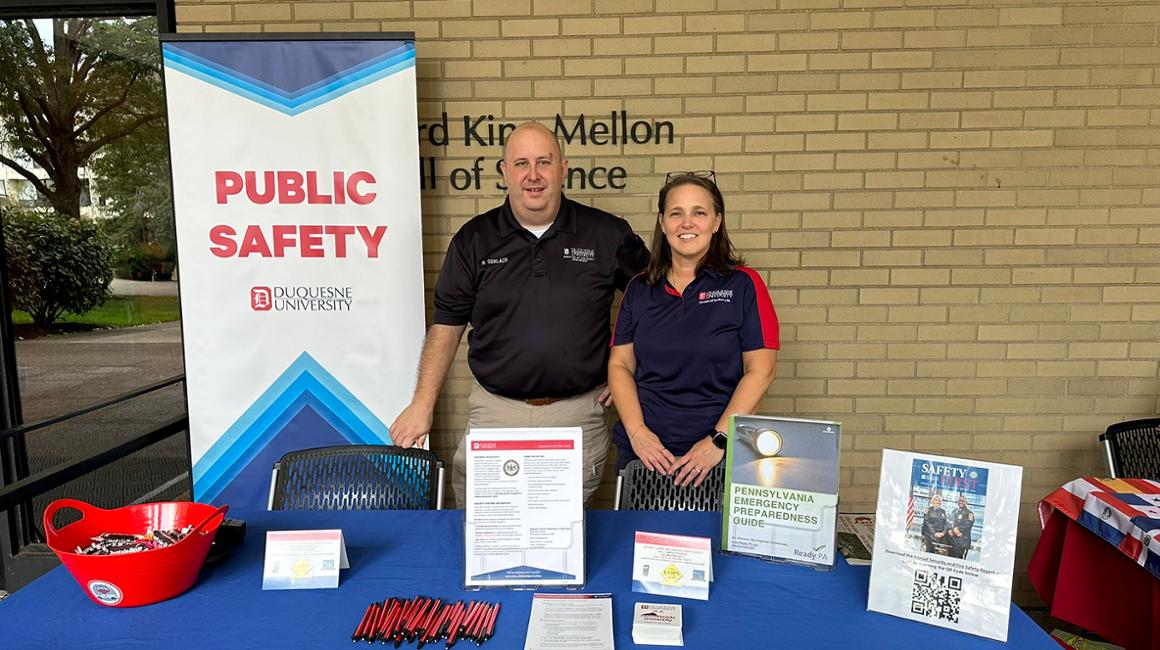
Emergencies can happen at any time, and being prepared is key to keeping our campus community safe.
"The start of a new academic year is an ideal time to revisit important safety protocols and share reminders about emergency preparedness across campus," shared Bob Gerlach, Duquesne’s director of emergency management and threat assessment at the latest meeting of the University’s emergency management team.
Whether it’s a natural disaster, hazardous material spill or a security threat, the University has established clear protective actions to guide students, faculty and staff during critical situations. These actions—Shelter, Secure, Lockdown, and Evacuate—are designed to minimize risk and ensure everyone knows what to do when seconds count.
Key Actions - Know the Difference
Shelter is used during non-violent emergencies such as hazardous material releases. The goal is to stay indoors and avoid exposure to outdoor dangers. If you’re outside when a shelter order is issued, head to the nearest building immediately. Once inside, move away from windows and doors, close all exterior openings.
Secure actions are taken when there’s a potential external threat. This could be a situation unfolding off-campus or nearby. In this case, individuals should go indoors, lock all exterior doors and lower window blinds. Movement should be minimized until the threat is resolved.
Lockdown is the most serious protective action, typically triggered by an active shooter or dangerous individual on campus. If you’re outside, seek shelter immediately. Inside, find a secure room, lock or barricade the door, stay out of sight, silence your phone and remain quiet until authorities give the all-clear.
Evacuate means it’s safer to leave than to stay. This action may apply to a single building or the entire campus. Know your evacuation routes and assembly points ahead of time. When evacuation is ordered, leave immediately—don’t stop for personal items or use elevators. Head to your designated location to be accounted for and receive further instructions. The University conducts evacuation drills once each semester—your participation ensures you to know the plan should the need arise.
To support these actions, the University uses DU Alerts, which deliver real-time emergency messages via text and voice. These alerts clearly state the protective action to take, such as “LOCKDOWN,” “SHELTER,” or “EVACUATE,” and provide brief instructions. It is important to note that typically, follow-up details are sent via email once the immediate threat has passed.
Faculty and staff play a vital role in modeling calm and informed behavior during emergencies. Familiarizing yourself with these protective actions and DU Alert messages prepares you to respond quickly and help guide students to safety. For more information, visit Campus Safety.
News Information
Published
August 12, 2025