


Doctor of Philosophy in Nursing Ethics
Nurses are on the front lines of ethical issues in health care. They typically spend the most time with patients and are most familiar with cases involving ethical challenges. Yet, nurses are often constrained by institutional policy and have limited decision-making authority when ethically charged situations arise.
Our online PhD in Nursing Ethics program provides nurses with expertise in evaluating and responding to ethically challenging situations in clinical practice and healthcare policy. In this program, students learn how to think and debate about ethics in a rigorous and rational manner. With intellectual skills and practical ethics knowledge, graduates will be prepared and empowered to stand up for what they know is right.
Program Focus
The PhD in Nursing Ethics program is an interdisciplinary program offered in collaboration with the Center for Global Health Ethics in the McAnulty College and Graduate School of Liberal Arts.
Our PhD in Nursing program prepares scientists to engage in empirical research, while our PhD in Nursing Ethics program trains ethicists to engage in normative scholarship. Normative research or scholarship aims at figuring out what is right, good and what should or ought to be the case, whereas empirical inquiry aims at figuring out what is the case. Normative research is the hallmark of the field of ethics. In this program, students learn normative methods, and apply those methods to challenging ethical problems in nursing practice and healthcare policy.
Our program also offers students the opportunity to conduct empirical research with our highly accomplished nurse scientists. However, the focus of the program, including the dissertation, is normative in nature: students learn to make reasoned arguments for their positions on a range of challenging and controversial moral problems in nursing and healthcare, and to respond rationally and convincingly to those who hold different positions. In this way, students will be prepared to contribute to the ethical improvement of nursing practice and the delivery of healthcare.
For a more detailed description of normative scholarship and its distinction from empirical research, as well as a discussion of the importance of normative scholarship in nursing, please see Vogelstein & Colbert (2019).
Program Information
The PhD in Nursing Ethics online program prepares you to become a nurse ethicist. The program focuses on normative research and scholarship and applies those methods to challenging ethical problems in nursing practice and health care policy. This is a 47-credit interdisciplinary program offered in collaboration with the Center for Global Health Ethics in the McAnulty College and Graduate School of Liberal Arts.
Program Type
Major
Degree
Doctorate
Academic Department
Advanced Role and PhD Program (Nursing)
Duration
4-6 years
Required Credit Hours
47
Modality
Online
Student and alumni perspectives
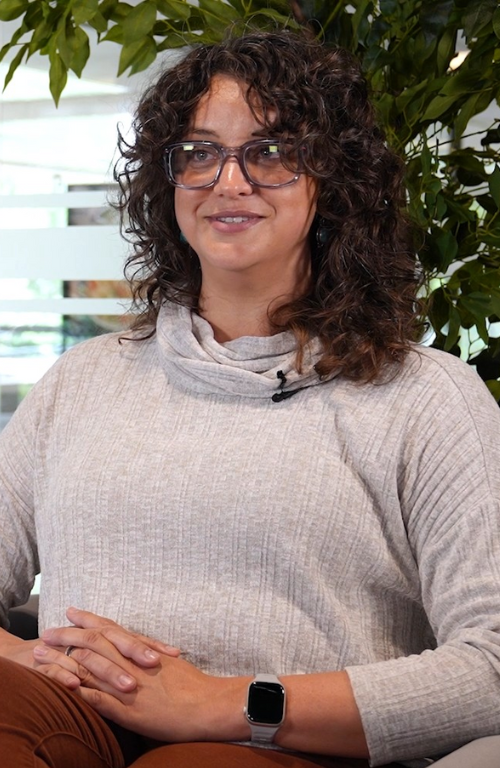
The fact that it's online and there is an asynchronous component, provides flexibility within the program. With being in Cohort 30 and celebrating the 30th anniversary of the program, I knew Duquesne was well versed in offering the PhD program in an online format.
More in this Program
PhD in Nursing Ethics Residencies
Doctoral Week (May of Year 1)
Every student admitted to the PhD program is required to come to the Pittsburgh, PA, campus for the first residency, usually held during the second or third week of May. This week includes an orientation to the PhD program and provides an opportunity for students to meet faculty and participate in live classes for the courses in which they are enrolled that summer.
Study Abroad (Summer of Year 2)
Students enrolled in GPNG 924 Methods of Scientific Inquiry II will take part of the course as a study abroad experience (approximately 10-14 days) in Dublin, Ireland, where students will have housing at Trinity College.
*Please note that any tuition discounts that graduate students receive are not applicable to study abroad courses.
Topic Approval (May of Year 3)
Graduate Nursing Scholarships and Tuition Discounts
Duquesne’s School of Nursing offers students of select graduate nursing programs one of the following scholarships and tuition discounts: a 25% scholarship, 35% scholarship, or 55% tuition discount.
Frequently asked questions for the PhD in Nursing Ethics Program. No later than the fall semester prior to beginning the program. *Please note the course must have been completed within the last 5 years. Duquesne University School of Education offers an online statistics course each fall, GREV 510 - Statistics I. For PhD in Nursing and PhD in Nursing Ethics students, this
must be completed the fall term prior to beginning your summer coursework. To enroll
in this course, please follow the special status application process. If our GREV 510 does not meet your timeline, courses will be accepted from any accredited
university with prior approval from the PhD chair. To assist applicants, our PhD faculty
have identified online courses through Portage Learning and the University of Phoenix that meet the prerequisite requirements. If you identify another course that you would like to attend in person or online,
please submit the course information for approval prior to enrollment. If you have any questions, please contact Director of Admissions Brian Bost at (412)
396-6539 or via email.Curriculum
*Required on-campus visit
Spring
Summer
**Required Study Abroad
Spring
Summer
*Required on-campus visit
Spring
Spring
Frequently Asked Questions
Request for Credit Consideration
Additional Resources
Do you have questions about the PhD in Nursing Ethics program?
Learning Outcomes
Ask a Question