

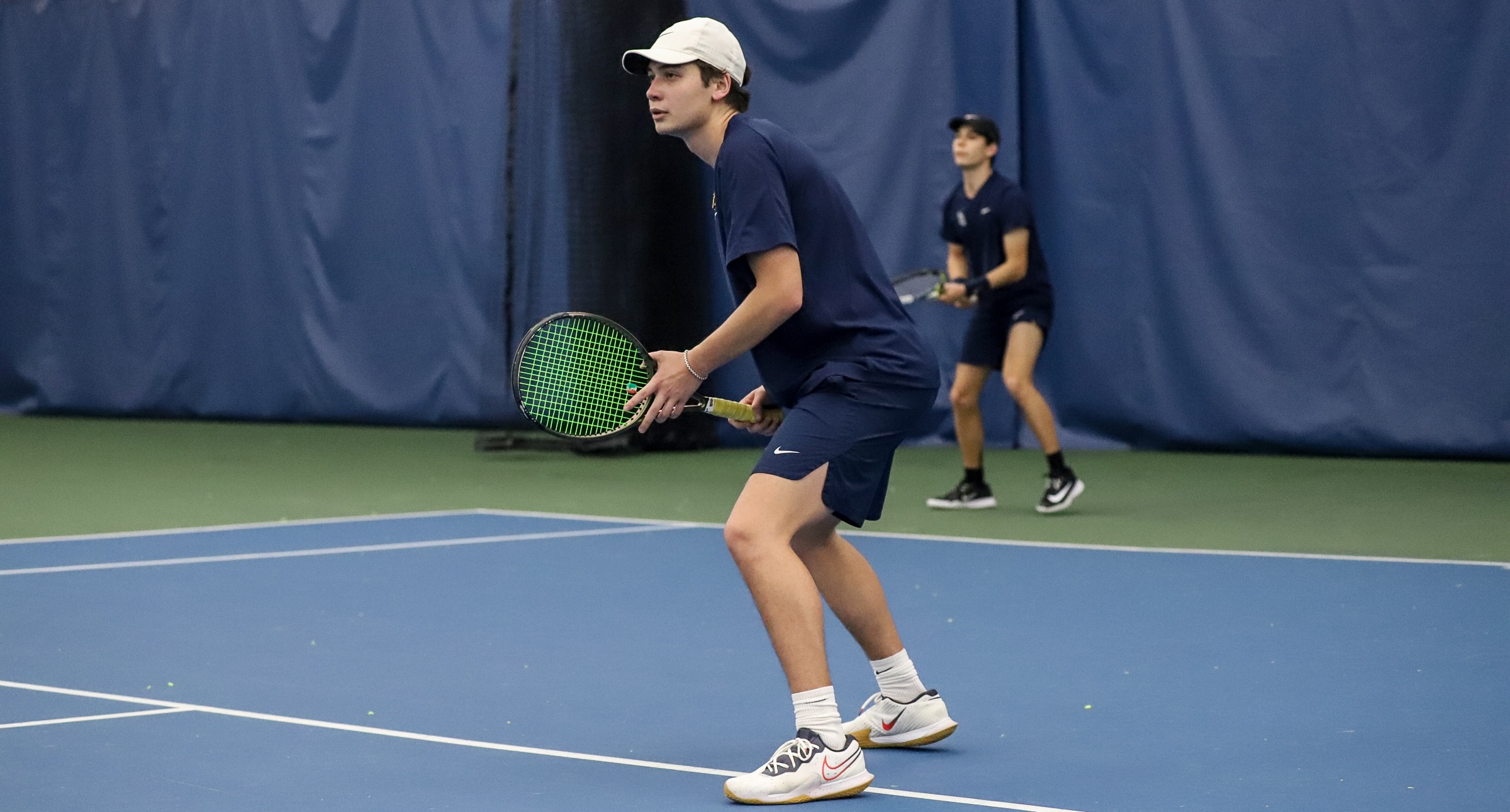
For Pierce Manning, choosing a university meant finding a place where he wouldn't have to choose between two ambitions: competing in Division I tennis and pursuing his dream of becoming a physician.
As a former Division I men's tennis captain, current assistant coach and aspiring physician, Pierce has embraced the opportunities to grow as a student, athlete and researcher at Duquesne University. With the support of faculty mentors and a collaborative School of Science and Engineering community, he is discovering how to turn his passion for science into a future in medicine.
Originally from Riverside, California, Pierce attended high school in LaGrange, Georgia, where he moved at age 14 to train with a tennis coach. He arrived at Duquesne in spring 2023 after graduating a semester early from high school.
While exploring collegiate opportunities, he found that many Division I programs were
hesitant to accommodate the demands of a pre-medical biology major alongside competitive athletics.
Duquesne offered a different path.
"Duquesne did that for me," Pierce said. "As someone who dreamed of becoming a physician, I needed a school that would allow me to pursue both dreams."
That opportunity has shaped his college experience, giving him the space to develop as a student, athlete and emerging scientist.
Empowering students to pursue bigger goals
During his three and a half years as a member of the men's tennis team, Pierce served as team captain for two years. His leadership on the court has continued beyond his playing career, and he now serves as an assistant coach.
His connection to Duquesne tennis actually began long before he became a student. At approximately 11 years old, Pierce attended a clinic hosted by the Duquesne tennis team, where he met players and members of the coaching staff. By his freshman year of high school, he had set his sights on becoming a Division I collegiate athlete.
At Duquesne, he found an environment where he could pursue that goal while preparing for a career in medicine.
His biology coursework has introduced him to new ways of thinking about science and the human body, while opportunities outside the classroom have helped him explore what it means to become a physician. One of the most influential experiences has been joining the research lab of Dr. John Pollock, a biology professor who encouraged Pierce to think differently about his potential as a student and future scientist.
Expanding horizons through undergraduate research
Joining a research lab was initially intimidating for Pierce. As captain of the men's
tennis team, he questioned whether he could balance the responsibilities of athletics,
academics and research.
A conversation with Dr. Pollock during the end of his junior year helped change his
perspective.
“During the end of my junior year, I met with Dr. Pollock, a professor who changed my perspective on what it means to be a valuable student,” Pierce said. "He told me that there are good scientists and great scientists, and the same goes for physicians."
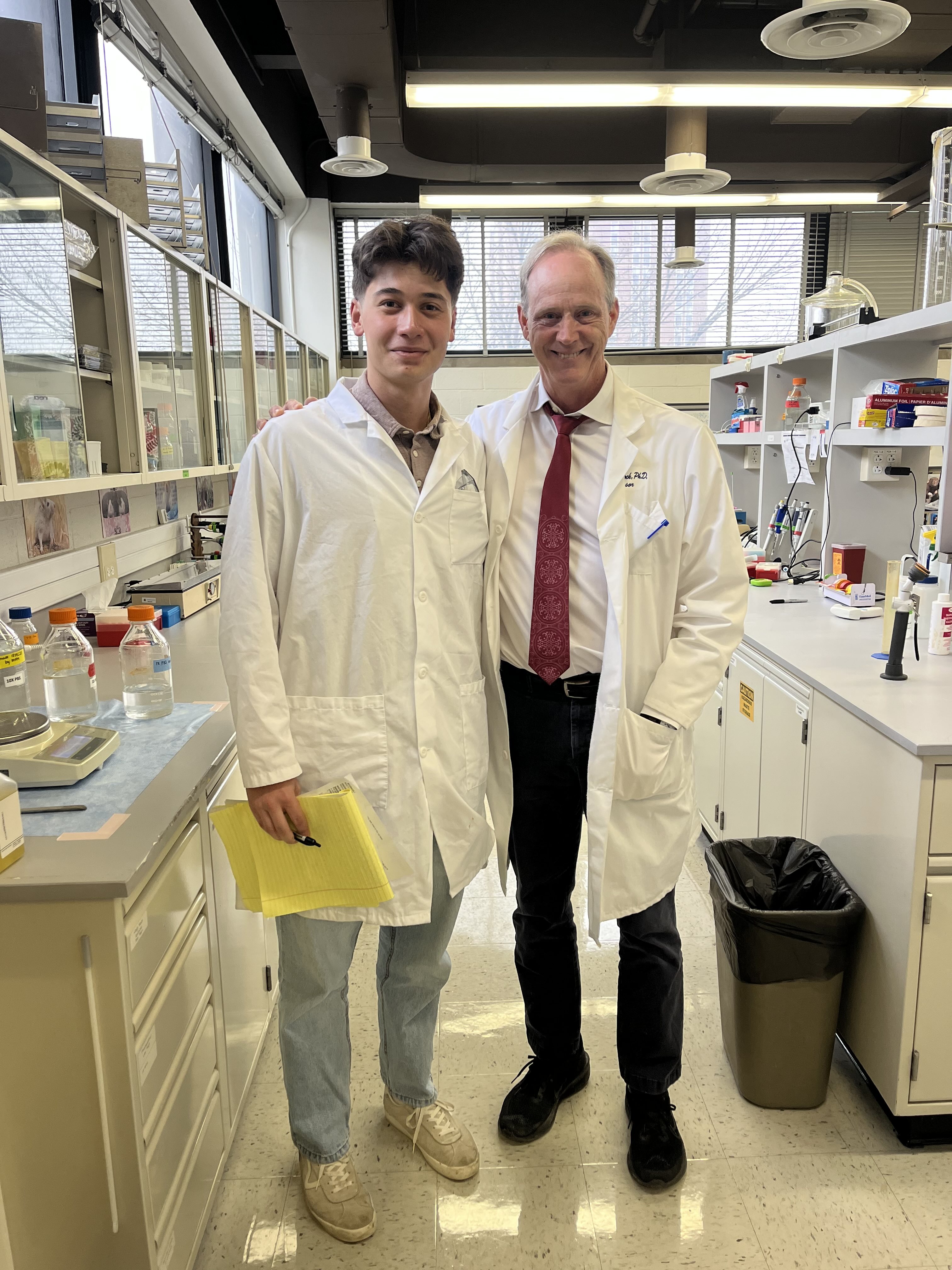
Encouraged by that conversation, Pierce decided to join the Pollock Lab, where he found a mentor willing to work with his demanding schedule while providing guidance and opportunities to develop his scientific skills.
“The most rewarding part of my research has been what most expect, a successful experiment. Adding to this, having a successful experiment following troubleshooting something that went wrong.”
The experience has taught him the value of persistence, attention to detail and collaboration.
Through undergraduate research, Pierce has discovered that scientific progress is
rarely an individual effort. It requires problem-solving and a willingness to learn
from others—qualities that will serve him well as he continues toward a career in
medicine.
Learning together: A community that feels like family
While research and athletics have played important roles in Pierce's development, he says the people at Duquesne have made the greatest impact on his experience.
He describes the faculty in the School of Science and Engineering as not only academically accomplished but also deeply invested in their students' well-being.
One experience, in particular, stands out.
During his junior year, Pierce struggled to find time for lunch on certain days because of his demanding schedule. A few biology professors noticed and began bringing him snacks and even a footlong sandwich to make sure he had something to eat.
It was a simple gesture, but one that left a lasting impression.
"The department of Biology almost feels like a family. The professors have always looked out for me and my peers and truly value our physical and mental well-being."
That sense of belonging has helped him navigate the challenges of college while building meaningful relationships with faculty and classmates.
Pierce says he genuinely looks forward to running into professors and faculty members
throughout the biology building—a reflection of the connections he has developed during
his time at Duquesne.
For him, learning together extends beyond lectures, laboratories and team practices.
It means being part of a community where people recognize one another's needs, celebrate
successes and step in to help when challenges arise.
Innovating through leadership, research and problem-solving
Pierce's experiences as a student-athlete and researcher have challenged him to approach problems from different perspectives.
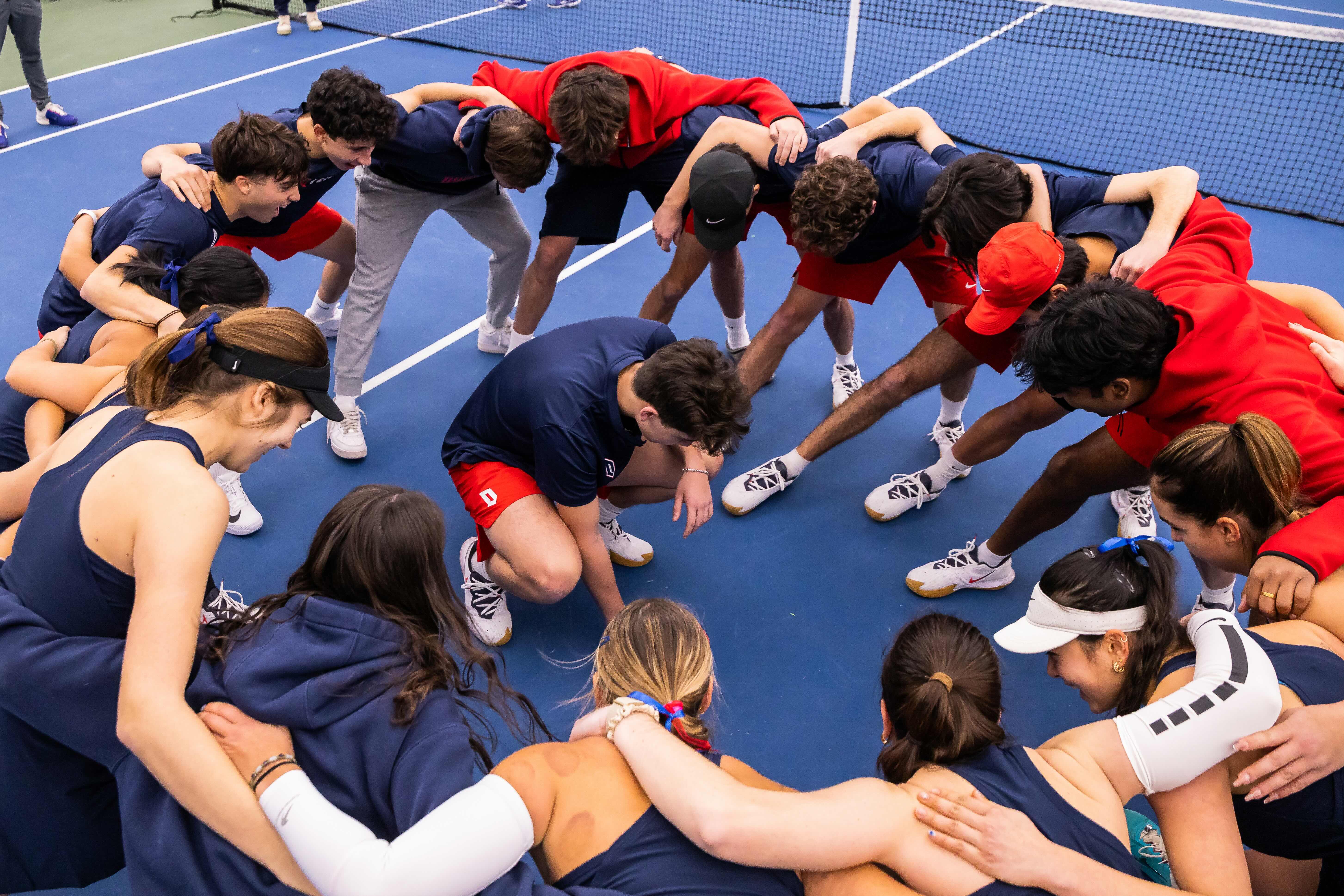
On the tennis court, serving as team captain required leadership, communication and the ability to support teammates through both victories and setbacks. Now, as an assistant coach, he has the opportunity to share what he has learned and help develop the next generation of Duquesne student-athletes.
In the research lab, he applies that same mindset to scientific challenges, learning to troubleshoot experiments, adapt when something doesn't go as planned and work alongside others to achieve a shared goal.
"My side of the research done in the Pollock lab has recently been staining cell bodies in the dorsal root ganglia for certain target proteins and imaging these slides on a fluorescent microscope. This process is extremely tedious and intricate, since there are multiple areas where mistakes or unforeseen situations can occur. Thankfully, having a team of highly skilled and experienced individuals can lighten the burden greatly," Pierce said.
Looking ahead: Preparing for a future in medicine
As Pierce continues his biology studies and his work in the Pollock Lab, he is building a foundation for his ultimate goal of becoming a physician.
His journey at Duquesne has shown him that academic success is about more than mastering scientific concepts. It also involves developing relationships, embracing challenges, learning from setbacks and recognizing the importance of community.
“My experience at Duquesne has been nothing short of amazing. The people and support that I have come to experience have constantly been a rock for me to rely on.”
From his early days as a young tennis player attending a Duquesne clinic to his years as a Division I team captain and undergraduate researcher, Pierce has made the most of opportunities to grow both personally and professionally.
News Information