

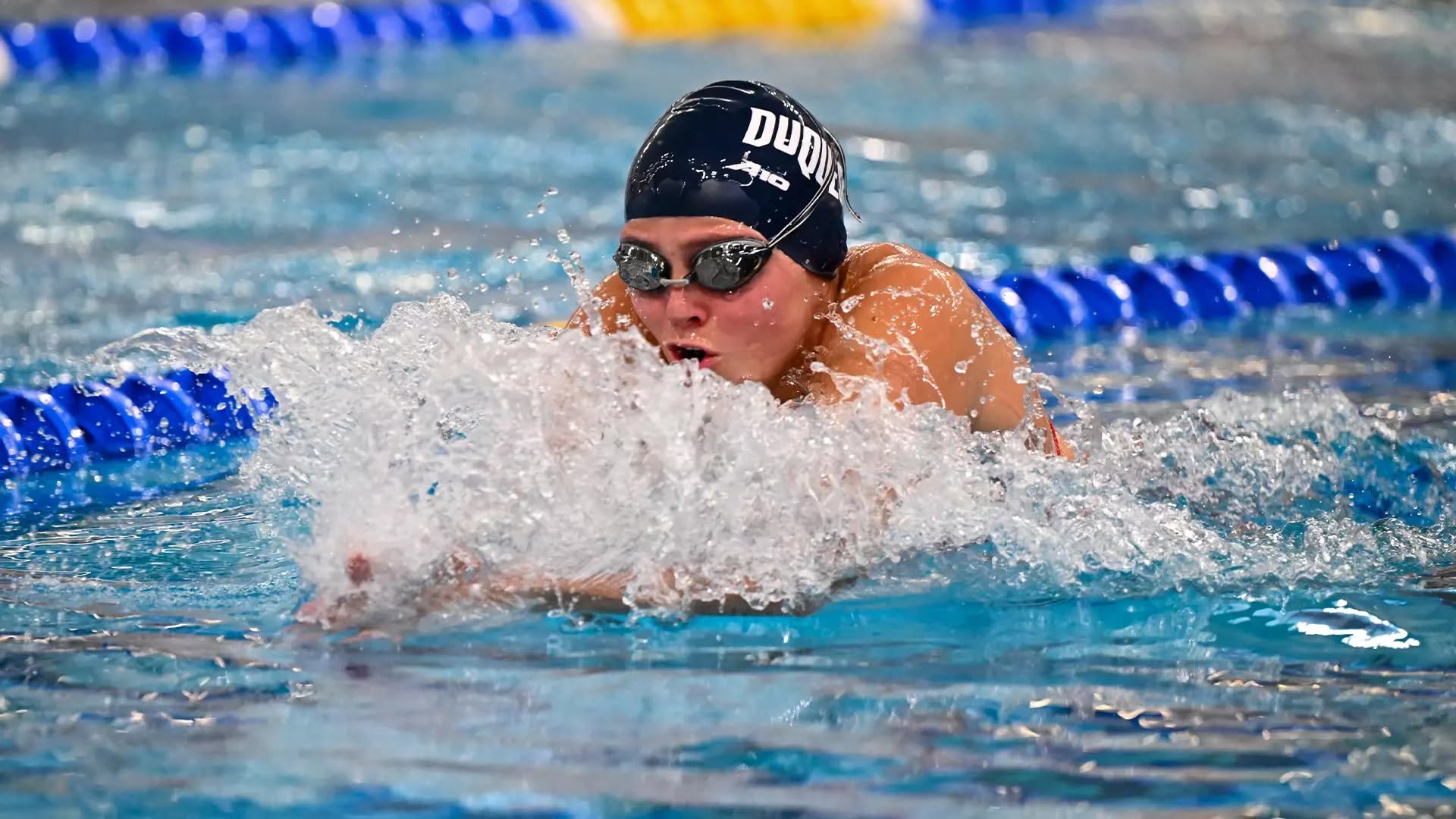
For Ashley Freel, a junior Mechanical Engineering major and member of Duquesne University's Swimming and Diving team, success means pushing boundaries, embracing new challenges and making the most of every opportunity.
Originally from Bloomington, Indiana, Ashley came to Duquesne after being recruited for swimming. Although she had never pictured herself attending a university in a city, her campus visit changed her perspective. The combination of a close-knit campus community and the opportunities of being downtown made Duquesne stand out.
She also arrived with a strong interest in STEM, inspired in part by her high school swim coach, who was both an engineer and a swimmer. Seeing how engineering principles connected to everyday activities like swimming helped Ashley recognize the possibilities of pursuing a career in the field.
"I thought it was really cool to see how much math and science could be connected to the things I do every day."
Today, Ashley is putting that curiosity into practice through hands-on engineering projects, undergraduate research and the demands of Division I athletics. Her experience reflects the School of Science and Engineering's commitment to empowering students to explore their potential, collaborating across disciplines and innovating through real-world learning.
Discovering Possibilities Through Hands-On Engineering
Although Ashley knew she wanted to pursue engineering, she discovered Mechanical Engineering during her freshman year at Duquesne.
Through the Introduction to Engineering course, she explored different engineering disciplines and learned about the wide range of opportunities within the field. Mechanical Engineering stood out because of its combination of data analysis, problem-solving, creativity and hands-on application.
The discipline also offered the flexibility to explore different career paths while building on her strengths and interests.
Ashley has taken advantage of opportunities to put her classroom knowledge into practice. She has participated in the School of Science and Engineering's Summer Undergraduate Research Program (URP) for the past two years, conducting research with Dr. Katherine Hornbostel. She has continued working with Dr. Hornbostel during the academic year, and the two are currently working toward publishing a research paper.
Her coursework has also provided opportunities to design, build and test engineering solutions. Projects have included constructing and testing bridge prototypes, designing a new trailer hitch and performing stress tests on various metals.
These experiences have expanded her understanding of how engineering concepts translate into practical applications and how different disciplines intersect.
"Mechanical engineering is such a broad field that combines data analysis, problem solving, creativity, innovation and hands-on application. This was the perfect combination of my strengths and interests while offering the flexibility to explore a variety of career paths in the future."
Beyond the classroom and research lab, Ashley serves as a School of Science and Engineering ambassador, working with Dr. Palmer and Dean Gawalt to recruit prospective students and share her experiences.
She is also involved in the American Society of Mechanical Engineers (ASME) and the American Society of Civil Engineers (ASCE), where she participates in technical projects, networking opportunities and activities that connect students with faculty, industry professionals and fellow engineers.
Building Connections in the Classroom and Beyond
A strong sense of community has been central to Ashley's experience at Duquesne.
She credits the School of Science and Engineering's supportive faculty and close-knit student community with helping her succeed. Small class sizes allow students to build meaningful relationships with professors, while being part of a small academic cohort has helped Ashley develop friendships with classmates who share similar coursework and academic goals.
"We do study groups together and are always supporting each other," she said.
That collaborative environment extends beyond engineering. As a student-athlete, Ashley has built relationships with teammates from a variety of academic disciplines, giving her opportunities to learn from perspectives outside her own.
Whether seeking advice from business majors while applying for internships or talking with teammates studying physician assistant and nursing programs about health-related questions, Ashley values the different experiences and knowledge her teammates bring.
"This is such a unique thing to be able to hear so many different views and perspectives," she said.
She also appreciates the opportunities to connect with faculty through department events and student organizations. These relationships have helped her build a network of mentors, peers and professionals who support her academic and personal growth.
For Ashley, collaboration is not limited to engineering projects or athletic competitions. It is an everyday part of learning, problem-solving and preparing for the future.
Connecting Engineering, Athletics and Real-World Problem-Solving
Ashley's interest in engineering began with recognizing the connections between science and the activities she enjoyed. As a student-athlete, she continues to experience how different disciplines and skills can work together.
Her commitment to swimming has taught her lessons that translate directly into her engineering studies, including time management, organization, communication, collaboration, attention to detail and accountability.
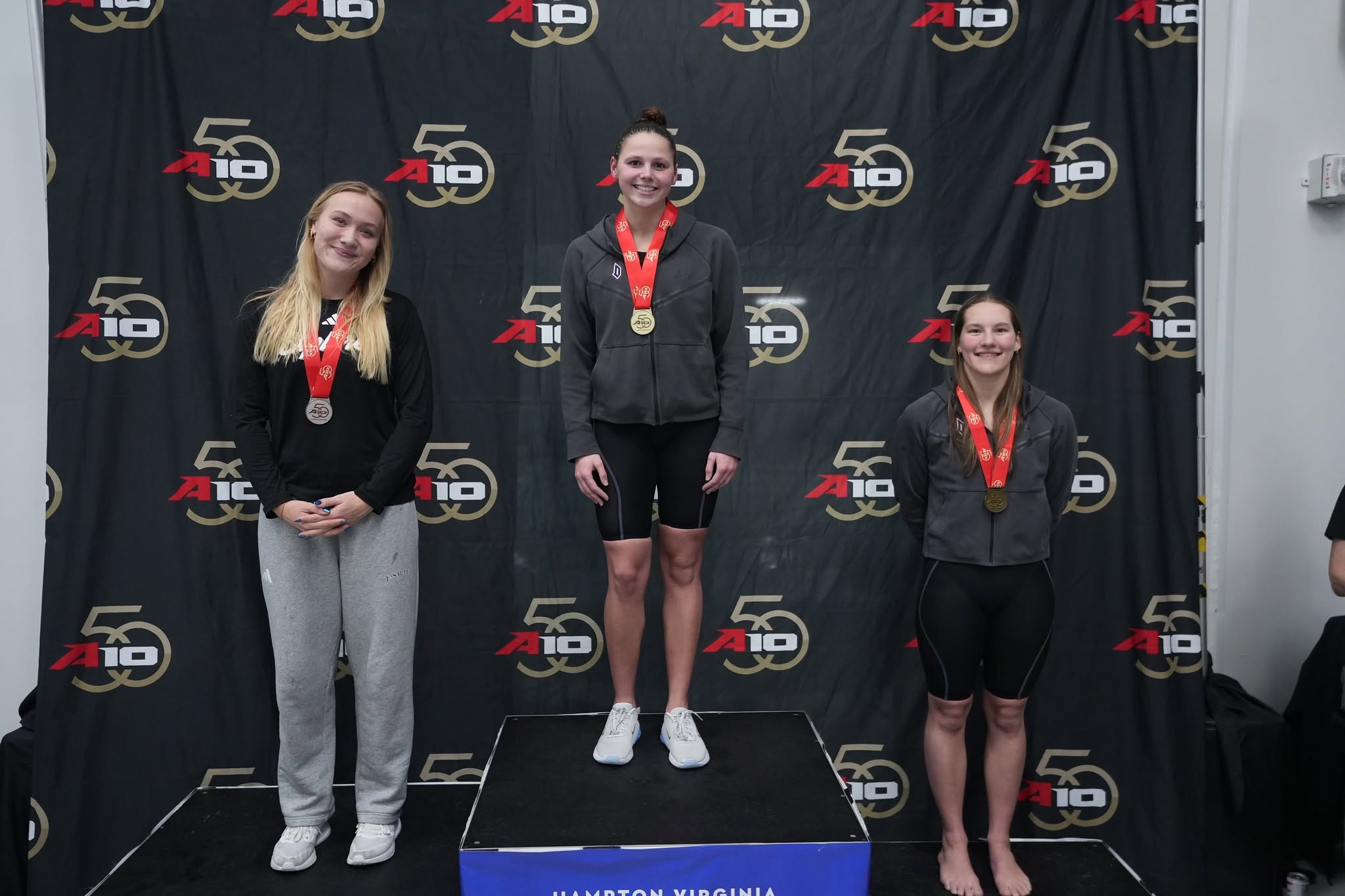
As a member of Duquesne's Swimming and Diving team, Ashley spends approximately 20 hours each week at practices, lifts and competitions while managing a demanding engineering course load of about 16 credit hours.
A typical day may include an early morning swim or lift, two or three engineering classes, time spent studying between classes and a second swim practice before returning to assignments in the evening.
Balancing those responsibilities requires flexibility and careful planning. During the season, competitions can mean missing several days of classes, making it especially important to stay organized and communicate with professors and classmates.
Ashley also makes time for activities outside academics and athletics, including crafting, baking and reading.
"At some points of the year I have the luxuries of having ample time to myself doing things that bring me joy," she said. "Other times I must make an effort to do these things, and that may mean that I can only read one chapter of a book."
Through athletics, Ashley has learned to perform under pressure, embrace challenges and recognize that she is capable of more than she sometimes realizes.
"I am constantly pushed outside of my comfort zone," she said. "Every day is a new challenge that reminds me that I am more capable than I think."
That mindset carries into her engineering education, where innovation requires curiosity, persistence and the willingness to approach problems from different perspectives.
Making Room for Both Engineering and Athletics
For Ashley, one of the most meaningful aspects of her Duquesne experience has been the opportunity to pursue two demanding commitments without having to choose between them.
During the college recruiting process, she encountered schools that would not allow her to major in engineering while competing on a Division I swim team. Duquesne offered a different experience.
"At Duquesne, I am able to do both because my coaches and the school are willing to be flexible and work with me to help me succeed in both."
She also recognizes the value of having access to undergraduate research opportunities. While some universities focus primarily on graduate-level research, Ashley has been able to gain meaningful laboratory experience as an undergraduate and work toward a potential publication.
The support she receives from professors, coaches, classmates and teammates has made balancing her commitments possible.
Her advice to prospective students interested in pursuing a demanding STEM major while competing in college athletics is straightforward: take the opportunity.
"Do it! If you have the opportunity to pursue both, take it because it is an extremely rewarding opportunity that very few people get to do," she said.
She also emphasizes the importance of communication, encouraging students to build relationships with their coaches, professors, classmates, teammates and advisors.
"There are so many people who want to help you succeed, but they can't help unless they know what's going on."
Embracing an Open Future
As Ashley looks toward graduation, she is keeping her options open and exploring the many possibilities available to Mechanical Engineering graduates.
She enjoys the flexibility of the field and the opportunity to apply her skills across different industries and disciplines. Her research, coursework, student organizations and athletic experiences have all helped her discover new interests and develop skills she can carry into her career.
When reflecting on her time at Duquesne, Ashley is most proud of the effort she puts in each day and her willingness to take advantage of opportunities that challenge her to grow.
"I am proud that I take advantage of opportunities and continue to grow as a person," she said.
News Information