

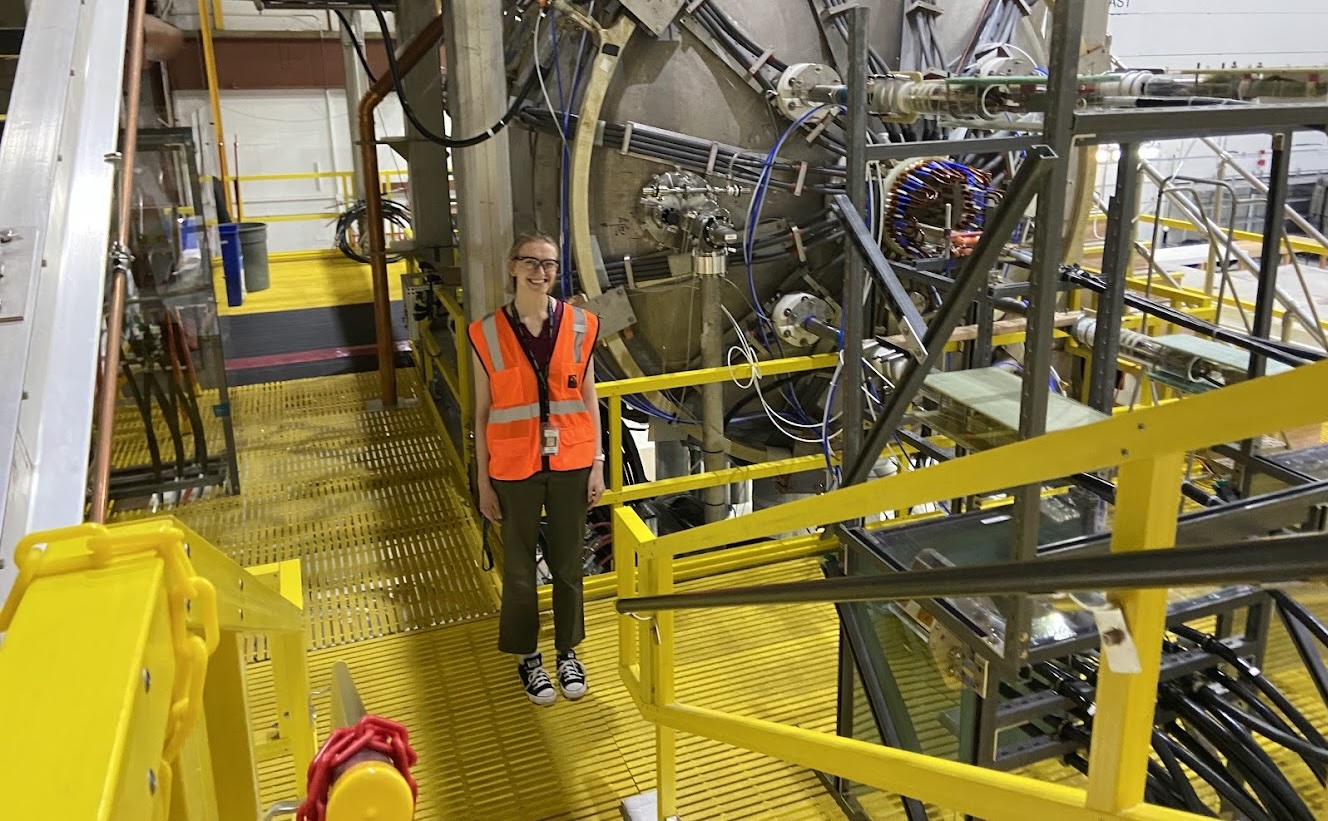
When Emma Landefeld arrived at Duquesne University, she envisioned a future as a high school physics teacher. What she discovered instead was a passion that would take her far beyond the classroom—and into the cutting-edge world of plasma physics.
Emma credits Duquesne with giving her the freedom to explore. Encouraged to step outside her original plan, she pursued research opportunities that ultimately reshaped her future.
That turning point came during a summer internship at West Virginia University, where
she was introduced to experimental plasma physics for the first time. Tasked with
building an electron beam to excite plasma, Emma faced challenges that tested her
persistence. For much of the internship, her device didn’t work—but instead of stepping
back, she leaned in.
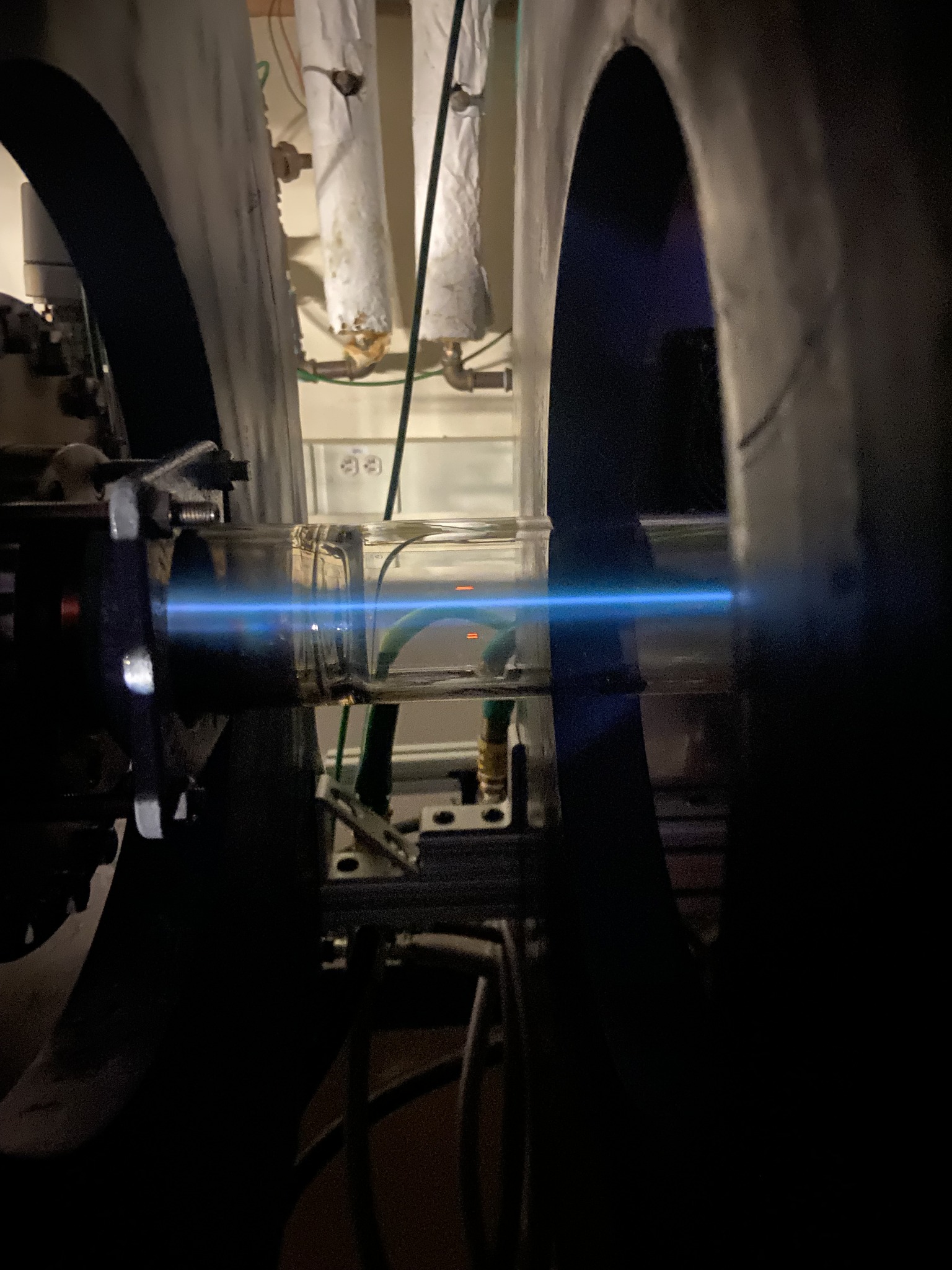
“I challenged myself to understand every part of the system,” she said. “When I finally found the issue and fixed it, I saw the most beautiful blue glow—the first plasma I ever created.”
That moment was more than a success—it was clarity. Emma realized that physics wasn’t just a subject, but a puzzle she was driven to solve.
At Duquesne, that curiosity was nurtured in a close-knit department where faculty invested in students as individuals. Through mentorship and support, Emma not only built a strong academic foundation but also grew in confidence—overcoming challenges like imposter syndrome and learning to navigate ADHD.
“I’ve become a more mature scientist and person,” she said. “I truly feel prepared for what’s next.”
Mentorship and collaboration played a defining role in Emma’s journey. Under the guidance of Ted Corcovilos, she found both support and independence.
“Dr. Corcovilos gives his students space to explore their passions. When I wanted to build a plasma device for the advanced lab, he went out of his way to help me make it happen.”
Emma also expanded her experience through research at Princeton Plasma Physics Laboratory, contributing to the FLARE project, which studies magnetic reconnection—a process critical to understanding both fusion energy and astrophysical phenomena.
Working alongside scientists and graduate students from across institutions reinforced an important lesson: science is inherently collaborative. The relationships she built continue to support her today, from graduate school advice to late-night questions about plasma physics.
Back on campus, Emma’s impact will be lasting. In her final semester, she developed a plasma setup for Duquesne’s advanced lab course—creating new opportunities for future students to explore the field.
“I’m so excited for Duquesne students to experience plasma,” she said.
Duquesne’s hands-on curriculum gave Emma a strong technical foundation early on. By her sophomore year, she had already developed skills in electronics, optics, and programming—preparing her to thrive in competitive research environments.
“When I started my first internship, I felt ready,” she said. “I wasn’t overwhelmed by the independence that comes with research.”
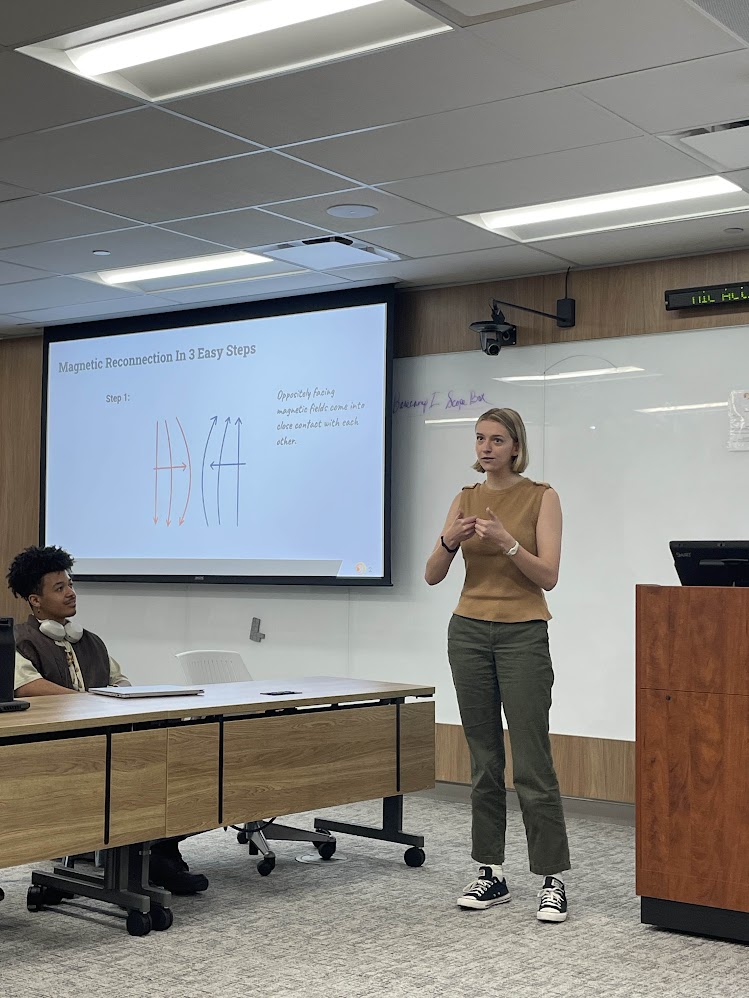
That preparation carried her through multiple high-level research experiences and positioned her for the next step: pursuing a Ph.D. in plasma physics. After being accepted into several top programs, Emma will continue her journey at Cornell University this fall.
As she reflects on her time at Duquesne, Emma is most proud of the relationships she’s built and the moments that defined her experience.
“I’m leaving with countless cherished memories,” she said.
Looking forward, she hopes to make an impact not only through research in astrophysical plasmas, but also through education and outreach—bringing plasma physics into classrooms and inspiring the next generation of scientists.
“Plasma has incredible applications—from fusion energy to space science,” she said. “I want more people to see that—and to get excited about it.”
News Information