

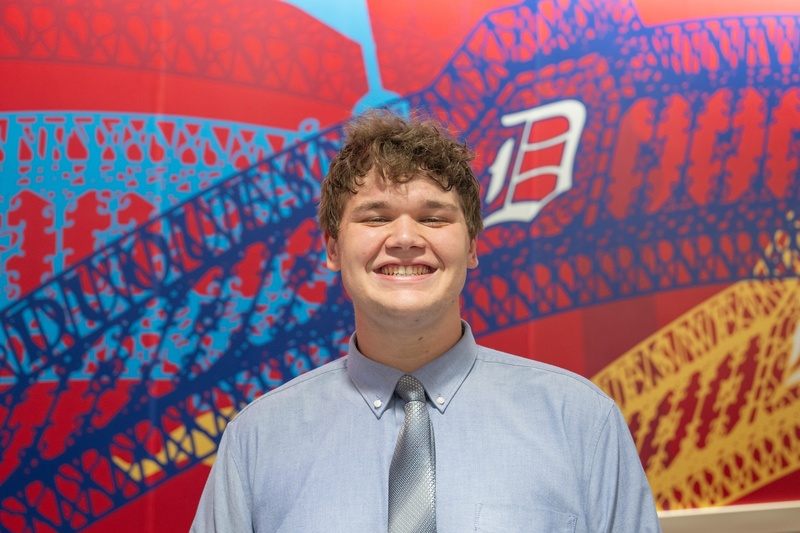
From freshwater research and international study to student mentorship and environmental advocacy, senior Tommy Fortsch is turning his passion for the natural world into a future dedicated to making a difference.
For Tommy Fortsch, a senior Environmental Science major from Bethlehem, Pennsylvania, the path to Duquesne University’s School of Science and Engineering began with a lifelong curiosity about the natural world. Inspired by watching National Geographic growing up, he knew he wanted a career that would keep him connected to the environment. When he toured Duquesne during his junior year of high school, he found more than a promising science program. He found a community that felt like home.
“I was drawn to Duquesne because they were putting a lot of work into improving their science program with new labs,” Tommy said. “When I toured in my junior year of high school, the campus felt like home and everyone genuinely seemed to enjoy themselves.”
Since arriving at Duquesne, Tommy has discovered how an education rooted in hands-on learning, meaningful collaboration and personal growth can prepare students to make a difference far beyond the classroom. Through environmental research, international study, professional experience and campus leadership, he has embraced opportunities to explore new perspectives, develop practical skills and help others find their place in the Duquesne community.
Exploring Environmental Challenges Through Hands-On Research
At Duquesne, Tommy has found that understanding the environment requires more than studying scientific concepts. It means asking questions, gathering evidence and applying knowledge to real-world challenges that affect communities and ecosystems.
A member of Dr. David Kahler’s research lab since his freshman year, Tommy has contributed to projects ranging from remote sensing of the Limpopo Basin in South Africa to research on harmful algal blooms in Chautauqua Lake in western New York. His work on Chautauqua Lake has focused on how groundwater contributes phosphates to freshwater systems, helping researchers better understand factors that can contribute to harmful algal blooms.
To investigate these processes, Tommy has performed Electrical Resistivity Tomography (ERT) to determine the depth of impermeable layers and map groundwater flow. He has also used QGIS software to create detailed surface maps of the lake.
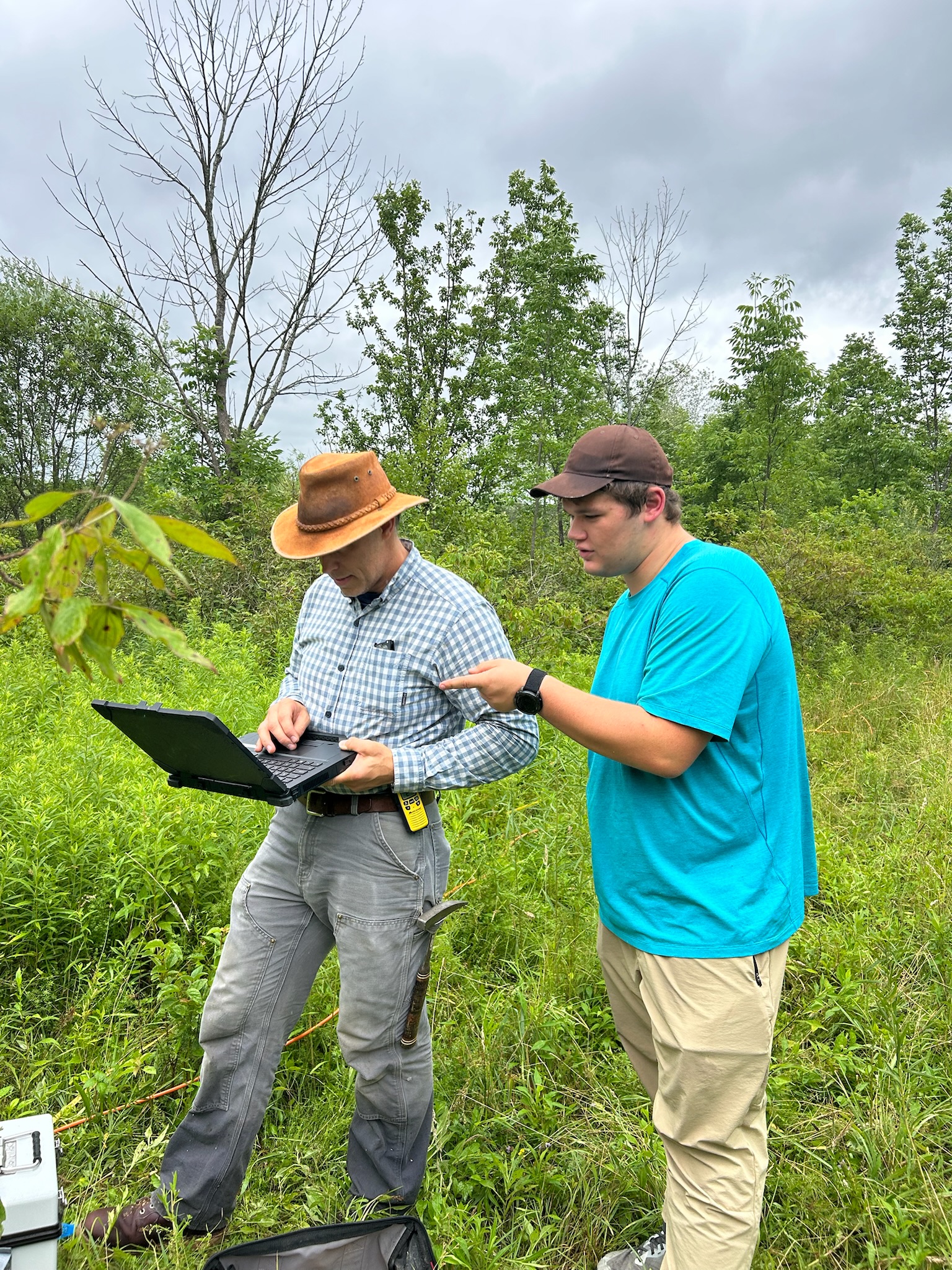
The experience has allowed him to develop technical skills while exploring the interconnected factors that shape environmental health. It has also reinforced the importance of collaboration across disciplines when addressing complex environmental challenges.
“I like that Duquesne’s Environmental Science program is focused on practical research and applications in the real world,” Tommy said. “Studying Environmental Science at Duquesne has deepened my understanding of how working toward a better world requires a variety of disciplines and mindsets.”
His research reflects Duquesne’s commitment to horizon-expanding education: giving students opportunities to move beyond textbooks, investigate questions with real-world implications and discover how their knowledge can contribute to a better future.
A Global Perspective on Environmental Stewardship
Tommy expanded his understanding of environmental science even further during a spring 2025 semester abroad in Dublin. Alongside Environmental Biology and Organic Chemistry, he enrolled in a course on invasive species typically offered only to graduate-level students. Through the course, he researched the potential effects of invasive raccoons on Ireland’s island ecosystem.
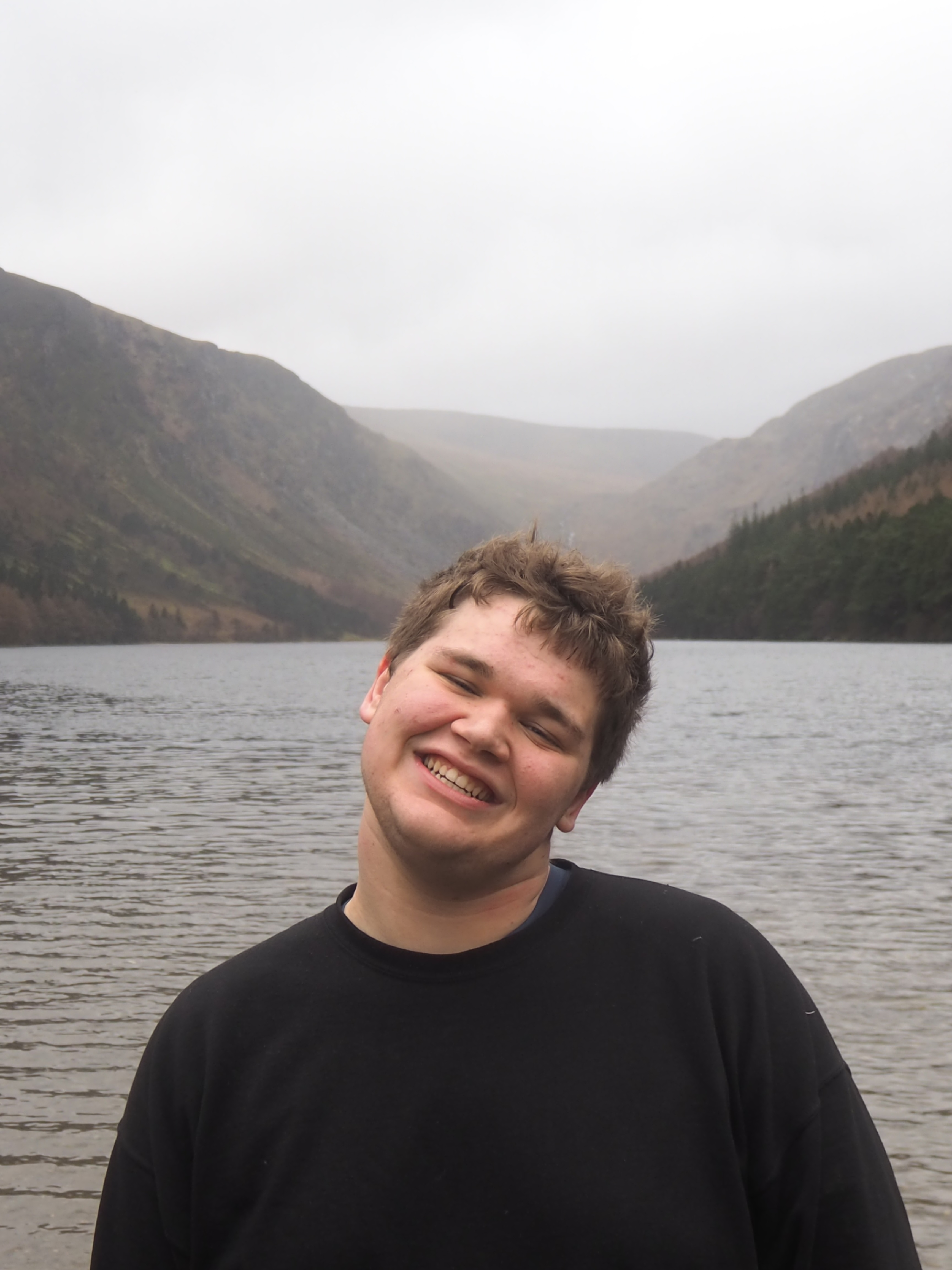
The experience introduced him to new environmental questions while giving him a firsthand look at sustainability initiatives at University College Dublin. Navigating the city also changed how he thought about the relationship between everyday choices and environmental stewardship.
“I used public transportation or walked almost always while abroad, which made me realize how pivotal walkable cities and viable public transportation are to environmental stewardship,” Tommy said.
For Tommy, studying abroad was more than an opportunity to fulfill academic requirements in a new setting. It was a chance to see environmental challenges through a different cultural and geographic lens. By examining sustainability practices in another country, he gained a broader perspective on how communities can approach environmental responsibility.
That willingness to explore unfamiliar ideas is central to his Duquesne experience. Whether investigating groundwater movement in a freshwater lake or examining invasive species abroad, Tommy has learned that meaningful environmental solutions begin with curiosity, adaptability and a willingness to consider different perspectives.
Learning Together Through Mentorship and Community
While research and international study have shaped Tommy academically, the people he has met at Duquesne have been equally influential.
He credits Dr. Kahler with teaching him fieldwork techniques and environmental coding skills he never expected to develop. Dr. Phillip Palmer has helped him navigate the transition to college and provided guidance on both professional and personal matters. Student success coach Dee Dawson has also played an important role, celebrating his accomplishments and offering encouragement during the summers he spent conducting research away from home.
These relationships have shown Tommy how much students can accomplish when they have mentors who recognize their potential and peers who support their growth.
“Being part of the Duquesne Community means being in a group of my peers that truly want the best for you and want to celebrate your accomplishments.”
Tommy has carried that spirit of collaboration into his own leadership roles. As the School of Science and Engineering’s lead student ambassador, he introduces prospective students and their families to campus, sharing the opportunities that have shaped his experience. He also serves as a peer mentor, helping first-year students navigate college and encouraging them to explore undergraduate research and campus resources.
His work as a Resident Assistant, including serving as lead Resident Assistant of Des Places Hall, has given him additional opportunities to build relationships, resolve conflicts and support students as they adjust to college life.
Tommy understands how important those connections can be because he remembers being nervous about starting college himself.
“I remember being so scared to start college, and I remember that the people who made the biggest swing in feeling at home were my RA and my peer mentor,” he said. “In a full-circle moment, I am grateful for the opportunity to give back to Duquesne and be someone’s first point of contact.”
Now, he hopes to offer that same reassurance to others. Whether helping a prospective student picture themselves on campus or encouraging a first-year student to pursue research, Tommy wants others to recognize that they belong and that opportunities are available to help them succeed.
His commitment to supporting others reflects Duquesne’s belief that equity and opportunity begin at home. By sharing his experience, connecting students with resources and celebrating their achievements, Tommy helps create an environment where others can find confidence and pursue their own goals.
Prepared for Anything
Tommy’s experiences at Duquesne have also helped him connect scientific knowledge with the communication, leadership and problem-solving skills needed in the professional world.
During his internship with the Pennsylvania Department of Environmental Protection (PADEP), he drew on concepts from his Water Pollution Prevention and Control course and writing samples from Scientific Writing when preparing Notices of Violation. The experience demonstrated how classroom learning could translate directly into professional responsibilities.
His involvement across campus has strengthened other skills essential to his future career. Balancing academics with his responsibilities as lead student ambassador, president of Working Waters, peer mentor and lead Resident Assistant has sharpened his time-management abilities. Through his work as a Resident Assistant and with Working Waters, he has also developed leadership and conflict-resolution skills.
Together, these experiences have helped him become more confident in his ability to lead, communicate and adapt when faced with unfamiliar challenges.
Tommy plans to continue working with the PADEP or pursue a similar role in state government. He also hopes to attend graduate school for Environmental Engineering and build a career in hydrology.
As he prepares for the next step, he has turned to Duquesne’s Career Center for help organizing cover letters and practicing interviews, adding career preparation to the academic and professional experiences he has gained throughout his undergraduate years.
For Tommy, being prepared for the future means more than mastering scientific methods. It means knowing how to communicate findings, work with others, approach problems from different perspectives and continue learning as new challenges emerge.
Empowering Others to Find Their Path
Looking back on his time at Duquesne, Tommy is proud of the distance he has traveled since his freshman year. He has grown as a student, leader and friend, and he credits the opportunities available through the School of Science and Engineering with helping him discover what he can accomplish.
He is especially proud to have been selected as a STEM Scholar from a highly selective pool of applicants. For him, the recognition represents not only an accomplishment but also an opportunity to make the most of his education.
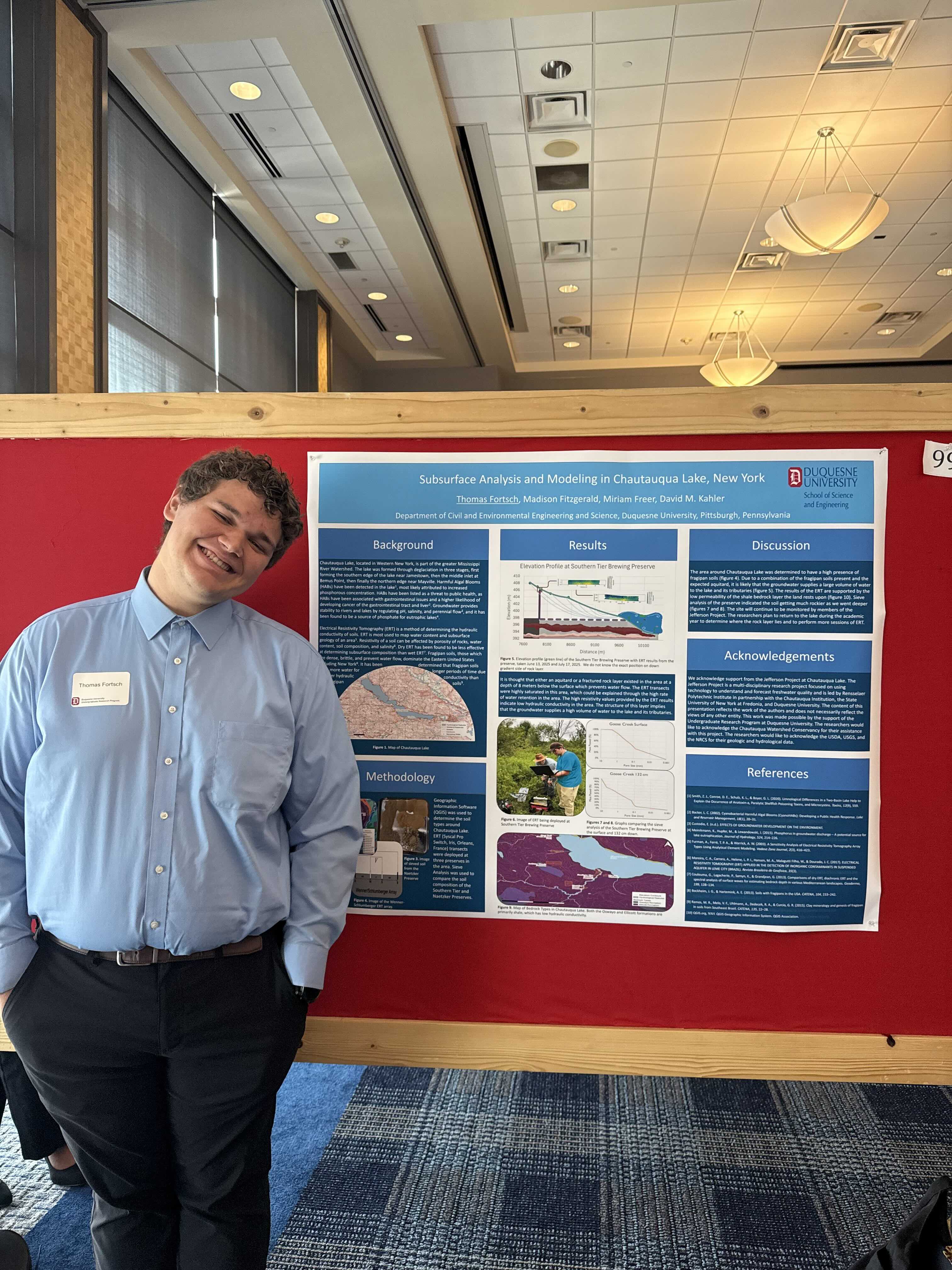
Tommy’s experience illustrates how Duquesne’s promise to Empower. Collaborate. Innovate. can take shape in a student’s everyday life. He has been empowered to explore his interests through research and international study, collaborated with faculty and fellow students to learn and lead, and developed new ways of applying scientific knowledge to environmental questions.
Just as importantly, he is using what he has learned to empower others. Through his work as an ambassador and peer mentor, he helps students see possibilities for themselves and encourages them to take advantage of the resources and relationships available at Duquesne.
His advice to prospective Environmental Science students is this: be willing to explore, even when the next step feels uncertain.
“I would tell someone to go for it, even if it scares them,” Tommy said.
He encourages students to keep an open mind about where their interests might lead. Environmental Science majors take the same general education courses as other School of Science and Engineering students during their first two years, providing time to explore different subjects before narrowing their focus. The field also offers opportunities to connect environmental interests with other areas of science, law, business and beyond.
For students considering the program, Tommy recommends connecting with Dr. David Kahler or Dee Dawson to learn more about studying Environmental Science at Duquesne.
As he looks toward graduate school and a career focused on environmental challenges, Tommy knows his education has given him more than scientific knowledge. It has provided opportunities to discover new interests, relationships that have helped him grow and experiences that have prepared him to contribute to his community.
“Whatever my future holds, I know Duquesne has prepared me for it.”
“Duquesne has given me opportunities, experiences, lessons, and friendships that will stay with me forever.”
News Information