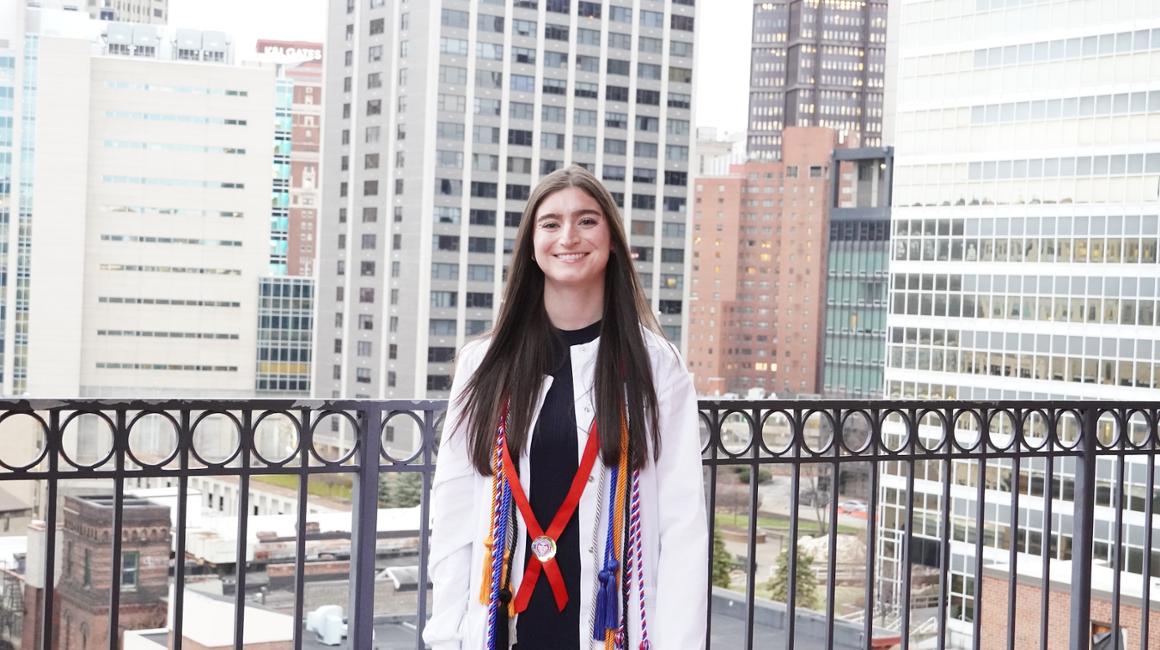
When Francesca Fisher graduated from Duquesne University’s accelerated second-degree nursing program in December 2025, she wasn’t just earning a diploma—she was stepping confidently
into a future defined by purpose and service.
Choosing Nursing with Intention
After earning a degree in kinesiology, Francesca knew she wanted a career in medicine—but
she wasn’t yet sure which path to take. “I ultimately chose nursing because I wanted
more hands-on interaction with patients,” says the Centreville, Md., native. “I really
love being directly involved in the healing process.”
That choice led her to the Duquesne’s School of Nursing—known for strong NCLEX outcomes, rigorous preparation and a mission-centered approach
to care. The University’s park-like campus in Pittsburgh also stood out. “It felt
like the best of both worlds—set apart from the city but right in the middle of everything.”
From Calling to Commission
Inspired by her Navy-veteran mother and growing up near the U.S. Naval Academy, Francesca
always felt drawn to serve. Acceptance into the Navy’s highly competitive Nurse Candidate
Program—which provides scholarship support in exchange for eight years of active-duty
service—confirmed her direction and recognized her potential.
She applied for and received multiple scholarships, which she credits for helping
afford a second degree. Francesca also earned support within the accelerated second-degree
program as a Conway scholar—an initiative designed to expand access and strengthen the nursing workforce. The
16-month curriculum challenged her academically while surrounding her with faculty
mentors deeply invested in her success.
“I often met with my mentor and went to Conway Scholar events to help guide me through
school. Duquesne provides many extra opportunities to help students succeed,” she
says. “I learned that I am capable of much more than I realized.”
Growing Through Clinical Practice
Through clinical rotations in pediatrics, labor and delivery, critical care and more,
Francesca sharpened her clinical judgment across diverse health care settings. The
pace required discipline, resilience and teamwork—qualities essential in military
nursing.
“The holistic approach at Duquesne really stood out,” she said. “It wasn’t just about
tests and clinicals. It was about caring for the whole person, including us as students.”
That culture of mentorship and shared learning helped her grow not only as a clinician,
but as a confident leader prepared to serve others with skill and compassion. “At
Duquesne, it felt like we were all in this together, encouraging and supporting one
another.”
A Running Start on a Meaningful Career
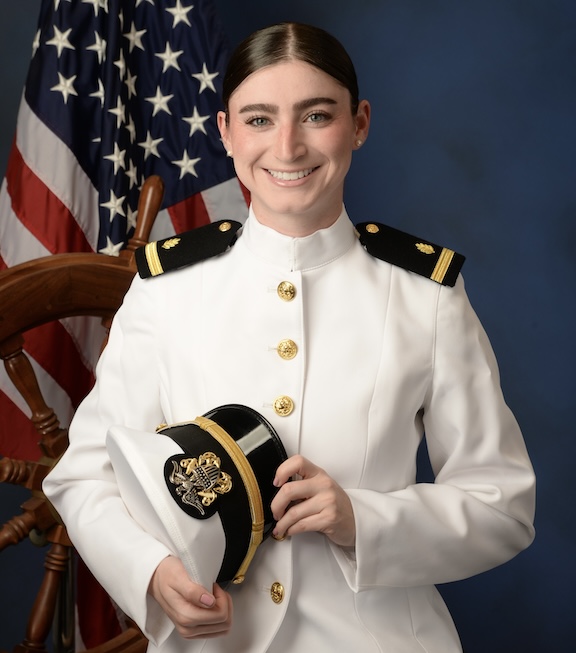
Francesca Fisher in her United States Navy Service Dress White uniform.
After passing the NCLEX exam on her first attempt, Francesca is completing Officer
Development School in June before transitioning to active duty. She will then begin
caring for service members and their families at the Alexander T. Augusta Military
Medical Center on Fort Belvior in Fairfax County, Virginia—bringing her Duquesne education
directly into military nursing.
“Military nursing is set apart from civilian medicine because of its unique patient
population and environment,” Francesca said. “The goal is not only recovery, but readiness
for the mission.”
Guided by bigger goals, Francesca looks forward to stepping into military medicine
prepared for anything. “I plan to spend my entire nursing career in the Navy, and
I can’t wait,” she said.