

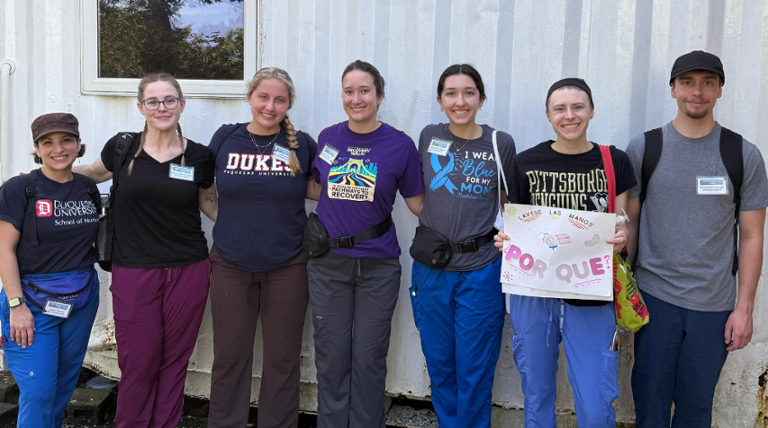
“At Duquesne, service is a cornerstone of our nursing education,” says Dr. Kate Deluca, School of Nursing Associate Dean for Student and Alumni Affairs. “We have a very active student body. Our students don’t wait to make a difference until after graduation; they engage, serve and lead in the community from the beginning.”
What sets Duquesne nursing students apart isn’t just their didactic and clinical knowledge — it’s their heart for service, their courage to lead and their drive to make a lasting impact on their community.
For nursing students at Duquesne, this commitment to service is more than words — it’s woven into daily life. Each year, faculty, staff and students give back through countless hours of volunteer work, student leadership and community engagement. These experiences don’t come from a textbook, but they are no less essential to a nurse’s education.
For students, opportunities to serve are everywhere: representing classmates, leading initiatives or volunteering through one of the University’s 300 student organizations. Beyond résumé building, these experiences deepen connections to peers, the University and the wider community.
“You can put it on your résumé, and that’s great, but it goes so far beyond that personal aspect,” says rising senior and class representative Dylan Aviles. “It’s inspiring to be part of the broader community. You share perspectives, support each other, and learn to care for mental and emotional health, too. And if you’re going into a profession built on helping people, why not start now?”
Student Leaders in Action
This year, Aviles serves as one of six student representatives, a role that annually serves as a bridge between students and faculty. They organize volunteer opportunities, show new students around campus and plan events like graduation.
“I figured it was a good opportunity to put myself out there,” Aviles says. “I don’t want to just talk to people in my program. I enjoy building that sense of community.” That commitment extends beyond his role as class representative. Aviles recently volunteered through the Health Professions Society, making wound care packages for people experiencing homelessness — an experience that reflects his broader vision for nursing.
Looking ahead, Aviles plans to move to Philadelphia to pursue a career in pediatric emergency medicine. “I want to continue to support the community in any way I can,” he says.
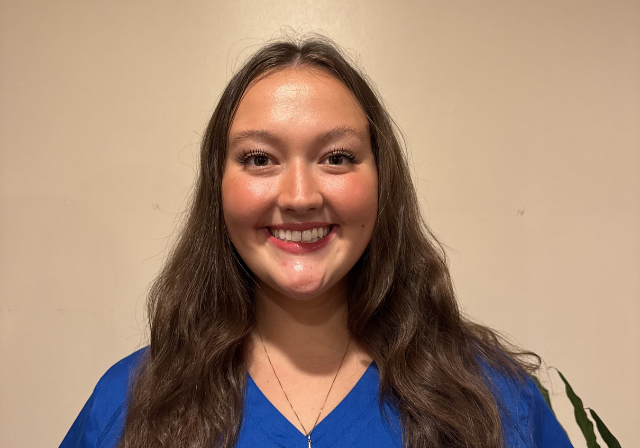
“So many freshmen and sophomores don’t have their footing yet,” Maida says. “ATD gives them a place to belong. That can really make or break your educational experience.” Looking ahead, Maida hopes to work as a labor and delivery nurse and eventually return to school to earn her master’s degree so she can teach. She plans to stay involved with the organizations that have shaped her experience and values at Duquesne.
ATD also partners with the Duquesne University Student Nurses’ Association (DUSNA), which focuses on both local and national service. Each year, members join nursing students from across the country at the National Student Nurses’ Association conference, drafting resolutions to address pressing public health issues.
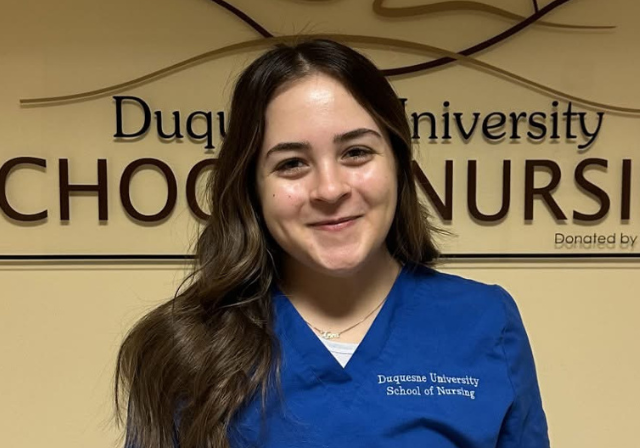
“We’re always looking for people who want to write resolutions, build leadership experience or just be part of the community,” says rising senior and DUSNA president Brianna Kotek. “This is a safe space for nursing students to come if they want to meet people, get help with studying or even just talk on a rough day.”
Balancing Act
With the demands of nursing school, time is the biggest obstacle to getting involved. But students say the rewards outweigh the challenges.
“Finding time to balance everything is important,” Aviles says. “If you prioritize giving back, you just make it work.”
Maida agrees. “It is hard to balance school, friendships and involvement. But once you find your people with common goals and values, it actually lowers stress. You feel more comfortable and supported.”
For her, involvement has also built confidence. “I’ve spoken in front of 200 people and organized meetings. It was scary at first, but it opened so many doors. If I hadn’t done this, I would have regretted it.”
Built Different
That commitment to service is one of the reasons employers consistently remark that Duquesne nurses are “built different” — critical thinkers who also lead with empathy and compassion.
“DUSNA didn’t just bring me friends; it gave me leadership and communication skills,” Kotek says. “These are skills I’ll carry into my professional life — how to form a community from a diverse group of people, and how to learn from others.”
For Kotek, service is also personal. “When I was young, my grandparents were in the hospital, and I saw how the nurses gave back to them. It was beautiful. Now, it’s important for me to do the same. It gives me such joy to make a difference in someone’s life.”
Looking ahead, Kotek has accepted a position as a graduate nurse on the neuro-trauma unit at UPMC Presbyterian. She plans to remain involved as a DUSNA alumna and hopes to return to campus to share her experiences as a new nurse.
As these students prepare to enter the nursing profession, the service experiences that shaped their college years will continue to guide their practice. The leadership skills Maida developed while organizing ATD events, the community-building abilities Kotek honed through DUSNA and Aviles’ commitment to bridging different groups together will make each of them stronger nurses who carry a deep understanding of community, leadership and advocacy. They will be the compassionate leaders that the health care field so desperately needs today.
News Information