
Forensic Science and Law MS
Duquesne University’s Master of Science (MS) in Forensic Science and Law is the nation’s only accredited 4+1 forensic science program, offering an accelerated pathway for students to earn both a bachelor’s and master’s degree. With a strong science-based curriculum, FEPAC accreditation and a commitment to career preparation, the program equips students with the scientific expertise, practical experience and critical thinking skills needed to pursue careers in forensic science and related fields.
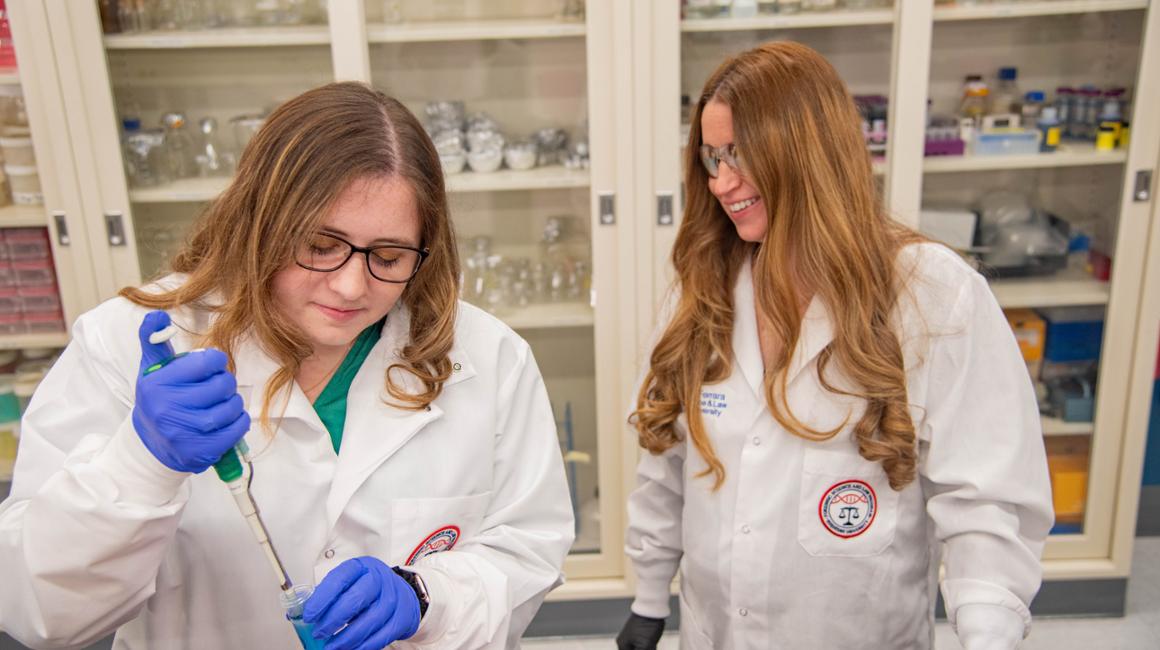
As a Forensic Science and Law student, you’ll gain hands-on experience in a wide range of forensic disciplines, including crime scene investigation, DNA analysis, forensic toxicology, pathology and instrumental analysis. You’ll also explore the intersection of forensic science and law, learning about evidence handling, chain of custody, courtroom procedures and expert testimony. Courses in statistics and critical thinking further develop your ability to analyze evidence, interpret findings and communicate scientific conclusions.
Undergraduate research is a required component of the program, giving you opportunities to work on research projects tailored to your interests with support from experienced faculty. Faculty members specialize in diverse research areas, including DNA analysis and interpretation, sexual assault and violence cases, and fire and explosives investigations. Through research and hands-on laboratory training, you’ll develop practical skills while exploring the scientific questions and investigative techniques that shape the field.
Located in Pittsburgh, Duquesne offers a learning environment shaped by a strong program reputation, dedicated faculty and opportunities to connect classroom learning with professional practice. Alumni frequently identify DNA analysis, hands-on laboratory training, research experience and the integration of forensic science and law as some of the program’s most valuable learning experiences.
Graduates pursue careers as forensic scientists, crime scene investigators, forensic toxicologists and digital forensic analysts, applying their knowledge in crime laboratories, government agencies, private industry and research institutions. Whether you plan to enter the workforce after graduation or pursue doctoral research and other advanced studies, the Forensic Science and Law program prepares you to approach complex challenges with scientific rigor, ethical judgment and confidence.
Prepared for the Next Step
Forensic Science and Law graduates report strong preparation in scientific reasoning, laboratory competency, ethics and research. Alumni ratings reflect the skills and experiences they developed through the program.
|
Skill Area |
Average Rating |
|
Ethical Decision-Making |
4.58/5 |
|
Critical Thinking & Problem Solving |
4.18/5 |
|
Laboratory Skills & Instrumentation |
4.15/5 |
|
Research Skills |
4.06/5 |
Program Information
Duquesne's MS in Forensic Science and Law is the nation’s only accredited 4+1 forensic science program, combining hands-on forensic training, legal expertise, and research experience to prepare graduates for careers as forensic scientists, crime scene investigators and digital forensic analysts.
Program Type
Dual Degree
Degree
Bachelor's, Master's
Academic Department
Forensic Science and Law
Duration
5 years
Required Credit Hours
131 (BS Biochemistry), 26 (MS Forensic Science and Law), 157 Total Credits
Modality
In-Person
A defining feature of the program is the opportunity to engage in faculty-led research
that reflects current challenges and innovations in forensic science. You’ll work
on projects that connect laboratory science, emerging technology and real-world case
applications.Research Opportunities
Questions? Contact Us!

Outcomes Matter
Real Students. Real Forensic Science.
Step Inside Our Forensic Science and Law Program
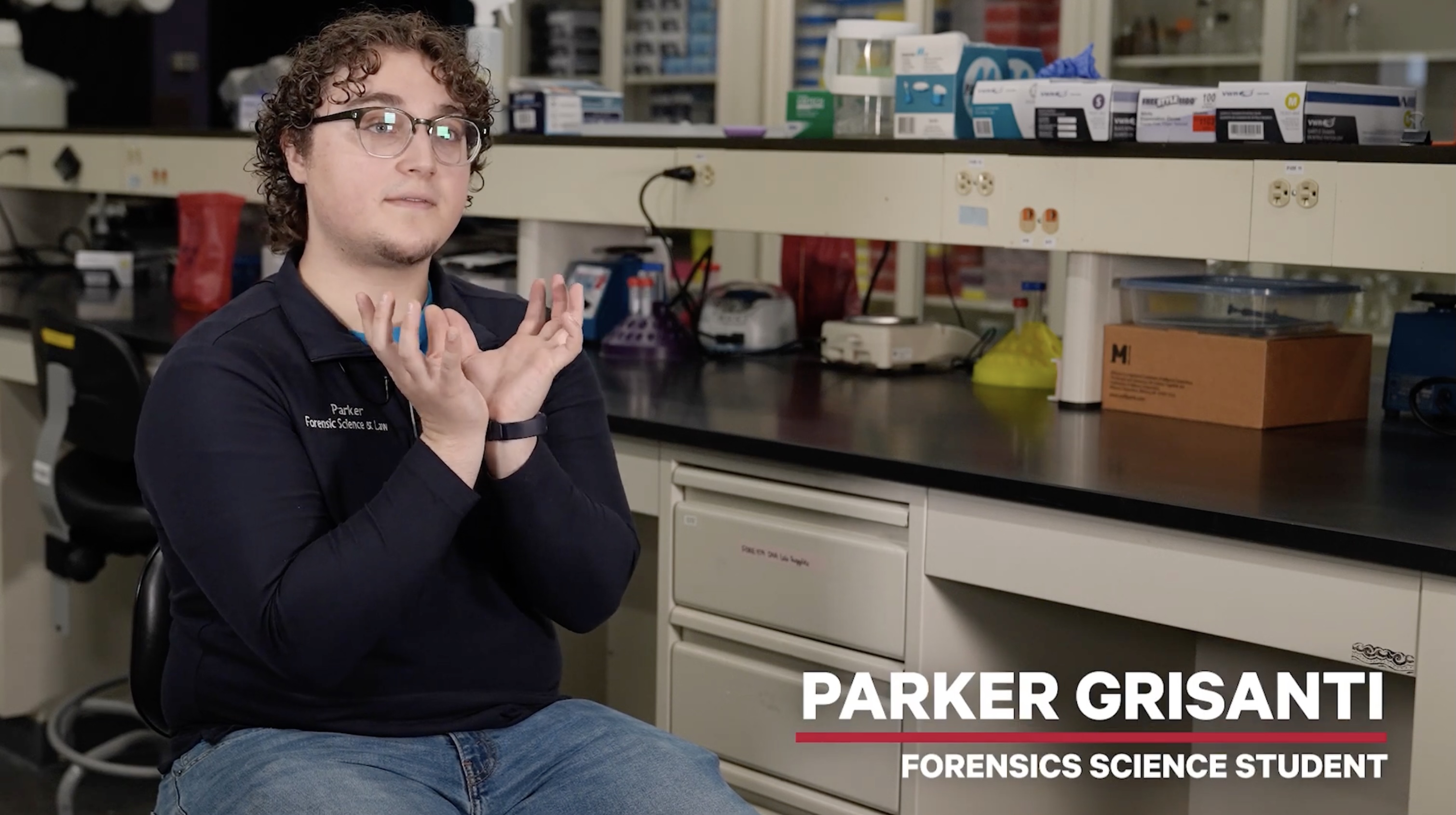
Students inspired by shows like NCIS share how Duquesne’s Forensic Science and Law program prepare them for exciting careers.
See What Makes Our Program Unique
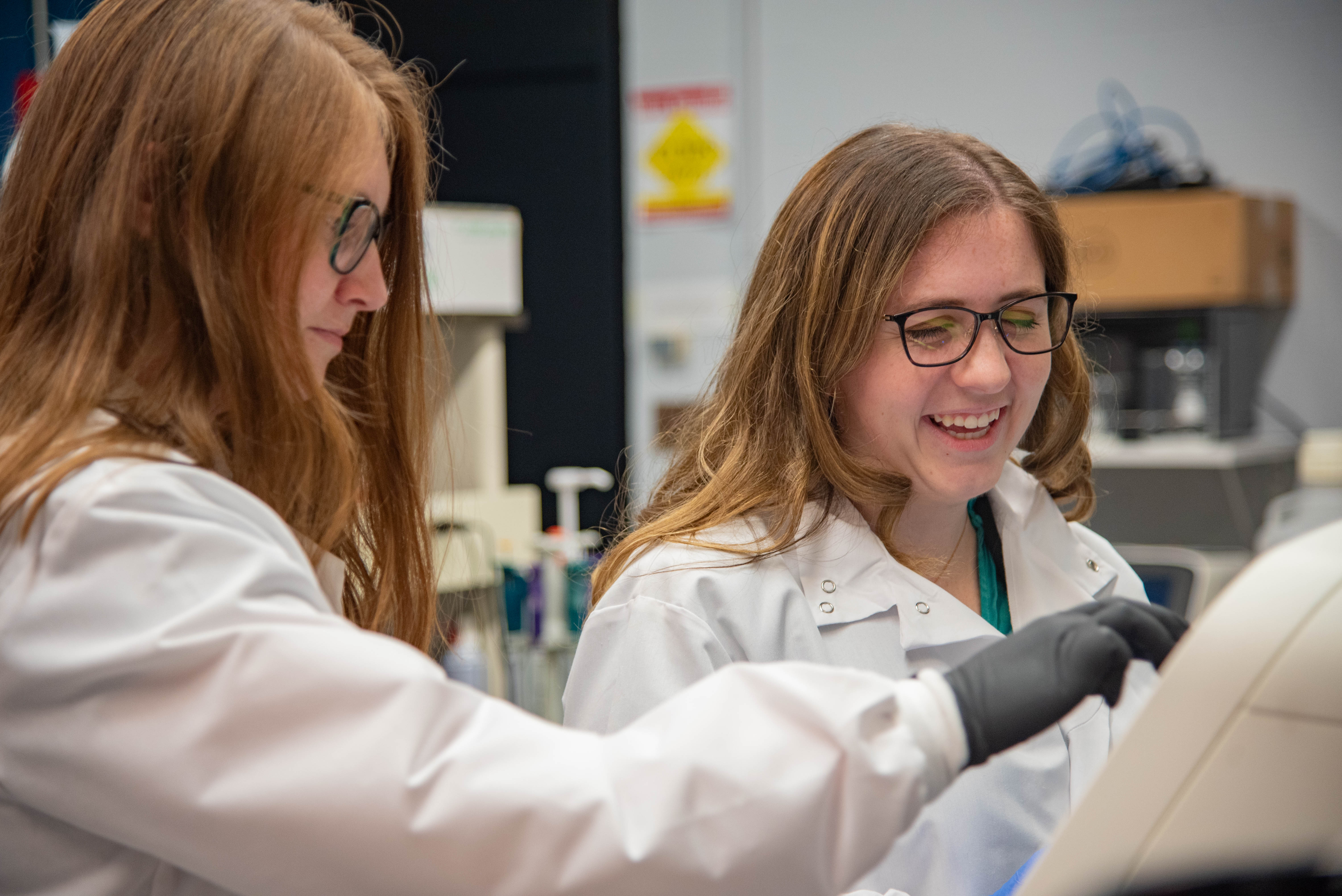
Forensic Science and Law students share how the program provides personalized, one-on-one support from faculty with extensive expertise in the field.
Student Publications
Where Can a Forensic Science and Law Degree Take You?
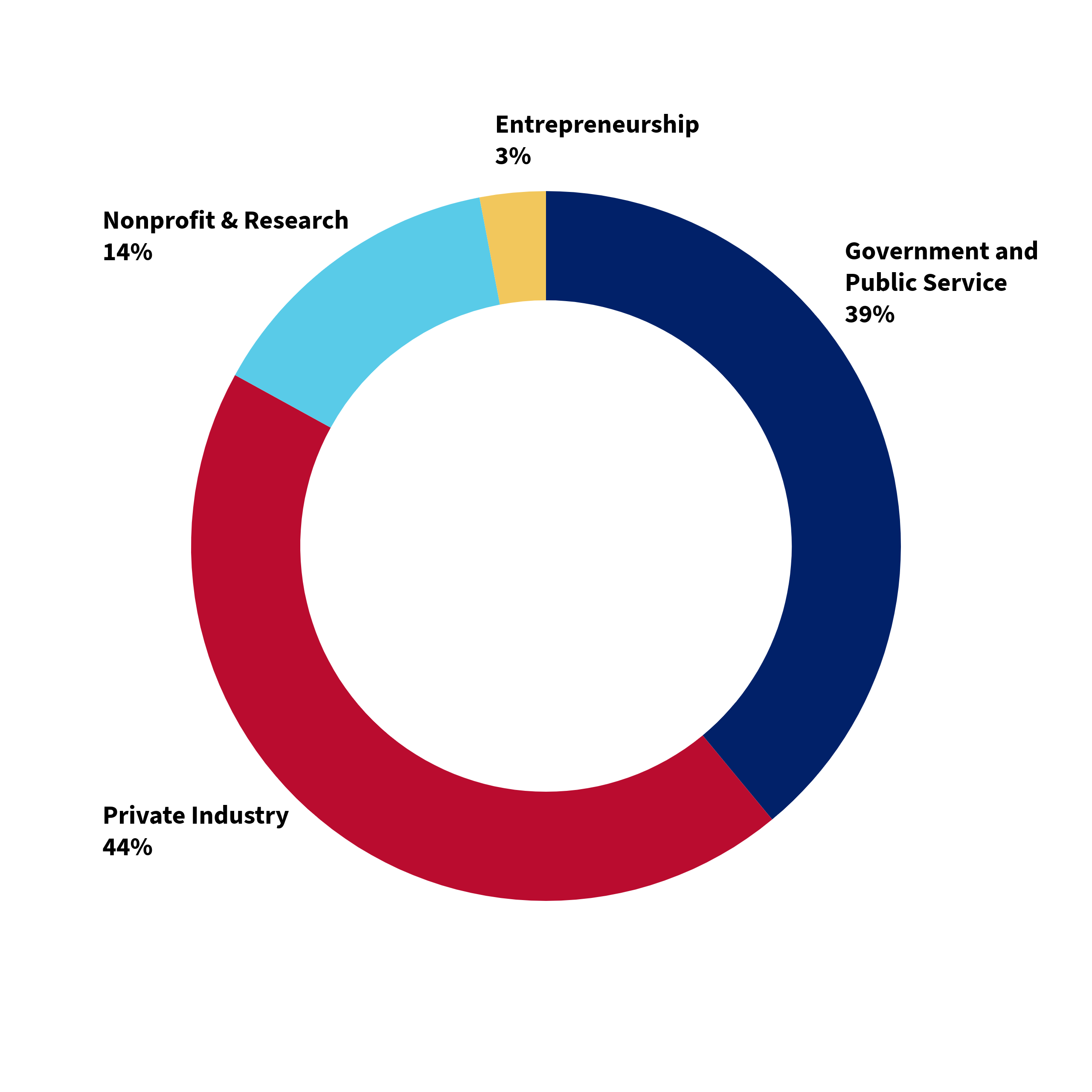
Employers and Career Paths
Forensic Science and Law alumni pursue careers in government, private industry, research and entrepreneurship, applying their expertise in a variety of professional settings. Graduates have gone on to work for organizations such as the FBI, state crime labs, medical examiner offices, U.S. Customs and Border Protection, police forensic laboratories, the Armed Forces Medical Examiner System, Thermo Fisher Scientific, Corteva Agriscience, Castle Biosciences, DrugScan, Restek, the aerospace industry, the American Museum of Natural History and the Association of Public Health Laboratories (APHL). Other alumni work at research institutions or own private law practices.
What’s Next for the Class of 2026?
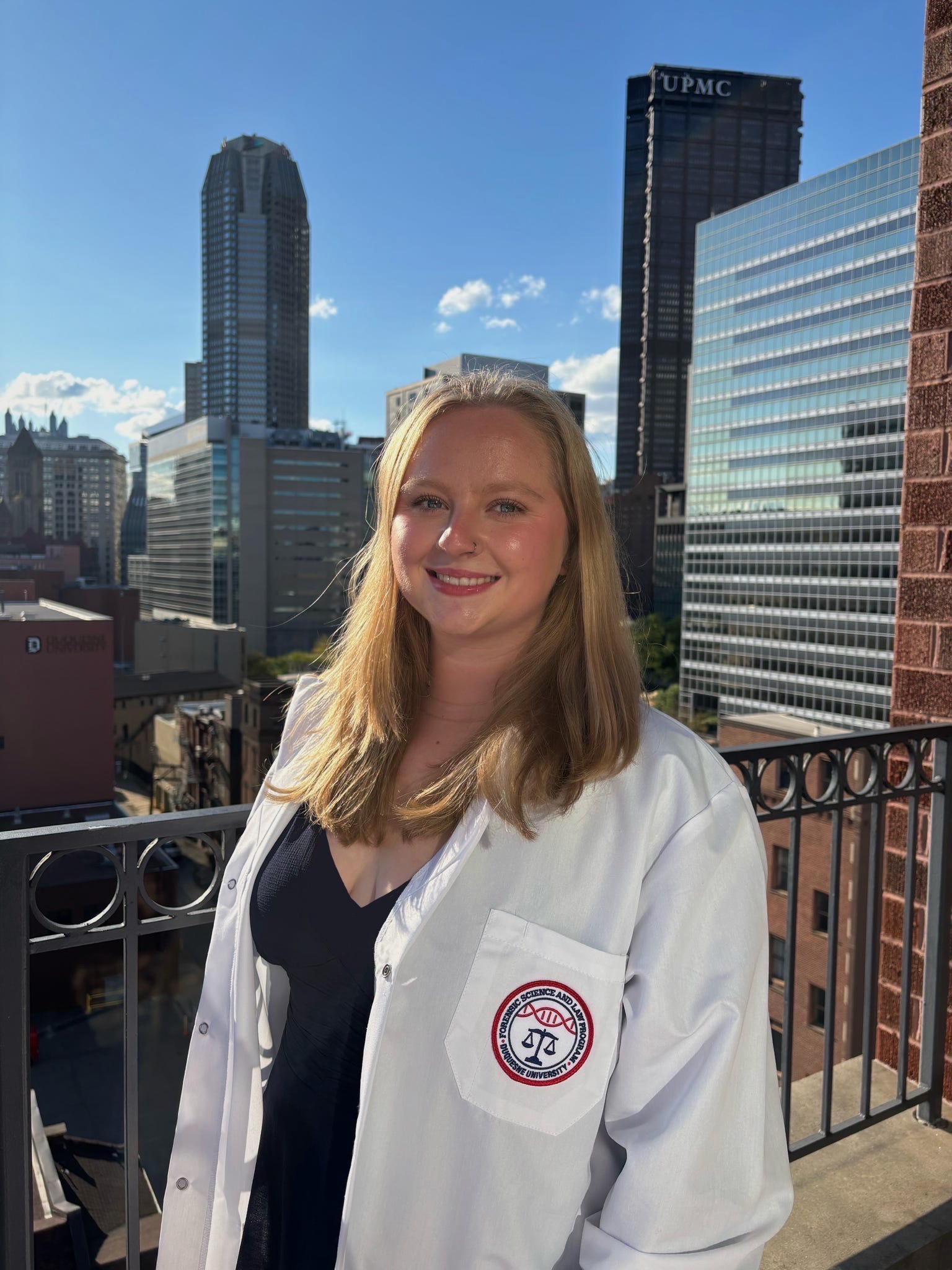
Every class played a role in preparing me. I felt confident applying what I learned to my internships and now to my profession. I am working for New York Life in their Accidental Death and Dismemberment section after graduation.
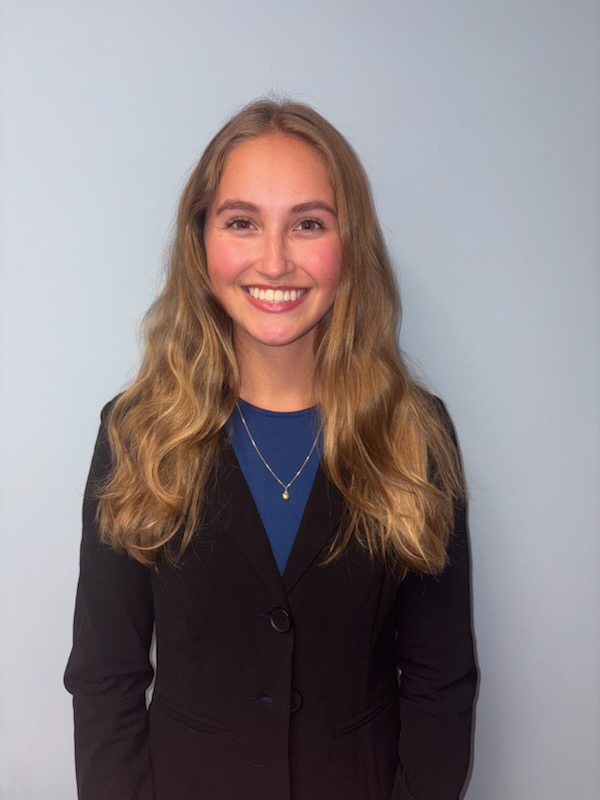
This program taught me to be confident in my decisions as a student and a scientist. Running my own research project is one of my proudest achievements and I look forward to it helping our community! Following graduation, I will be an Associate Scientist II at QPS Holdings.
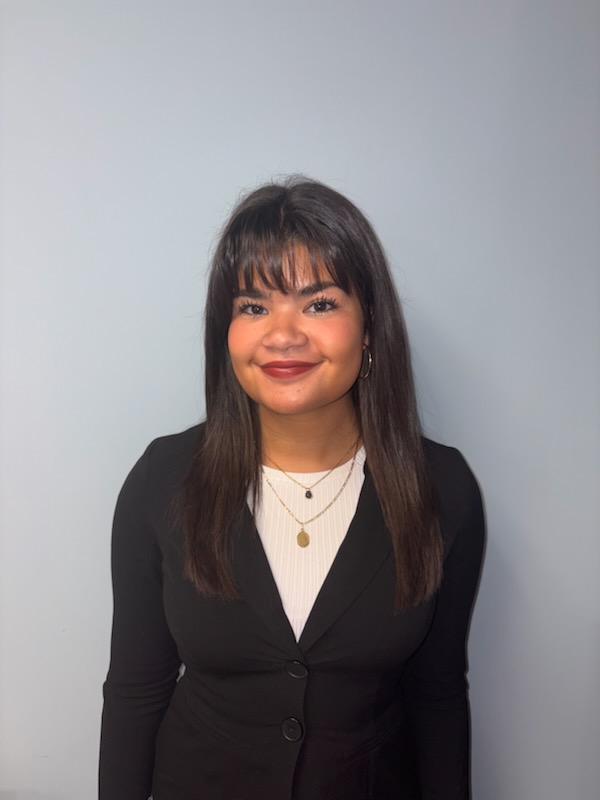
The FSL program helped me turn curiosity into evidence-based truth while teaching me to trust my skills and stay inquisitive. Following graduation, I will be joining the South Carolina Law Enforcement Division (SLED) as a Criminalist I in the Forensic Services – Drug Analysis Department.

My favorite memories from program include attending the AAFS conference two years in a row to present two different research projects, as well as traveling to Portland for the SOFT conference to present my master’s thesis. After graduation, I will be working for the Pennsylvania State Police.

I have discovered my strengths, passions and goals. My favorite memory was participating in a study abroad experience in wildlife forensics in South Africa. After graduation, I will be working as a lab analyst at Metiri Group in Kittanning, PA, performing environmental health testing for water, air and soil quality.
My favorite part of the Forensic Science and Law Program has been the opportunity to build meaningful, lasting connections. The support from my peers has been extremely valuable. After graduation, I will be working with Microbac Laboratories as a Microbiology Analyst I.
My favorite memory from the Forensic Science and Law Program is taking a road trip to New Orleans to present my master’s research at the AAFS conference. Following graduation, I will work in latent print analysis.
One of the most impactful aspects of the program has been the opportunity to connect with such supportive faculty. The program has enhanced my forensic science knowledge and skills. Following graduation, I plan to continue working as a Casework Coordinator at the Allegheny County Medical Examiner’s Office.
Student Success and Outcomes
Research Outcomes
See the research conducted by our Forensic Science and Law students at our previous graduate research symposiums.
Graduation Rates
| Year of Graduation | Number of students entering the 3rd year | Number of students graduating the 5th year | Percentage of students earning the Master of Science Degree |
| 2026 | 19 | 15 | 79% |
| 2025 | 14 | 13 | 93% |
| 2024 | 30 | 25 | 83% |
| 2023 | 32 | 26 | 81% |
| 2022 | 32 | 25 | 78% |
| 2021 | 17 | 15 | 88% |
| 2020 | 21 | 16 | 76% |
| 2019 | 20 | 18 | 90% |
| 2018 | 19 | 16 | 84% |
| 2017 | 25 | 21 | 84% |
Employment Rates
|
Year of Graduation |
Number of enrolled students |
Percentage of Students employed between 12-18 months in a forensic science and/or science-related position |
Percentage of students continuing their education in law, medicine, or research | Percentage of students who were unreachable or didn't respond |
Total % |
| 2026 | 134 | 80% (5 months after graduation) | 0% | 0% | 80% |
| 2025 | 152 | 69% | 8% | 23% | 100% |
| 2024 | 145 | 80% | 12% | 0% | 92% |
| 2023 | 152 | 84% | 4% | 12% | 88% |
| 2022 | 159 | 84% | 8% | 8% | 92% |
| 2021 | 147 | 93% | 7% | 0% | 100% |
| 2020 | 143 | 81% | 13% | 6% | 94% |
| 2019 | 146 | 89% | 6% | 5% | 95% |
Suggested Course Sequence
Suggested course sequence for the Forensic Science and Law program.
To assist in achieving your academic goals, we recommend the following course sequence.
Please review the Forensic Science and Law Program's Academic Integrity Policy. All students must read and acknowledge the policy by signing it as part of the program
requirements.
- IFSL 100 Undergraduate Seminar l (1 credit)
- FORE 105 FIRST Colloquium (0 credits)
- CHEM 151 Atomic and Molecular Principles (4 credits)
- CHEM 151L Intro Chemistry Lab I (1 credit)
- MATH 115 Calculus I (4 credits)
- BIOL 111/L Biology I/Lab (4 credits)
- BRDG 101 Writing and Analysis (3 credits)
- BRDG 100 Research & Information Skills (1 credit)
- FORE 106 FIRST Colloquium (0 credits)
- CHEM 152 Quantitative Analysis (4 credits)
- CHEM 152L Quantitative Analysis Lab II 1
- MATH 116 Calculus II (4 credits)
- BIOL 112/L Biology II/Lab (4 credits)
- BRDG 102 Writing and Literature (3 credits)
- FORE 101 Forensic Science & Criminal Law
- CHEM 211 Organic Chemistry I (3 credits)
- CHEM 211L Organic Chem Lab I (1 credit)
- PHYS 201 Physics Life Science I (3 credits)
- PHYS 201L Physics Lab I (1 credit)
- BIOL 212 Cell and Molecular Biology (4 credits)
- BIOL 212R Cell and Molec Bio Rec (0 credits)
- ENGL 302W Scientific Writing (3 credits)
- EQ xxx Essential Questions Seminar (3 credits)
- FORE 205 FIRST Colloquium (0 credits)
Spring Semester
- CHEM 212 Organic Chemistry II (3 credits)
- CHEM 212L Organic Chem Lab II (1 credit)
- PHYS 202 Physics Life Sciences II (3 credits)
- PHYS 202L Physics Lab II (1 credit)
- MATH 225 Biostatistics I (3 credits)
- FORE 201 Phil Ethics of Law (2 credits)
- IFSL 200 FSL UG Seminar II (1 credit)
- FORE 206 FIRST Colloquium (0 credits)
- CHEM 340 Instrumental Analysis (3 credits)
- CHEM 401 Biochemistry I (3 credits)
- CHEM 301 Phys Chem Life Sci (4 credits)
- MATH 335 Biostatistics II (3 credits)
- FORE 410 Forensic Invest I (2 credits)
- FORE 301W Wrongful Convictions (2 credits)
- FORE 300 Professional Dev I (0/1 credits)
- CHEM 371W/R Forensic Chem Lab (3 credits)
- CHEM 402 Biochemistry II (3 credits)
- CHEM 305 W/R Advanced Lab Skills (1 credits)
- FORE 479 Forensics Molec Biology (3 credits)
- FORE 411 Forensic Invest II (2 credits)
- BRDG 105 Intro to Ethical Reasoning (3 credits)
- FORE 320 Professional Dev II (0/1 credits)
- CHEM 514W/R Adv Forensic Chem Lab (3 credits)
- FORE 530W DNA Methods/Pop Gen (4 credits)
- FORE 401 American Legal History (1 credit)
- FORE 402 Torts (1 credit)
- BIOL 577 Forensic Human Genetics (3 credits)
- FORE 540 Constitutional Crim Proc (1 credit)
- Bridges course - Cultural Fluency/Theology (3 credits)
- SPRG 108 Service Learning in Science (0 credits)
- FORE 400W Professional Dev III (1 credit)
- FORE 480 Independ Research Forensics (1 credit)
- FORE 585 Crim Case Review & Evidence Admis (1 credit)
- FORE 510 Ethics in Forensic Sci/Prof Resp (1 credit)
- FORE 522 QA & Lab Admin Management (2 credits)
- FORE 420W Professional Dev IV (1 credit)
- FORE 480 Independ Research Forensics (1 credit)
- FORE 535 Evidence/Case Management (1 credit)
- Bridges course - Social & Hist Reasoning/Phil (3 credits)
- General Elective (3 credits)
- FORE 501 Trace Evid/Environmental (3 credits)
- FORE 521 For DNA Anly/Interpretation/Statistics (3 credits)
- FORE 541 Latent Print Analysis (1 credit)
- FORE 550 Seminar/Journal Club (1 credit)
- FORE 610 Trace Evidence App Lab (1 credit)
- FORE 620 Serology/DNA App Lab (1 credit)
- FORE 650 Adv DNA Topics: Non Hum DNA (1 credit)
- IFSL 560 Forensic Anatomy (1 credit)
- FORE 575 Advncd Forensic Investigations (1 credit)
- FORE 500 Internship (Optional) (0 credits)
- FORE 511 Forensic Drug Analysis (2 credits)
- FORE 513 Firearm Examination and Identif (2 credits)
- FORE 525 Forensics Toxicology (3 credits)
- FORE 545 Explosives & Ars Investigations (2 credits)
- FORE 555 Expert Qualification (1 credit)
- FORE 630 Chem/Tox/Ars App Lab (1 credit)
- FORE 640 Research Defense (1 credit)
- FORE 660 Forensic Science & Law Comp (0 credits)
- IFSL 565 Forensic Pathology (1 credit)
Duquesne’s Forensic Science and Law master’s program is fully accredited by the Forensic
Science Education Programs Accreditation Commission (FEPAC), part of the American
Academy of Forensic Sciences. This accreditation recognizes programs that meet the
highest standards of forensic science education.
Learning Outcomes
Accreditation