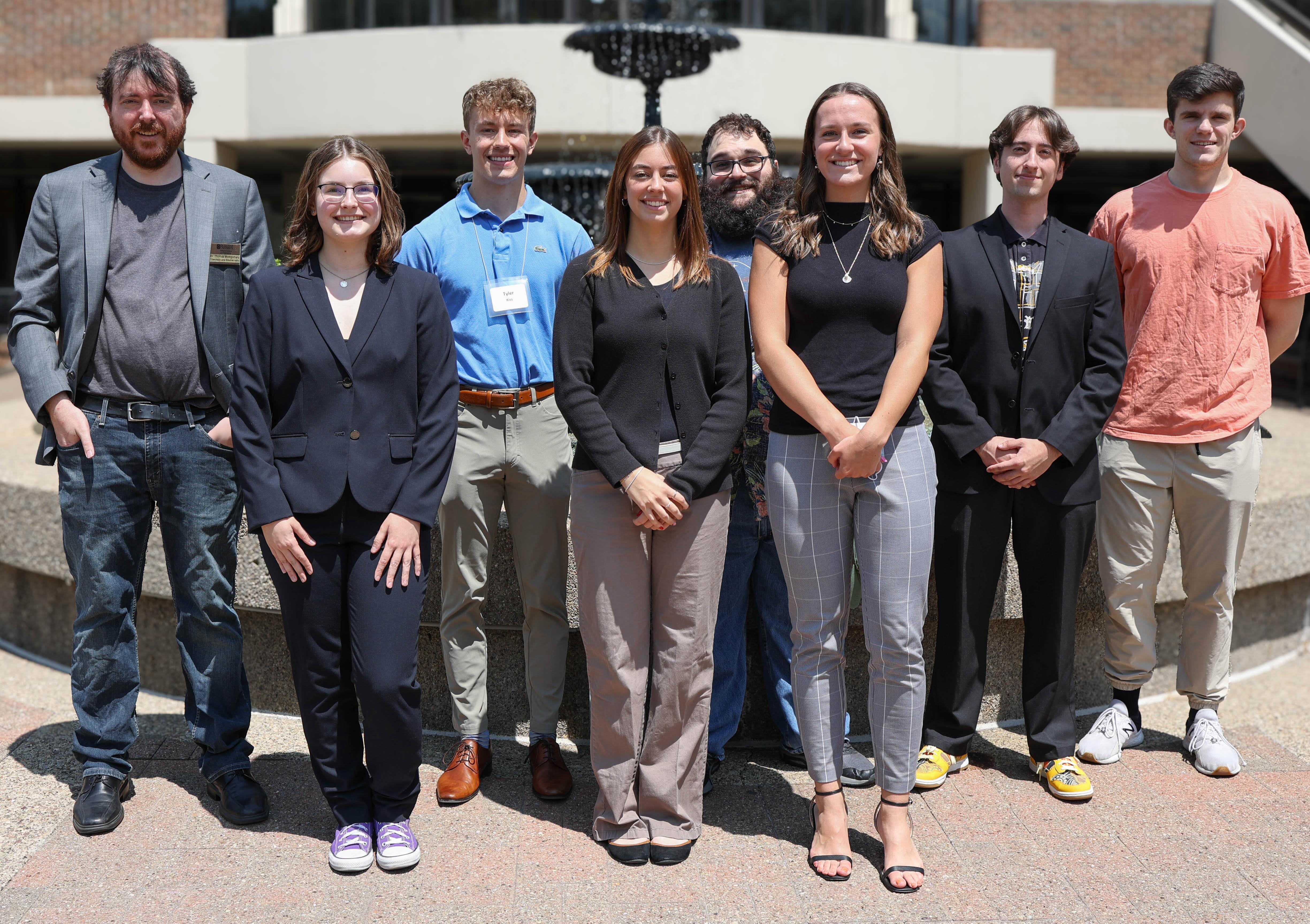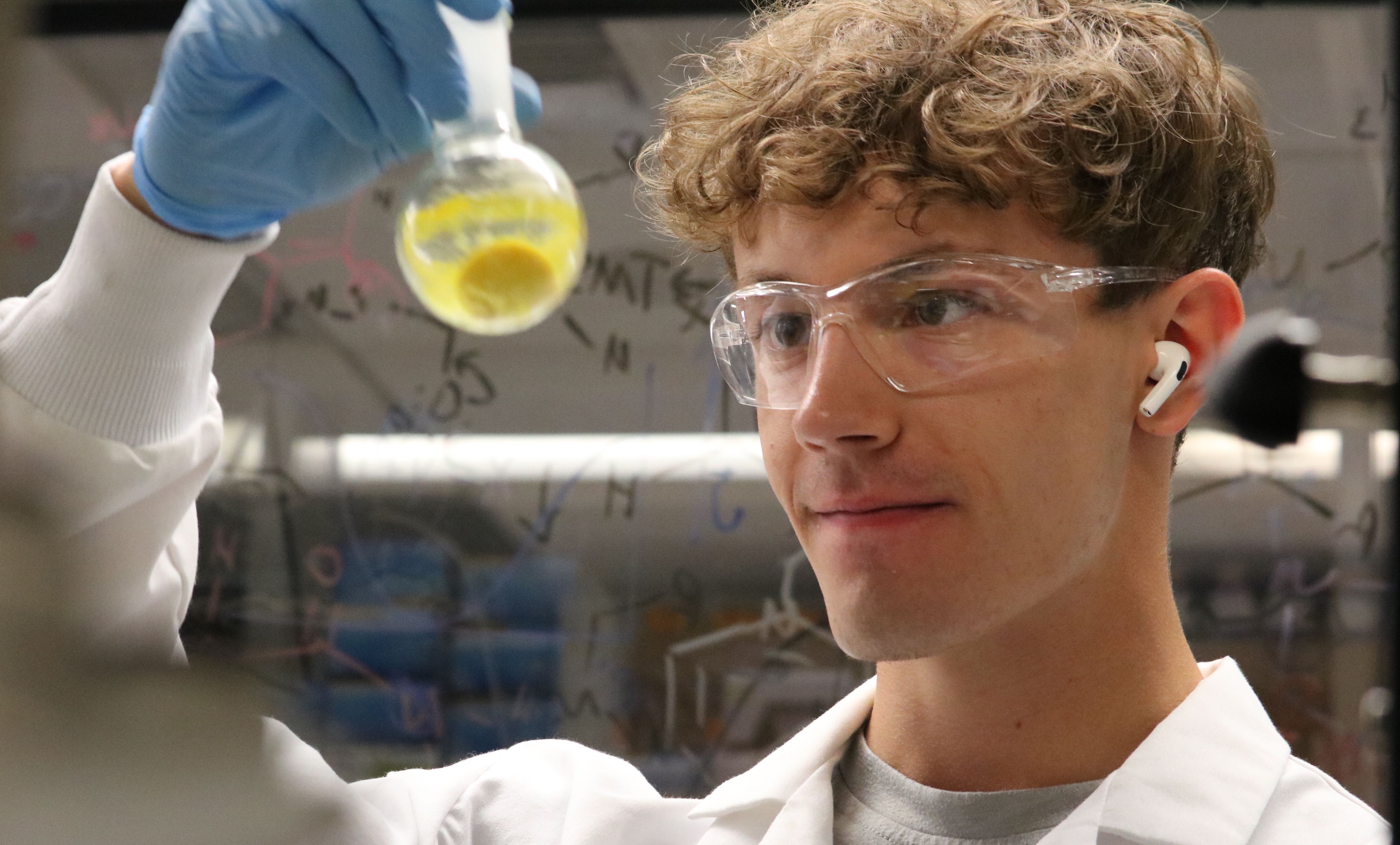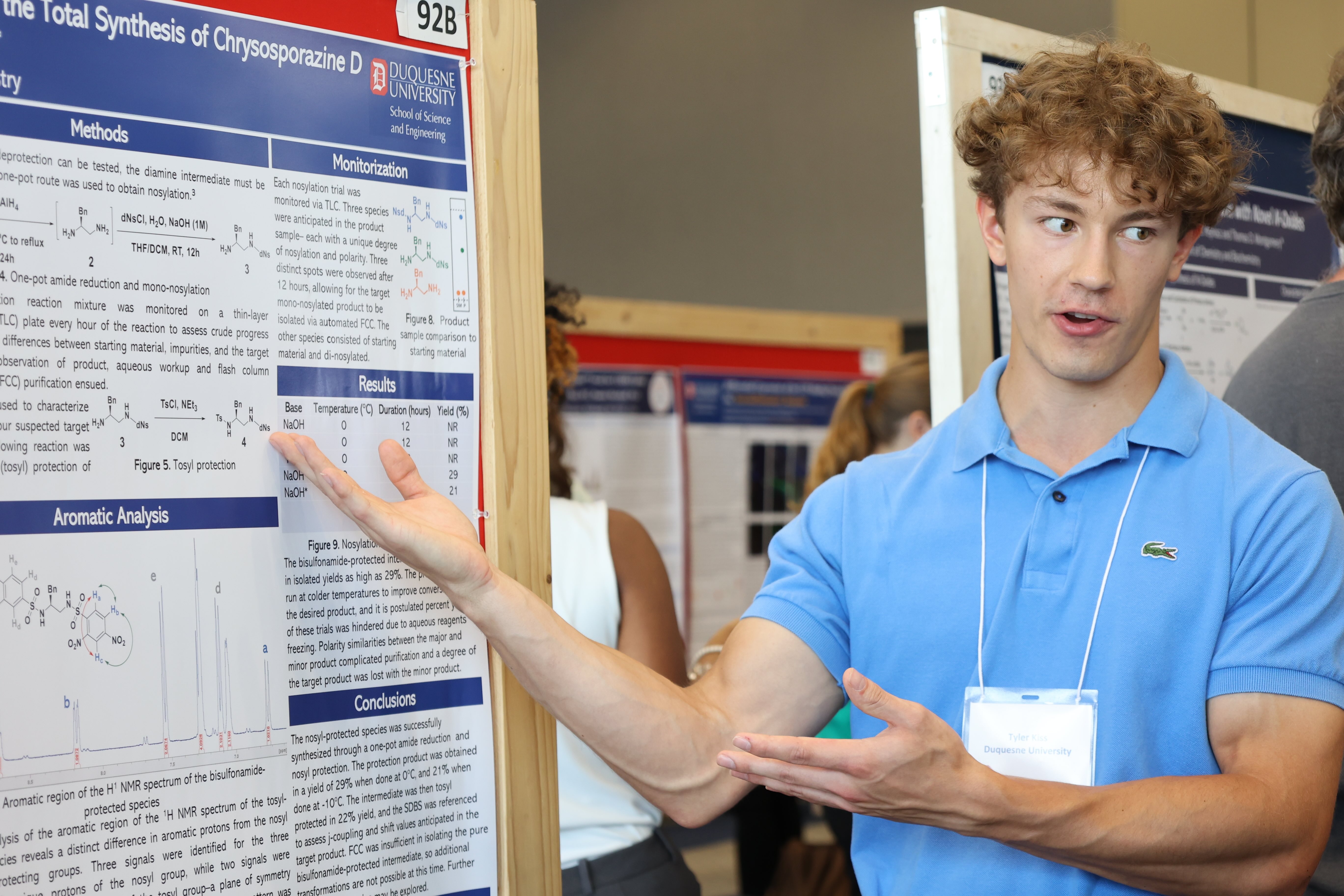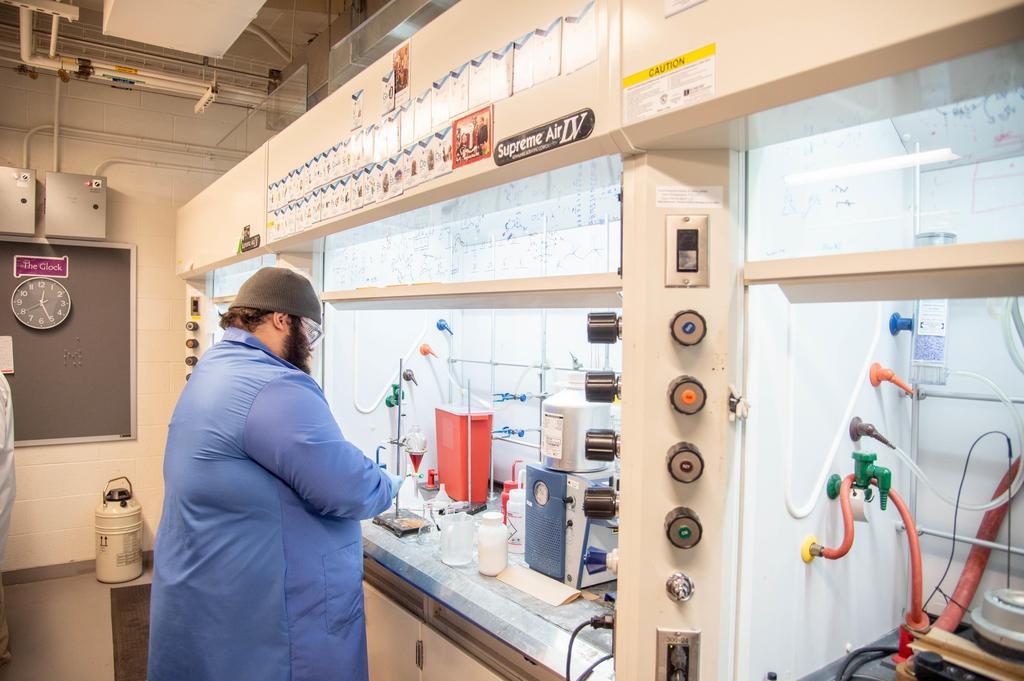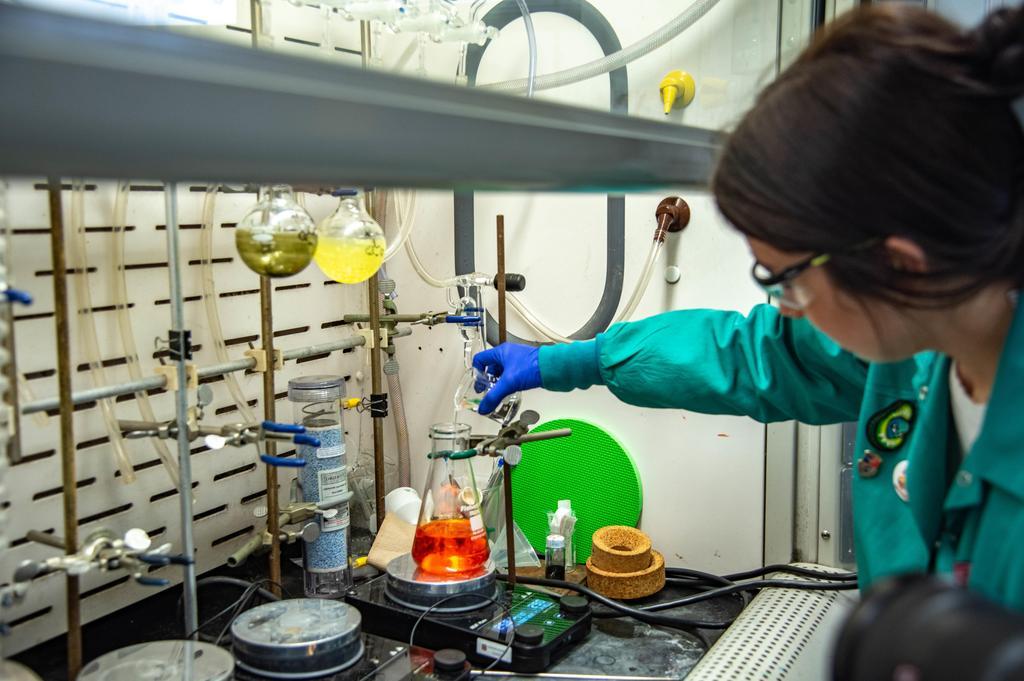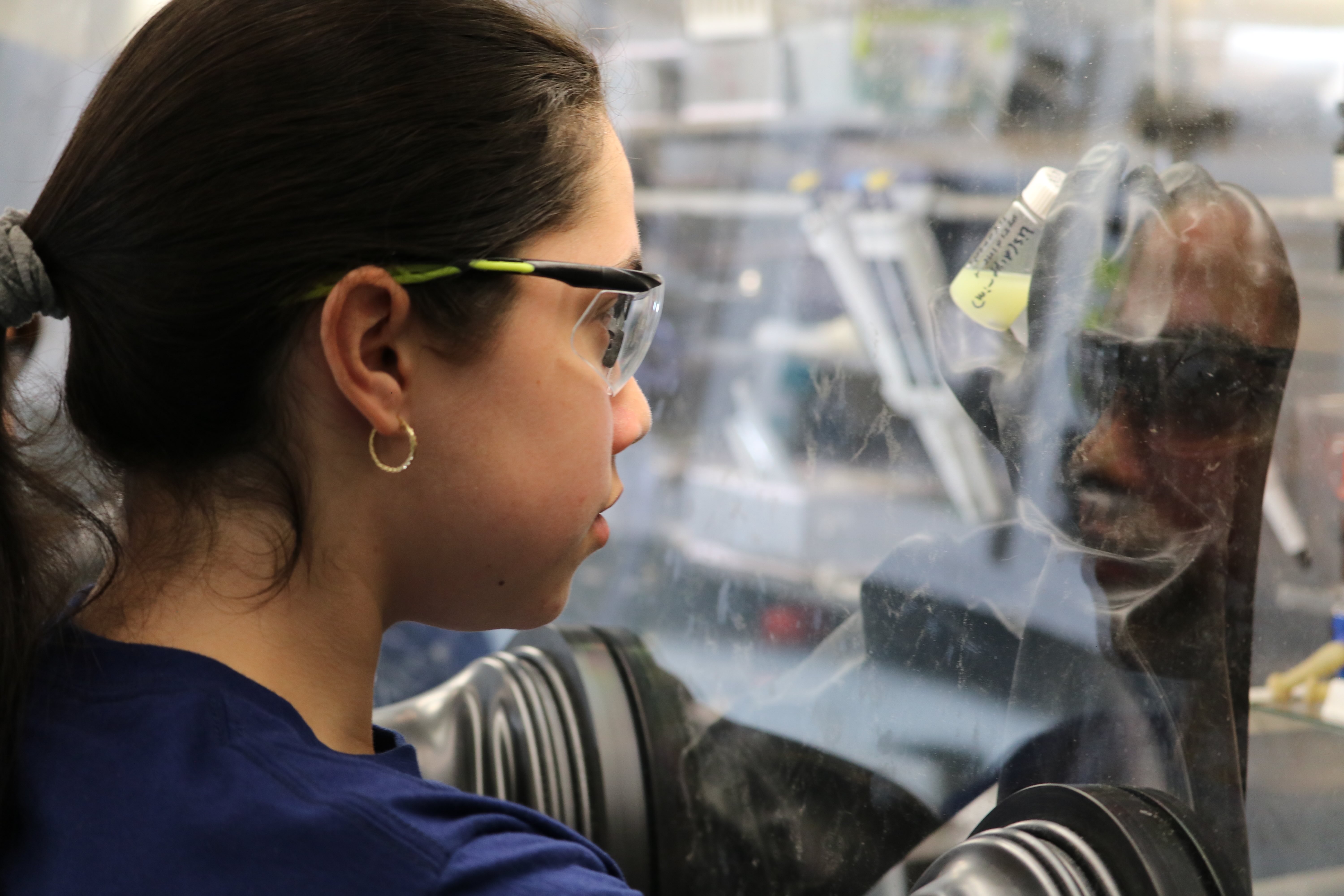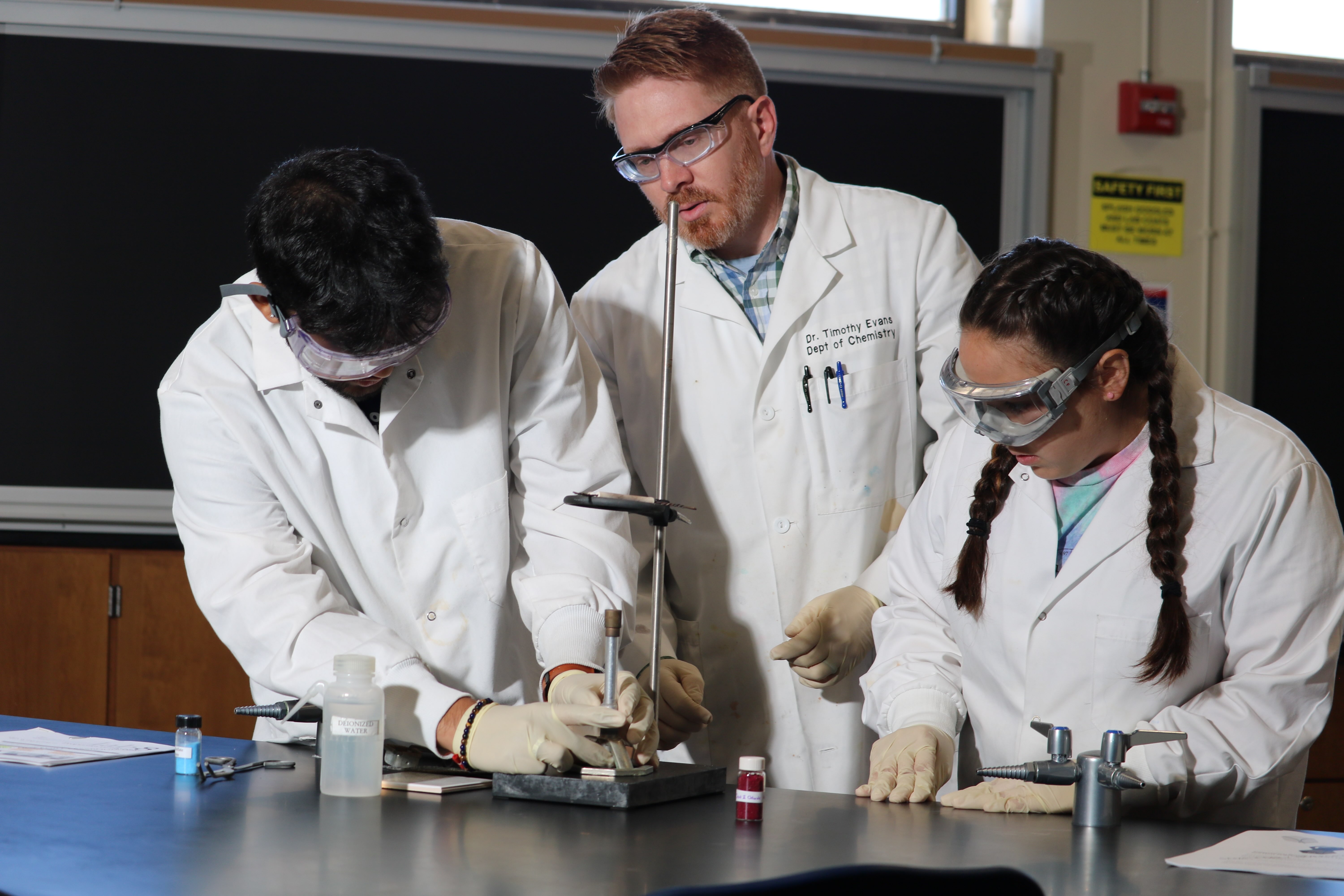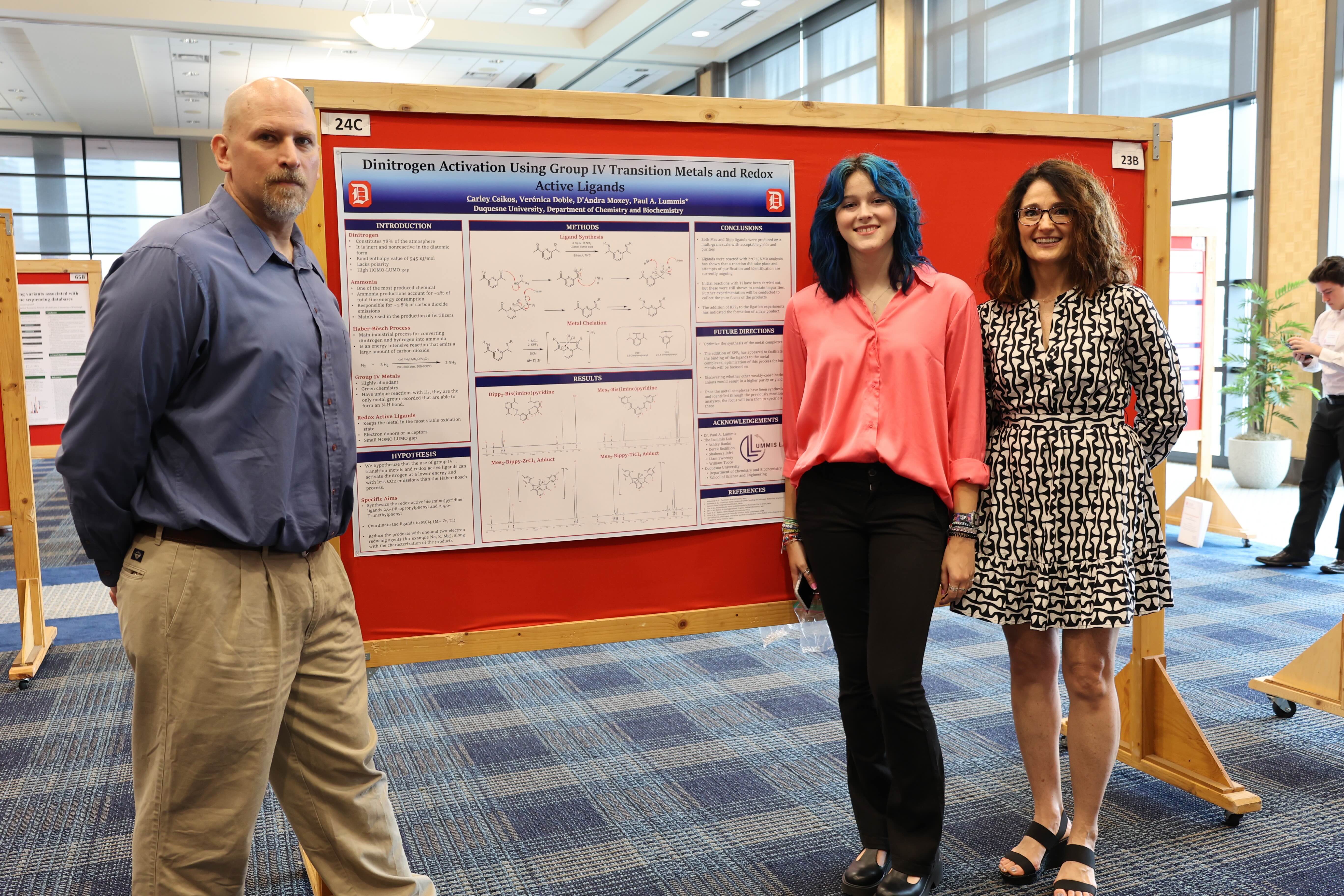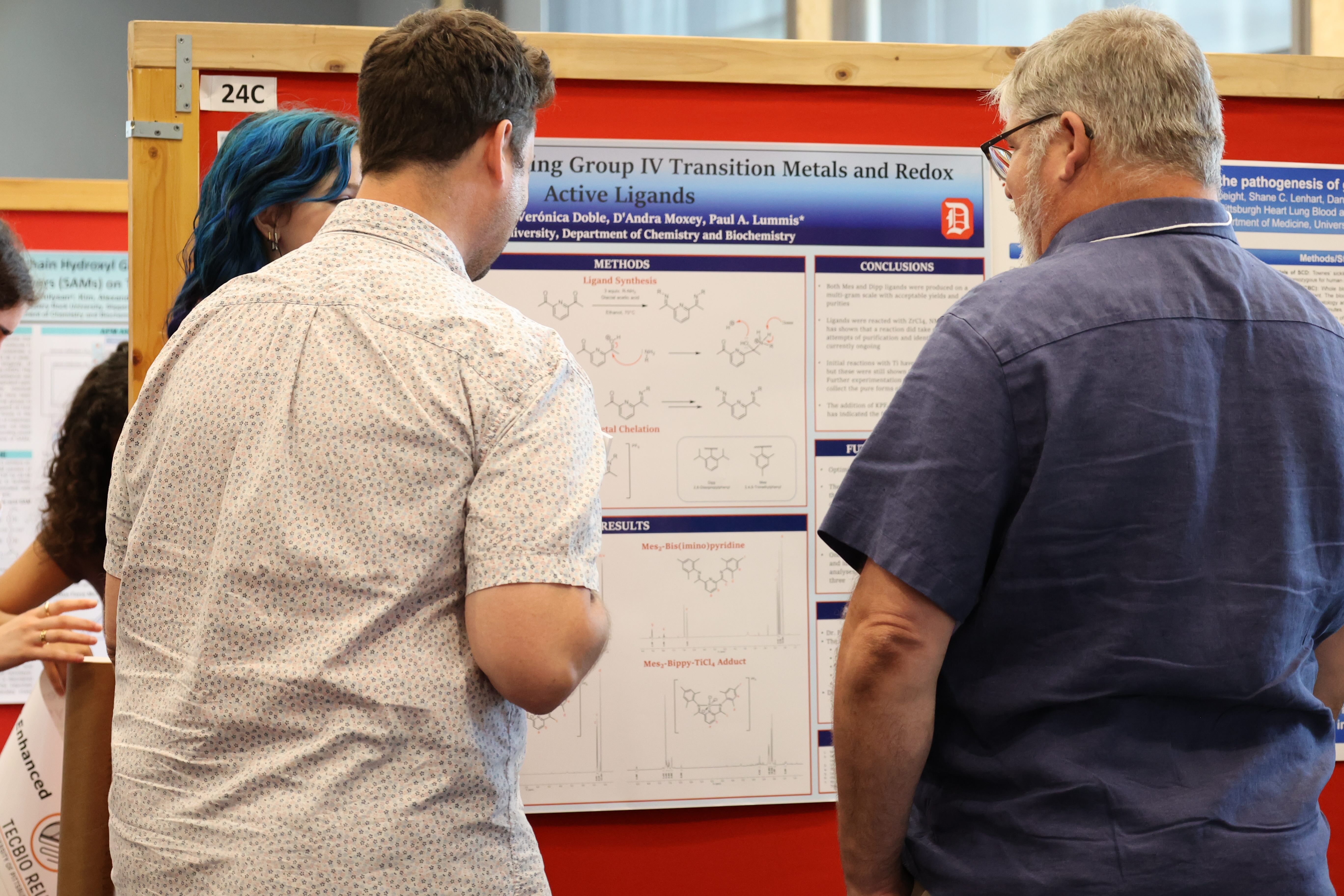


The collective strength of the Department of Chemistry and Biochemistry is in its established tradition of offering research experiences to undergraduates, proven track record of publication, and greater than 95% student placement in excellent Ph.D. programs, government labs, and industrial positions.
The Department’s basic philosophy is that education in both the classroom and research laboratory is carried out in an “active learning environment,” where you and faculty interact directly. The aim of our efforts is to stimulate your overall intellectual advancement, foster a more exciting and active atmosphere for learning chemistry, and enhance conceptual comprehension of chemical concepts with corresponding retention.
Project Descriptions
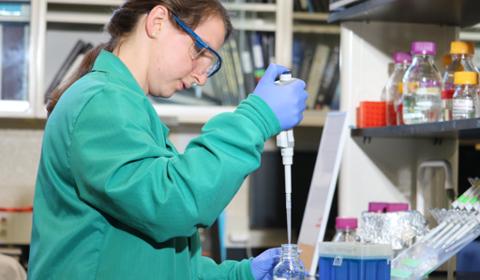
The project descriptions that follow are general examples on how you can embrace the research experience and the expected outcomes that you will realize. Each project can take on an experimental, computational, or combined experimental and computational dimension. There is room for many students working on either different hypotheses or different systems.
You will work as a team member with other students and faculty members. Depending upon your level, the goals set for each will vary. The faculty will adapt to maximize the impact of the research experience for you. The objective is to have you rise to your highest possible potential for a positive and productive experience. Each project taken on by you is intended to be publishable, assist you in your scientific growth, and prepare you for graduate studies or employment in the U.S. workforce.
Project Descriptions
Jeffrey J. Rohde and Mira Kanzelberger (Franciscan Univ. of Steubenville) and Jeffrey
D. Evanseck and Thomas D. Montgomery (Duquesne)
[Grants: NSF/CHE-1726824 ($265,060); 1-R15 GM148917-01 ($406,000)]
Background: The opioid epidemic is a serious issue in America today.1 Opioids, while possessing excellent analgesic properties, are highly addictive, and so are intrinsically prone to abuse.2 This makes the synthesis and evaluation of new non-addictive compounds of paramount importance.
Scientific Problem: Discovered in 1974, epibatidine has demonstrated exceptional analgesic capabilities that operates via a bio-orthogonal mechanism to opioids which can be leveraged towards a non-addictive opioid substitute.3 However, reported synthetic routes to epibatidine and related analogs are impractical, long, expensive, and low-yielding.4-6
Research Plan: Our intent is to leverage computations to create a more efficient and robust synthetic route to epibatidine and related analogs. Our recent reports on the mechanism for forming azamethine ylides from N-oxides has illuminated many previously unsuspected aspects of this chemistry.7 We will capitalize on this theoretical framework and our experimental expertise in this area to generate azamethine ylides for asynchronous [3+2]-cycloaddition reactions. (Figure 1). This disconnection serves to divide epibatidine, and related compounds, into two simple portions making it highly attractive for synthesis. To determine optimal conditions, quantum mechanical calculations will be carried out to explore various dipole or dipolarophile combinations. Promising candidates will then be tested experimentally.
Significance: Synthesis of compact bridged heterocyclic systems via an efficient dipolar cycloaddition will provide practical access to epibatidine and other similar biologically interesting compounds. Moreover, a modular synthetic approach opens up possibilities for structure activity relationship studies with AbbVie Inc.
Skills Acquired: Undergraduates will develop familiarization with quantum mechanical (QM) computational methods, including use of discrete-continuum solvent approximations to complement a wide range of experimental skills including running multistage reactions, air-free chemistry, purification techniques, and how to use spectroscopic instruments, e.g., NMR, IR, LC-MS, and HPLC.
References:
- F-R. L Ahmad, P. Sutton. Provisional Drug Overdose Death Counts. In: Statistics NCfH, editor. 2021.
- N. Stoicea, A. Costa, L. Costa, A. Uribe, T. Weaver, SD. Bergese. Current perspectives on the opioid crisis in the US healthcare system: A comprehensive literature review. Medicine. 2019;98(20):e15425-e. DOI. PubMed PMID: 31096439
- B. Badio, J. W. Daly. Epibatidine, a potent analgetic and nicotinic agonist. Molecular Pharmacology. 1994;45(4):563-9.
- S. C. Clayton, A. C. Regan. A total synthesis of (±)-epibatidine. Tetrahedron Letters. 1993;34(46):7493-6. DOI.
- E. J. Corey, T. P. Loh, S. AchyuthaRao, D. C. Daley, S. Sarshar. Stereocontrolled total synthesis of (+)- and (-)-epibatidine. The Journal of Organic Chemistry. 1993;58(21):5600-2. DOI.
- S. R. Fletcher, R. Baker, M. S. Chambers, S. C. Hobbs, P. J. Mitchell. The synthesis of (+)- and (–)-epibatidine. Journal of the Chemical Society, Chemical Communications. 1993(15):1216-8. DOI.
- M. J. Neal, S. L. Hejnosz, J. J. Rohde, J. D. Evanseck, T. D. Montgomery. Multi-Ion Bridged Pathway of N-Oxides to 1,3-Dipole Dilithium Oxide Complexes. The Journal of Organic Chemistry. 2021. DOI.
Daniel T. Chase (St. Mary’s College of Maryland), Paul A. Lummis (Duquesne), Thomas
D Montgomery (Duquesne)
[Grants: NSF/CHE-1726824 ($265,060); ACS-PRF-61563-UR3 ($70,000)]
Background: Over the last two decades there has been a resurgence in novel materials using the
aza-dipyrromethane (aza-DIPY) core motif due to its ability to absorb and emit in
the near-IR (NIR) range.1,2 Our interest is in developing optimal strategies to manipulate the emission maxima,
with the goal of moving beyond 800 nm.
Scientific Problem: Significant work has been done to electronically perturb the aza-DIPY core, mainly through installation of aryl groups at the proximal and distal positions with electron donating or withdrawing groups.3-5 However, both computational modeling and X-ray crystallography show these aryl rings to be twisted significantly out of the plane (circa 55°), limiting conjugation and therefore impact of these functionalized rings on the central lumophore.
Research Plan: Our intent is to use computational modeling of potential aza-DIPY chelates as a guide for our synthetic efforts to making compounds with significantly shifted absorption maxima. Our recently report allowed us to correlate predicted DFT (Figure 1) values with experimentally determined structures (X-ray) and absorption (UV-Vis), giving significant confidence in using our model in new, untested systems.6 The most promising candidates will then be targeted for chemical synthesis and spectroscopic characterization.
Significance: The creation of aza-DIPY scaffolds with unique photophysical properties is of significant interest to both the physical and biological sciences due to their ability to absorb strongly and emit in the NIR range.
Skills Acquired: Undergraduates will learn how to optimize molecules using DFT and compute HOMO-LUMO bond gaps to determine absorption frequencies. Additionally, they will have the opportunity to synthesize and characterize these compounds, using NMR, UV-Vis and X-ray instruments, linking structural data from X-ray and electronic data from UV-Vis to computed models.
References:
- Y. Ge and D. F. O’Shea, Chem. Soc. Rev., 2015, 45, 3846-3864.
- Z. Shi, Y. Han, W. Hu. H. Bai, B. Peng, L. Ji, Q. Fan, L. Li, W. Hwuang, Chem. Soc. Rev., 2020, 49, 7533-7567.
- Q. Bellier, S. Pégaz, C. Aronica, B. Le Guennic, C. Andraud, O. Maury, Org. Lett., 2011, 13, 22-25.
- W. Sheng, Y. Wu, C. Yu, P. Bobadova–Parvanova, E. Hao, L. Jiao, Org. Lett., 2018, 20, 2620-2623.
- S. David, H.-J. Chang, C. Lopes, C. Brännlund, B. Le Guennic, G. Berginc, E. Van Stryland, M. V. Bondar, D. Hagan, D. Jacquemin, C. Andraud, O. Maury, Chem. Eur. J., 2021, 27, 3517-3525.
- S. R. Zarcone, H. J. Yarbrough, M. J. Neal, J. C. Kelly, K. L. Kaczynski, A. J. Bloomfield, G. M. Bowers, T. D. Montgomery, D. T. Chase, New. J. Chem., 2022, 46, 4483-4496
Patrick Lackey (Westminster College), David Heisler (Duquesne) and Rita Mihailescu
(Duquesne)
[Grants: NIH 2R15GM127307-05 ($400,000); NSF/CHE-1726824 ($265,060)]
References:
- Haki, M.; Al-Biati, H. A.; Al-Tameemi, Z. S.; Ali, I. S.; Al-Hussaniy, H. A. Review of multiple sclerosis: Epidemiology, etiology, pathophysiology, and treatment. Medicine (Baltimore) 2024, 103 (8), e37297. DOI.
- Walton, C.; King, R.; Rechtman, L.; Kaye, W.; Leray, E.; Marrie, R. A.; Robertson, N.; La Rocca, N.; Uitdehaag, B.; van der Mei, I.; et al. Rising prevalence of multiple sclerosis worldwide: Insights from the Atlas of MS, third edition. Mult Scler 2020, 26 (14), 1816-1821. DOI.
- Olsson, T.; Barcellos, L. F.; Alfredsson, L. Interactions between genetic, lifestyle and environmental risk factors for multiple sclerosis. Nature Reviews Neurology 2017, 13 (1), 25-36. DOI.
- Huynh, J. L.; Casaccia, P. Epigenetic mechanisms in multiple sclerosis: implications for pathogenesis and treatment. Lancet Neurol 2013, 12 (2), 195-206. DOI.
- Jia, T.; Ma, Y.; Qin, F.; Han, F.; Zhang, C. Brain proteome-wide association study linking-genes in multiple sclerosis pathogenesis. Ann Clin Transl Neurol 2023, 10 (1), 58-69. DOI.
- Ineichen, B. V.; Keskitalo, S.; Farkas, M.; Bain, N.; Kallweit, U.; Weller, M.; Klotz, L.; Linnebank, M. Genetic variants of homocysteine metabolism and multiple sclerosis: a case-control study. Neurosci Lett 2014, 562, 75-78. DOI.
- Ma, Q.; Shams, H.; Didonna, A.; Baranzini, S. E.; Cree, B. A. C.; Hauser, S. L.; Henry, R. G.; Oksenberg, J. R. Integration of epigenetic and genetic profiles identifies multiple sclerosis disease-critical cell types and genes. Commun Biol 2023, 6 (1), 342. DOI.
- Chomyk, A. M.; Volsko, C.; Tripathi, A.; Deckard, S. A.; Trapp, B. D.; Fox, R. J.; Dutta, R. DNA methylation in demyelinated multiple sclerosis hippocampus. Sci Rep 2017, 7 (1), 8696. DOI.
- Fagone, P.; Mangano, K.; Di Marco, R.; Touil-Boukoffa, C.; Chikovan, T.; Signorelli, S.; Lombardo, G. A.; Patti, F.; Mammana, S.; Nicoletti, F. Expression of DNA methylation genes in secondary progressive multiple sclerosis. J Neuroimmunol 2016, 290, 66-69. DOI.
- Mehmood, A.; Shah, S.; Guo, R. Y.; Haider, A.; Shi, M.; Ali, H.; Ali, I.; Ullah, R.; Li, B. Methyl-CpG-Binding Protein 2 Emerges as a Central Player in Multiple Sclerosis and Neuromyelitis Optica Spectrum Disorders. Cell Mol Neurobiol 2023, 43 (8), 4071-4101. DOI.
Min Soo Lim (Slippery Rock University), and Ellen S. Gawalt (Duquesne)
[NSF/CHE-1726824 ($265,060)]
Background: The continued miniaturization of advanced technologies, particularly microelectromechanical
systems (MEMS), imposes stringent requirements on interfacial lubrication. At these
scales, conventional lubricants fail to provide effective friction and wear control;
instead, molecularly thin lubricating layers are essential to ensure reliable operation.1 These films are modeled by self-assembled monolayers (SAMs) of functionalized organic
molecules formed on the surfaces of metals, metal alloys, and metal oxides.2-5
Scientific Problem: Critically, the nano-tribological behavior of SAMs—such as friction, adhesion, and wear resistance—is highly sensitive to the molecular structure and chemical composition of the monomers that comprise the monolayer.6 However, the fundamental mechanisms governing these structure–property relationships remain poorly understood. A deeper understanding of the origin of these tribological properties is essential for the rational design and optimization of SAM-based lubricating coatings.7
Project: We aim to study the effect of interchain hydrogen bonding on the interfacial frictional properties of monolayers under two conditions: (1) when hydroxyl groups are positioned either in the middle or at the terminal end of the alkyl chains of monolayer-forming molecules, and (2) when hydroxylated monomers are mixed with fully hydrogenated monomers at varying ratios to form mixed monolayers. Friction force microscopy (FFM) will be employed to study the correlation between topography and friction of monolayer surface and investigate the changes in the interfacial friction of monolayers under wearless normal load (Figure 1). These studies will be supported by DRIFT, AFM, and contact angle goniometry. Dr. Gawalt’s lab previously established the conditions for self-assembled monolayer formation using phosphonic and carboxylic acid head groups with some chain length and tail group variations without FFM.4,5
Significance: The insight gained in this project will directly contribute to improving the durability and functional lifespan of MEMS and related nanoscale devices.
Skills acquired: The students will be trained in surface coatings synthesis and characterization including infrared spectroscopy, AFM, FFM, and contact angle goniometry.
References:
- Bhushan, B.: Liu, “Nanotribology and Nanomechanics” Springer, 2005
- Lim, M.S.; Smiley, K.; Gawalt, E.S. “Thermally Driven Stability of Octadecylphosphonic Acid Thin Films Grown on SS316L” Scanning, 2010, 32, 304-311.
- Lim, M.S.; Feng, K.; Chen, X.; Wu, N.; Raman, A.; Nightingale, J.; Gawalt, E.; Korakakis, D.; Hornak, L.A.; Timperman, A.T. “Adsorption and Desorption of Stearic Acid Self-Assembled Monolayers on Aluminum Oxide “, Langmuir, 2007, 23(5), 2444-2452.
- Raman, A.; Quinones, R.; *Barriger, L.; *Eastman, R.; Parsi, A.; Gawalt, E.S. “Understanding Organic Film Behavior on Alloy and Metal Oxides” Langmuir, 2010, 26(3), 1747-1754.
- Raman, A.; Gawalt, E.S. “ Self-Assembled Monolayers of Alkanoic Acids on the Native Oxide Surface of SS316L by Solution Deposition” Langmuir, 2007, 23(5), 2284-2288.
- Flater, E.; Ashurst, W.R.; Carpick, R.W. “Nanotribology of Octadecyltrichlorosilane Monolayers and Silicon: Self-Mated versus Unmated Interfaces and Local Packing Density Effects” Langmuir, 2007, 23(18), 9242–9252
- Ruehe, ; Novotny, V.J.; Kanazawa, K.K.; Clarke, T.; Street, G.B. “Structure and tribological properties of ultrathin alkylsilane films chemisorbed to solid surfaces” Langmuir, 1993, 9(9), 2383-2388.
Evangelia Kotsikorou (The University of Texas Rio Grande Valley) and Jeffrey D. Evanseck
(Duquesne)
[NSF/CHE-1726824 ($265,060)]
Background: Endocrine disrupting chemicals (EDCs) found in the environment or in plastics used in food packaging products cause disruptions of the endocrine system that lead to hormone related cancers, disrupted fetal development, etc. The androgen receptor (AR) is one of the main receptors whose function gets disrupted.1
Scientific Problem: It is thought that EDCs disrupt the function of the androgen and estrogen receptors via binding in the steroid binding pocket of the receptor preventing the steroid from binding acting as an antagonist, or binding in the steroid binding pocket and acting as an agonist (e.g. xenoestrogens). Recent experiments suggest that certain EDCs bind to an AR surface binding site called binding function 3 (BF3), allosterically facilitating the expulsion of the steroid from its binding pocket (Figure 1), thus disrupting the receptor function.2,3
Hypothesis: EDCs containing the biphenyl moiety bind to the AR surface site BF3 allosterically facilitating the ejection of DHT from its binding pocket.
Research Plan: Our computational efforts in conjunction with current experimental data and mutagenesis experiments will help determine exactly how EDCs affect the function of AR via binding to the BF3 site. Molecular dynamics (MD) simulations will be used to study the stability and conformational dynamics of the wild-type AR ligand binding domain complexed with the bound steroid dihydrotestosterone (DHT) in the absence (control) and presence of an EDC (DDE, a metabolite of the pesticide DDT) bound in the BF3 surface binding site. Additionally, enhanced MD methods will be used to identify steroid egress pathways and to quantify the energy required for DHT to leave its binding pocket in the absence and presence of and EDC in the BF3 surface binding site. Finally, MD methods will be used to study the change in the dynamic behavior of the AR ligand binding domain containing mutations in the BF3 site complexed with the bound steroid DHT in the absence and presence of DDE bound in the BF3 site.
Significance: Understanding how EDCs exert their effect on AR will help us understand the mechanisms of endocrine system disruption and may aid the design of next generation pesticide and good packaging products that lack endocrine system disrupting activity. Molecular biology techniques provide important information for this scientific problem. However, by incorporating computational methods in our approach we can get atomic level details that help us get a more complete picture of the effect of EDCs on AR.
Skills Acquired: The students will be trained in molecular modeling of biomolecules, parameterization of small molecules, and molecular dynamics simulations techniques as well as how to use these techniques to understand a complex problem of interactions of exogenous chemicals with the human body.
Publication timeline: During fall 2025 the manuscript containing the MD simulations of the wild-type AR ligand binding domain complexed with DHT in the presence and absence of DDE will be finalized and submitted for publication. In the spring 2026, the enhanced MD methods calculations will be completed and written up. In the summer and fall of 2026 MD simulations of the mutant AR receptors will be carried out. The manuscript will be written up in the spring 2027 and will be submitted in the summer 2027.
References
- “Nuclear Receptors are the Major Targets of Endocrine Disrupting Chemicals.” Toporova, L. and Balaguer, P. Molecular and Cellular Endcrinology, 2020, 502, 110665.
- “A surface on the androgen receptor that allosterically regulates coactivator binding.” Estébanez-Perpiñá, Eva; Arnold, Leggy A; Nguyen, Phuong; Rodrigues, Edson Delgado; Mar, Ellena; Bateman, Raynard; Pallai, Peter; Shokat, Kevan M; Baxter, John D; Guy, R Kiplin; Webb, Paul; Fletterick, and Robert J. Proceedings of the National Academy of Sciences of the United States of America. 2007, 104(41), 16074.
- “Inhibition of Steroid Binding to the Androgen and Estrogen Receptors by dichlorodiphenyltrichloroethane (DDT) and its Analogs”. Tahyra Resto; Jacqueline I. Goodship; Matthew D. Rosales; Ahyssa R. Cruz; Isaac A. Rodriguez; Ventura Flores; Amanda Chavez; Monica P. Solis; Esmeralda Lopez; Evangelia Kotsikorou; and Frank B. Dean. Manuscript in progress.
David Heisler (Duquesne)
Background: Listeria monocytogenes is an opportunistic intracellular pathogen that causes gastrointestinal infections and kills ~20% of hospitalized patients.1 Thus, defining the mechanisms utilized by Listeria to establish robust infections are essential. My lab is interested in the internalin family of proteins that are highly conserved but for which their roles in infection are not well defined. Furthermore, we aim to decipher the molecular mechanisms that drive bacterial pathogenesis.
Scientific Problem: Previous work in the laboratory has suggested that Listeria internalin protein Lmo0549 binds to xenophagy proteins, but the exact binding partner(s) or how this interaction would promote infection remains elusive.
Hypothesis: Our guiding hypothesis is that Lmo0549 binds to an adapter protein, and this prevents the host cells from eliminating the bacteria through xenophagy.
Research Plan: We will use protein biochemistry to identify and verify the binding partner(s) of Lmo0549. We will then determine at which stage(s) of infection this interaction promotes infection using cell biology, microbiology and molecular genetics.
Objectives: The objectives are designed to supplement ongoing research in the laboratory and the results obtained by REU students to be included in future publications. Objective I – We will verify which host proteins in the xenophagy pathway bind to Lmo0549. Objective II. – We will next seek to understand when during the infection of host cells Lmo0549 is important. This will be accomplished using strains of Listeria that expresses and secretes a FLAG-tagged Lmo549. Objective III. – We will next explore the possibility that other internalin proteins also alter host signaling pathways, including xenophagy. To do this, we will use cell-based assays to screen a library of internalin proteins to determine which internalins impact specific pathways.
Student Skills Acquired: Depending on the objective, students will have the opportunity to perform molecular cloning of human and bacterial genes, microscopy, and/or flow cytometry.
Publication Timeline and Targets: We are looking to submit a publication that encompasses Objective I and II before the end of the REU timeline. Objective III will provide the foundation for future projects and will be included in all publications that stem from those results.
References
- Vazquez-Boland, J. A.; Kuhn, M.; Berche, P.; Chakraborty, T.; Dominguez-Bernal, G.; Goebel, W.; Gonzalez-Zorn, B.; Wehland, J.; Kreft, J. Listeria pathogenesis and molecular virulence determinants. Clin Microbiol Rev 2001, 14 (3), 584-640. DOI From NLM Medline.
Jonathan P. Moerdyk (Seton Hill), Paul A. Lummis (Duquesne), Thomas D. Montgomery
(Duquesne)
Background: Carbenes are most associated with being exceptional ligands for transition-metal catalysts, or as organocatalysts,1-4 However, the activation of small molecules as well as the stabilization of reactive intermediates5 have attracted significant interest (Figure 1), with our focus to expand the scope and utility of small molecule activation through carbene scaffold design.
Scientific Problem: The most well-studied class, N-heterocyclic carbenes (NHCs), generally lack reactivity with substrates commonly utilized in catalytic cycles (e.g., H2, CO, olefins, C-H bonds). Two scaffolds, alkylaminocarbenes (AACs)6 and diamidocarbenes (DACs)7 have emerged as stable carbenes that activate a range of small molecules due to their reduced singlet-triplet gaps. More recently, the first metal-free, catalytic incorporation of carbon monoxide to form carbonates was achieved.8 However, the restricted scope and limitations in other transformations signifies a need for more diverse carbene scaffolds.
Hypothesis: The synthesis of a stable, chiral (alkyl)(amido)carbene (AAmC) will enable access of intermediate properties and reactivity of DACs and AACs for catalytic and synthetic purposes.
Research Plan: This research will prepare AAmCs through a seven-step synthesis from inexpensive starting materials. N-substituents less activated toward C-H insertion compared to a transient AAmC,9 will facilitate isolation efforts and chirality proximal to the carbene will impart stereoselectivity in reactivity. DFT calculations support the intermediary electronic properties of the AAmC versus the DAC and AAC. The synthesized carbenes will be analyzed in terms of electronic properties (using DFT, TEP, NMR) and reactivity profile with diverse small molecules such as those listed above.
Objectives: The listed objectives are designed to be achievable over the cycle of the REU while generating peer-reviewed publications. Objective I - Synthesize an isolable (alykl)amidocarbene (AAmC) and determine the electronic properties and reactivity overview. Objective II - Explore in-depth the mechanisms of reactivity with small molecules and suitability for organocatalysis. Objective III - Use the AAmCs as organometallic ligands or as organocatalysts for stereoselective catalysis.
Skills acquired: Students will reinforce foundational organic synthesis skills as well as learn advanced skills including high pressure reactions and air-free techniques. A variety of analytical techniques will also be learned including low- and high-resolution mass spectrometry, infrared spectroscopy, multinuclear and 2D NMR spectroscopy, X-ray diffraction and DFT calculations.
Publication Timeline and Targets: We aim to submit a publication on each of the objectives above at a pace of one per summer.
References:
- Contemporary Carbene Chemistry Eds. Moss, R.A. and Doyle, M. P., Wiley, Hoboken, NJ, 2014.
- Science of Synthesis, N-Heterocyclic Carbenes in Catalytic Organic Synthesis 2 Eds. Nolan, S. P. and Cazin, C. S. J., Georg Thieme Verlag, New York, NY, 2017.
- Scattolin, T.; Logvinov, A. A.; Tzouras, N. V.; Cazin, C. S. J.; Nolan, S. P. Organometallics 2023, 42, 2692-2730.
- Song, R. J.; Jin, Z.; Chi, Y. R. Chem. Sci. 2021, 12, 5037-5043.
- Martin, D.; Soleilhavoup, M.; Bertrand, G. Chem. Sci. 2011, 2, 389-399.
- Lavallo, V.; Mafhouz, J.; Canac, Y.; Donnadieu, B.; Schoeller, W. W.; Bertrand, G. J. Am. Chem. Soc. 2004, 126, 8670-8671.
- Moerdyk, J. P.; Schilter, D.; Bielawski, C. W. Acc. Chem. Res. 2016, 49, 1458-1468.
- Peltier, J. L.; Tomás-Mendivil, E.; Tolentino, D. R.; Hansmann, M. M.; Jazzar, R. Bertrand, G. J. Am. Chem. Soc. 2020, 142, 18336-18340.
- McCarty, Z. R.; Lastovickova, D. N.; Bielawski, C. W. Chem. Commun. 2016, 52, 5447.
Robbie J. Iuliucci, Sean T. Holmes (NHMFL), and Jeffrey D. Evanseck (Duquesne)
Background: NMR crystallography (NMRX) represents a powerful set of experimental and computational tools used to elucidate crystal structures.1,2 Typically, NMRX integrates solid-state NMR (SSNMR), X-ray diffraction (XRD), and computational methods to achieve a more detailed understanding of molecular-level structure than is possible using any of these techniques in isolation. This emerging approach is particularly valuable in the pharmaceutical industry, where crystal structure engineering can enhance active pharmaceutical ingredients or, when combined with crystal structure prediction, contribute to de novo drug development.3-5 Notably, structures of amorphous solids can be determined using only SSNMR and computational methods—an achievement largely inaccessible to diffraction-based techniques.6-8
Scientific Problem: The chemical shift, an anisotropic property exceptionally sensitive to electronic structure, plays a central role in NMRX.9-15 However, its effectiveness in structure elucidation depends critically on accurate electronic structure modeling to interpret its rich spectral information. A key advantage is that the principal components of the chemical shift tensor can be readily extracted from simple powdered solids experimentally. Computational models must not only accurately represent the local electronic environment of the nucleus but also account for the extended lattice of the microcrystalline solid.
Hypothesis: Our NMRX methodology is to exploit the efficiency of plane-wave density functional theory (DFT), which, by satisfying the periodic boundary conditions of a crystal, captures the infinite lattice using only the atoms of the asymmetric unit cell. Because planewave DFT is currently limited to the generalized gradient approximation level, which is insufficient for the local electronic structure around nuclei, we will augment the planewave DFT with a correction using a monomer molecule that can be calculated to highest electronic method possible such as double-hybrid DFT. This multilayer approach now represents the state-of-the-art, enabling 13C chemical shift predictions in solids with accuracies approaching one ppm.
Research Plan: Training of involved students to experimentally acquire high resolution SSNMR spectra, extracting chemical shift anisotropy parameters, and being introduced to modern electronic structure calculations takes place at the MagLab Summer School on Solid-State NMR Spectroscopy prior to the REU. To model the experimental data, the students will use a series of quantum packages (i.e., CASTEP, Crystal17).
Objectives: Each of the listed objectives is designed to be achievable during the lifetime of the REU and results in peer reviewed publications. Objective I – Measure 13C and 15N CSA for a series of intriguing organic crystals to improve the current training set by making it more representative. Objective 2 – Model the chemical shift for organic crystals containing short-strong hydrogen bonding. Objective 3 – Apply NMRX to polymorphs of a family of compounds containing the quinazoline scaffold that show anti-cancer activity due to their kinase inhibitor functionality.
Student Skills Acquired: Students will gain an understanding of computational modeling, solid-state NMR techniques, how theory and experiment interact and complement each other. In addition, visitation to the National High Magnet Field Laboratory exposes students to careers at government laboratories.
Publication Timeline and Targets: Each objective will result in publication in peer review journals as demonstrated
by our annual publication track record.16-20
References:
- Taulelle, F. Fundamental Principles of NMR Crystallography. In eMagRes, 2009. DOI.
- Ashbrook, S. E.; McKay, D. Combining solid-state NMR spectroscopy with first-principles calculations – a guide to NMR crystallography. Chem. Commun. 2016, 52, 7186–7204. DOI.
- Harper, J. K.; Grant, D. M. Enhancing crystal-structure prediction with NMR tensor data. Cryst. Growth Des. 2006, 6, 2315–2321. DOI.
- Baias, M.; Dumez, J.-N.; Svensson, P. H.; Schantz, S.; Day, G. M.; Emsley, L. De novo determination of the crystal structure of a large drug molecule by crystal structure prediction-based powder NMR crystallography. J. Am. Chem. Soc. 2013, 135, 17501–17507. DOI.
- Balodis, M.; Cordova, M.; Hofstetter, A.; Day, G. M.; Emsley, L. De novo crystal structure determination from machine learned chemical shifts. J. Am. Chem. Soc. 2022, 144, 7215–7223. DOI.
- Cordova, M.; Moutzouri, P.; Nilsson Lill, S. O.; Cousen, A.; Kearns, M.; Norberg, S. T.; Svensk Ankarberg, A.; McCabe, J.; Pinon, A. C.; Schantz, S.; et al. Atomic-level structure determination of amorphous molecular solids by NMR. Nat. Commun. 2023, 14, 5138. DOI.
- Cordova, M.; Balodis, M.; Hofstetter, A.; Paruzzo, F.; Nilsson Lill, S. O.; Eriksson, E. S. E.; Berruyer, P.; Simões de Almeida, B.; Quayle, M. J.; Norberg, S. T.; et al. Structure determination of an amorphous drug through large-scale NMR predictions. Nat. Commun. 2021, 12, 2964. DOI.
- Holmes, J. B.; Torodii, D.; Balodis, M.; Cordova, M.; Hofstetter, A.; Paruzzo, F.; Nilsson Lill, S. O.; Eriksson, E.; Berruyer, P.; Simões de Almeida, B.; et al. Atomic-level structure of the amorphous drug atuliflapon via NMR crystallography. Faraday Discuss. 2024. DOI.
- Kalakewich, K.; Iuliucci, R.; Mueller, K. T.; Eloranta, H.; Harper, J. K. Monitoring the refinement of crystal structures with 15N solid-state NMR shift tensor data. J. Chem. Phys. 2015, 143. DOI.
- Harper, J. K.; Iuliucci, R.; Gruber, M.; Kalakewich, K. Refining crystal structures with experimental 13C NMR shift tensors and lattice-including electronic structure methods. CrystEngComm 2013, 15, 8693–8704. DOI.
- Toomey, R.; Wang, L.; Heider, E. C.; Hartman, J. D.; Nichols, A. J.; Myles, D. A. A.; Gardberg, A. S.; McIntyre, G. J.; Zeller, M.; Mehta, M. A.; et al. NMR-guided refinement of crystal structures using 15N chemical shift tensors. CrystEngComm 2024, 26, 3289–3302. DOI.
- Holmes, S. T.; Wang, W. D.; Hou, G.; Dybowski, C.; Wang, W.; Bai, S. A new NMR crystallographic approach to reveal the calcium local structure of atorvastatin calcium. Phys. Chem. Chem. Phys. 2019, 21, 6319–6326. DOI.
- Salager, E.; Stein, R. S.; Pickard, C. J.; Elena, B.; Emsley, L. Powder NMR crystallography of thymol. Phys. Chem. Chem. Phys. 2009, 11, 2610–2621. DOI.
- Harper, J. K.; Mulgrew, A. E.; Li, J. Y.; Barich, D. H.; Strobel, G. A.; Grant, D. M. Characterization of stereochemistry and molecular conformation using solid-state NMR tensors. J. Am. Chem. Soc. 2001, 123, 9837–9842. DOI.
- Yang, C.; Zhu, L.; Kudla, R. A.; Hartman, J. D.; Al-Kaysi, R. O.; Monaco, S.; Schatschneider, B.; Magalhães, A.; Beran, G. J. O.; Bardeen, C. J.; et al. Crystal structure of the meta-stable intermediate in the photomechanical, crystal-to-crystal reaction of 9-tert-butyl anthracene ester. CrystEngComm 2016, 18, 7319–7329. DOI.
- Sean T. Holmes, Ren Wiscons, Kerrigan Parks, Sarah Nickel, Halie S. Ankeny, Aaron M. Viggiano, Derek Bedillion, Deben Shoup, Robbie J. Iuliucci, Qiang Wang, Robert W. Schurko, Rosalynn Quiñones. A Novel Solid Form of Erlotinib via Heterogeneous Zinc Complexation. Cryst. Growth Des. 2025, 25, 9, 3219–3228. DOI.
- Sean T. Holmes, Cameron M. Boley, Angelika Dewicki, Zachary T. Gardner, Cameron S. Vojvodin, Robbie J. Iuliucci, Robert W. Schurko. Carbon-13 Chemical Shift Tensor Measurements for Nitrogen-Dense Compounds. Magn Reson Chem 2024, 1. DOI.
- RJ Iuliucci, JD Hartman, GJO Beran. Do Models beyond Hybrid Density Functionals Increase the Agreement with Experiment for Predicted NMR Chemical Shifts or Electric Field Gradient Tensors in Organic Solids? J. Phys. Chem. A 2023, 127, 12, 2846–2858. DOI.
- Thomas J. Gately, Cameron Cook, Raghad Almuzarie, Imadul Islam, Zachary Gardner, Robbie J. Iuliucci, Rabih O. Al-Kaysi, Gregory J. O. Beran, Christopher J. Bardeen. Effect of Fluorination on the Polymorphism and Photomechanical Properties of Cinnamalmalononitrile Crystals. Cryst. Growth Des. 2022, 22, 12, 7298–7307. DOI.
- Sean T Holmes, Olivia G Engl, Matthew N Srnec, Jeffry D Madura, Rosalynn Quiñones, James K Harper, Robert W Schurko, Robbie J Iuliucci. Chemical Shift Tensors of Cimetidine Form A Modeled with Density Functional Theory Calculations: Implications for NMR Crystallography. J. Phys. Chem. A 2020, 124, 16, 3109–3119. DOI.
Brandon Vernier (Bethune-Cookman), Rita Mihailescu (Duquesne) and Jeffrey Evanseck
(Duquesne)
Background: Hepatitis C is an inflammatory liver disease that can progress to cirrhosis and hepatocellular carcinoma, currently affecting over 50 million individuals worldwide and causes the death of over 200,000 individuals yearly.1 The Hepatitis C virus (HCV), the etiological agent, harbors a single-stranded RNA genome approximately 9600 nucleotides in length.2 Its 3’ untranslated region (3’ UTR) contains a highly conserved 98-nucleotide segment known as X RNA, which is functionally implicated in viral replication.3 Nuclear magnetic resonance (NMR) spectroscopy and gel electrophoresis experiments have revealed that X RNA adopts two distinct secondary structures.4,5 These conformations share a common stem-loop motif composed of the terminal 43 nucleotides with the structural divergence residing within the initial 55 nucleotides, designated X55 RNA (Figure x).6 Conformational interconversion in X55 has been investigated using NMR and Förster resonance energy transfer (FRET), revealing a Mg²⁺-dependent equilibrium.7,8 Both conformers participate in Mg²⁺-mediated kissing-loop interactions, with SL2 forming a kissing homodimer and SL2/3 engaging in a kissing heterodimer with 5BSL3.2 RNA within the viral open reading frame (ORF).5,9
Scientific Problem: The structural and dynamic consequences of Mg²⁺ on the SL2 and SL2/3 monomeric states remain unresolved. Moreover, while Mg²⁺ is recognized to promote kissing complex formation in both RNA and DNA, the molecular determinants—particularly structural perturbations and energetic drivers—are poorly characterized.
Hypothesis: Mg2+ ions will disrupt the intramolecular folding motifs on the SL2 and SL2/3 RNA to predispose the nucleotides towards the kissing dimer formation. The interconversion pathway between the SL2 and SL2/3 conformers will reveal metastable intermediates and energy barriers which will extend the understanding of how Mg2+ dictates the conformational equilibrium and offer novel targets for therapeutic developments against HCV.
Research Plan: We will use molecular dynamics (MD) simulations coupled with multivariate analysis and clustering algorithms to unravel the effect of Mg2+ on the structure and the dynamics of HCV X55. Objective 1 – We will use structure prediction software, Vfold3D/ISRNA pipeline10, to create starting structures of SL2 and SL2/3 conformers. The conformers solvated in explicit TIP3P11 water boxes with zero, three and eight Mg2+ to mimic experimental concentration gradient, will be subjected to microsecond MD simulations. The trajectories will be analyzed using routine analyses such as RMSD, RMSF and hydrogen bond counting, as well as using principal component analysis12 (PCA) coupled with clustering algorithms such as k-means13 and spectral clustering to quantify the structural and dynamic changes across the systems. The FRET histograms will be estimated from the simulations to qualitatively validate against the experiment. Objective 2 - We will perform nudged elastic band (NEB)14 calculations followed by umbrella sampling15 to compute the interconversion pathway between SL2 and SL2/3 that will reveal any metastable states and the energy barriers that can be validated against the interconversion timescales and conformer ratios observed from FRET.
Significance: By revealing the impact of Mg2+ ions on the structure and dynamics of the X55 conformers, this study will offer novel insights into the role of Mg2+ in initiating kissing complexation in RNAs. By locating metastable intermediates from computing the conformational interconversion pathways and the associated energies, this study will offer novel therapeutic targets against HCV.
Skills Acquired: The students will be trained in computational techniques such as structure prediction, molecular dynamics and learn analysis methods such as RMSD, RMSF, PCA and clustering. The students will learn the necessary theoretical background for these techniques as well as the integration of experimental knowledge to the computational workflow. The students will also get exposure to programming through writing necessary scripts required for the analysis.
Publication timeline and targets: We expect that each of the objectives, the unbiased MD on monomers and the conformational
interconversion pathway studies will result in separate publications before the end
of the proposed funding timeline.
References:
- World Health Organization. 2022. Hepatitis C, Vol. 2023. WHO, Geneva.
- Kato, N. Genome of Human Hepatitis C Virus (HCV): Gene Organization, Sequence Diversity, and Variation. Microb Comp Genomics 2000, 5 (3), 129–151. DOI;PAGEGROUP:STRING:PUBLICATION.
- Masante, C.; Jaubert, C.; Palau, W.; Plissonneau, J.; Besnard, L.; Ventura, M.; Di Primo, C. Mutations of the SL2 Dimerization Sequence of the Hepatitis C Genome Abrogate Viral Replication. Cellular and Molecular Life Sciences 2015, 72 (17), 3375–3385. DOI.
- Cantero-Camacho, Á.; Gallego, J. The Conserved 3′X Terminal Domain of Hepatitis C Virus Genomic RNA Forms a Two-Stem Structure That Promotes Viral RNA Dimerization. Nucleic Acids Res 2015, 43 (17), 8529–8539. DOI.
- Shetty, S.; Stefanovic, S.; Mihailescu, M. R. Hepatitis C Virus RNA: Molecular Switches Mediated by Long-Range RNA–RNA Interactions? Nucleic Acids Res 2013, 41 (4), 2526–2540. DOI.
- Cantero-Camacho, A.; Gallego, J. An Unexpected RNA Distal Interaction Mode Found in an Essential Region of the Hepatitis C Virus Genome. Nucleic Acids Res 2018, 46 (8), 4200–4212. DOI.
- Kranawetter, C.; Brady, S.; Sun, L.; Schroeder, M.; Chen, S. J.; Heng, X. Nuclear Magnetic Resonance Study of RNA Structures at the 3′-End of the Hepatitis C Virus Genome. Biochemistry 2017, 56 (37), 4972–4984. DOI.
- Sperstad, P. D.; Holmstrom, E. D. Conformational Dynamics of the Hepatitis C Virus 3′X RNA. RNA 2024, 30 (9), 1151–1163. DOI.
- Shetty, S.; Kim, S.; Shimakami, T.; Lemon, S. M.; Mihailescu, M. R. Hepatitis C Virus Genomic RNA Dimerization Is Mediated via a Kissing Complex Intermediate. RNA 2010, 16 (5), 913–925. DOI.
- Zhang, D.; Li, J.; Chen, S. J. IsRNA1: De Novo Prediction and Blind Screening of RNA 3D Structures. J Chem Theory Comput 2021, 17 (3), 1842–1857. DOI.
- Jorgensen, W. L.; Chandrasekhar, J.; Madura, J. D.; Impey, R. W.; Klein, M. L. Comparison of Simple Potential Functions for Simulating Liquid Water. J Chem Phys 1983, 79 (2), 926–935.
- Stein, S. A. M.; Loccisano, A. E.; Firestine, S. M.; Evanseck, J. D. Principal Components Analysis: A Review of Its Application on Molecular Dynamics Data. Annu Rep Comput Chem 2006, 2, 233–261.
- Hartigan, J. A.; Wong, M. A. Algorithm AS 136: A K-Means Clustering Algorithm. Appl Stat 1979, 28 (1), 100. DOI.
- JÓNSSON, H.; MILLS, G.; JACOBSEN, K. W. Nudged Elastic Band Method for Finding Minimum Energy Paths of Transitions. 1998, 385–404. DOI.
- Kästner, J. Umbrella Sampling. Wiley Interdiscip Rev Comput Mol Sci 2011, 1 (6), 932–942. DOI.
Background: Kissing complexes (KC) and extended duplexes (ED) represent dynamic RNA structures whose interconversion has been implicated in playing vital roles in biological systems (especially, but not exclusively, in viruses), influencing a broad spectrum of biochemical processes including genome packaging, viral recombination, and host-pathogen interactions.2–8 Reported viral KCs often involve conserved sequences of the viral genome, which are less likely to mutate in response to antiviral therapies.
Scientific Problem: Only limited thermodynamic and kinetic data on interconversions between KC and ED have been reported for the human immunodeficiency virus 1 (HIV-1) dimer initiation site (DIS) and model complexes based on the bacterial E. coli DsrA-rpoS RNA-mRNA regulatory complex.9–14 Additionally, structural, dynamic, and energetic details on how these interconversions occur are virtually unknown yet are vital in our novel approach of identifying and characterizing previously unconsidered meta-stable pathway states to inspire future antiviral and drug resistance development. Specifically, the reported structures of HIV-1 DIS and the spectroscopic and kinetic data on the E. coli DsrA-rpoS interconversion pathways will be used to develop a general paradigm for known RNA dimerization systems: HIV-1, SARS-CoV, SARS-CoV-2, and HCV.5,6,8 Ultimately, our work delivers a novel approach for antiviral therapies based on viral RNA conserved sequences less prone to resistance and may strengthen current combination drug strategies.
Hypothesis: Our overarching hypothesis is that by leveraging the limited kinetic and thermodynamic data reported on RNA transition pathway systems, including HIV-1 DIS and model complexes based on E. coli DsrA-rpoS, a general paradigm will be developed for other known RNA dimerization systems, such as SARS-CoV, SARS-CoV-2, HCV, and future emerging RNA viruses requiring novel antiviral therapies.
Objectives: The entire proposal is crafted to merge a timely and important research topic with an effective method for undergraduate training. Each objective represents an opportunity for undergraduates of various skill levels to contribute to novel science. Objective I - Ensemble generation of RNA/RNA structures entails using computational methods to generate trustworthy models of RNA dimers as starting geometries, followed by unbiased simulation; this is suitable for novices with minimal prior training. Objective II - RNA/RNA interconversion pathways targets pathways between functional states of RNA using chain of states models. The computed pathways will provide a comparison with available kinetic HIV-1 DIS (see preliminary data) and E. coli experiments for validation and confident extension to the other viral systems of interest to identify intermediate structures as antiviral targets. Finally, in Objective III - Influence of RNA-binding molecules on interconversion pathways, the transition pathways will be re-computed to predict the effect of the small molecules or oligonucleotides on interceding complexation, where the observed differences in the free energy landscape will signal important effects on the meta-stable state structures and energetics of strand displacement competition.
Student Skills Acquired: These projects will promote a deeper understanding of the science, background of RNA structure and dynamics, and MD methodologies. Through our experience, teams of graduate students and faculty are effective for impacting the development of research skills and knowledge by addressing each undergraduate’s Zone of Proximal Development.15 As a mentoring team, we intend to train the undergraduates to understand and appreciate the capabilities, limitations, and errors of experimental and computational chemistry, leveraging both fields into a seamless approach.
Publication Timeline and Targets: We are looking to submit two publications for each of HIV-1 DIS and the DrsA-rpoS
complex that encompass Objectives I and II before the end of the REU timeline, and
Objective III will expand on these results once foundational pathway data has been
generated.
References:
- Atanasov, A.; Carlsson, G.; Adams, H. Nudged Elastic Band in Topological Data Analysis. Topol Methods Nonlinear Anal 2015, 45 (1), 247. DOI.
- Friebe, P.; Boudet, J.; Simorre, J.-P.; Bartenschlager, R. Kissing-Loop Interaction in the 3′ End of the Hepatitis C Virus Genome Essential for RNA Replication. J Virol 2005, 79 (1), 380–392. DOI.
- Baba, S.; Takahashi, K. I.; Noguchi, S.; Takaku, H.; Koyanagi, Y.; Yamamoto, N.; Kawai, G. Solution RNA Structures of the HIV-1 Dimerization Initiation Site in the Kissing-Loop and Extended-Duplex Dimers. J Biochem 2005, 138 (5), 583–592. DOI.
- Laughrea, M.; Jetté, L.; Mak, J.; Kleiman, L.; Liang, C.; Wainberg, M. A. Mutations in the Kissing-Loop Hairpin of Human Immunodeficiency Virus Type 1 Reduce Viral Infectivity as Well as Genomic RNA Packaging and Dimerization. J Virol 1997, 71 (5), 3397–3406. DOI.
- Shetty, S.; Kim, S.; Shimakami, T.; Lemon, S. M.; Mihailescu, M.-R. Hepatitis C Virus Genomic RNA Dimerization Is Mediated via a Kissing Complex Intermediate. RNA 2010, 16 (5), 913–925. DOI.
- Imperatore, J. A.; Cunningham, C. L.; Pellegrene, K. A.; Brinson, R. G.; Marino, J. P.; Evanseck, J. D.; Mihailescu, M. R. Highly Conserved S2m Element of SARS-CoV-2 Dimerizes via a Kissing Complex and Interacts with Host MiRNA-1307-3p. Nucleic Acids Res 2022, 50 (2), 1017–1032. DOI.
- Frye, C. J.; Shine, M.; Makowski, J. A.; Kensinger, A. H.; Cunningham, C. L.; Milback, E. J.; Evanseck, J. D.; Lackey, P. E.; Mihailescu, M. R. Bioinformatics Analysis of the S2m Mutations within the SARS‐CoV‐2 Omicron Lineages. J Med Virol 2023, 95 (1). DOI.
- Nikolaitchik, O. A.; Dilley, K. A.; Fu, W.; Gorelick, R. J.; Tai, S.-H. S.; Soheilian, F.; Ptak, R. G.; Nagashima, K.; Pathak, V. K.; Hu, W.-S. Dimeric RNA Recognition Regulates HIV-1 Genome Packaging. PLoS Pathog 2013, 9 (3), e1003249. DOI.
- Mujeeb, A.; Ulyanov, N. B.; Georgantis, S.; Smirnov, I.; Chung, J.; Parslow, T. G.; James, T. L. Nucleocapsid Protein-Mediated Maturation of Dimer Initiation Complex of Full-Length SL1 Stemloop of HIV-1: Sequence Effects and Mechanism of RNA Refolding. Nucleic Acids Res 2007, 35 (6), 2026–2034. DOI.
- Salim, N.; Lamichhane, R.; Zhao, R.; Banerjee, T.; Philip, J.; Rueda, D.; Feig, A. L. Thermodynamic and Kinetic Analysis of an RNA Kissing Interaction and Its Resolution into an Extended Duplex. Biophys J 2012, 102 (5), 1097–1107. DOI.
- Ennifar, E.; Yusupov, M.; Walter, P.; Marquet, R.; Ehresmann, B.; Ehresmann, C.; Dumas, P. The Crystal Structure of the Dimerization Initiation Site of Genomic HIV-1 RNA Reveals an Extended Duplex with Two Adenine Bulges. Structure 1999, 7 (11), 1439–1449. DOI.
- Van Melckebeke, H.; Devany, M.; Di Primo, C.; Beaurain, F.; Toulmé, J. J.; Bryce, D. L.; Boisbouvier, J. Liquid-Crystal NMR Structure of HIV TAR RNA Bound to Its SELEX RNA Aptamer Reveals the Origins of the High Stability of the Complex. Proc Natl Acad Sci U S A 2008, 105 (27), 9210–9215. DOI.
- Kieken, F. A New NMR Solution Structure of the SL1 HIV-1Lai Loop-Loop Dimer. Nucleic Acids Res 2006, 34 (1), 343–352. DOI.
- Girard, F.; Barbault, F.; Gouyette, C.; Huynh-Dinh, T.; Paoletti, J.; Lancelot, G. Dimer Initiation Sequence of HIV-1 Lai Genomic RNA: NMR Solution Structure of the Extended Duplex. J Biomol Struct Dyn 1999, 16 (6), 1145–1157. DOI.
- Montgomery, T. D.; Buchbinder, J. R.; Gawalt, E. S.; Iuliucci, R. J.; Koch, A. S.; Kotsikorou, E.; Lackey, P. E.; Lim, M. S.; Rohde, J. J.; Rupprecht, A. J.; Srnec, M. N.; Vernier, B.; Evanseck, J. D. The Scientific Method as a Scaffold to Enhance Communication Skills in Chemistry. J Chem Educ 2022. DOI.
Alexandra Carpenter (Duquesne)
[Grants: NIH]
Background: Lupus is a chronic autoimmune disorder where patients present with photosensitivity, skin rash, fever, or fatigue, and severe disease can result in kidney failure.1 Lupus occurs in about 1 in 2000 people, 90% of these are female, and likelihood of disease is elevated 2-4 fold in dark skinned individuals.2 Diagnosis is notoriously difficult: it takes on average 6.4 years for diagnosis of lupus in older adults because symptoms mimic those of other diseases.3 There is also no cure for the disease, and existing treatments only work for subsets of patients.
Scientific Problem: On a molecular level, DNA is known to be an important contributor to Lupus disease pathology: Patients often present with autoantibodies to DNA or nuclear proteins, reduced ability to digest cell-free DNA due to poor serum nuclease function,4,5 and/or poor clearance of apoptotic cells.6 Recently, I have shown that photoproduct-containing damaged DNA can be released into the extracellular space following UVB exposure and taken up by bystander cells.7 Preliminary results show that treatment of cells with cell-free damaged DNA leads to DNA damage responses. Others have shown that DNA containing oxidized lesions or cyclobutane pyrimidine dimers impairs or slows degradation of DNA by nuclease TREX1 leading to augmented type I inflammatory responses in cell and murine models.8,9. Therefore, UVB-damaged DNA likely plays a role in lupus photosensitivity by inhibiting nuclease degradation. The lack of understanding about the role of cell-free damaged DNA in autoimmune disorders presents a major gap in the field.
Hypothesis: I expect cell-free damaged DNA to act as a ‘road block’ for nucleases such as TREX1, DNase I, DNase II, and/or DNase1L3. This is should augment normal DNA damage responses (ATR dependent) and cytosolic DNA sensing pathways (cGas/STING) resulting in augmented type I inflamatory signaling.
Research Plan: My plan is to test the capacity of TREX1, DNase I, DNase II, and/or DNase1L3 for UVB photoproduct-containing DNA. We will observe enzyme substrate capacity using purified proteins and defined photoproduct-containing oligomers. The effects of nuclease deficiency on damaged DNA release from UVB treated cells and DNA damage kinase signaling in bystander cells will also be studied.
Significance: This work may help establish a novel mode of photosensitivity in autoimmune disorders that has been overlooked due to lack of awareness of cell-free damaged DNA. Better understanding which nucleases are capable of degrading UVB photoproduct-containing DNA substrates may lead to improved diagnostics and therapeutics in individuals with photosensitive autoimmune disorders.
Skills Acquired: Students will learn to isolate cell-free DNA, perform cell culture, and immuno-blotting. Depending on student interests, students may also have the opportunity to learn microscopy, cloning, protein purification, or qPCR.
Publication Timeline and Targets: Work done will supplement ongoing work in the lab to enable REU participant contribution
to impactful publications. Manuscripts detailing the impact of each nuclease on the
degradation of various damaged DNA substrates will be submitted by the end of the
REU period.
References:
- Kernder, A.; Richter, J. G.; Fischer-Betz, R.; Winkler-Rohlfing, B.; Brinks, R.; Aringer, M.; Schneider, M.; Chehab, G. Delayed Diagnosis Adversely Affects Outcome in Systemic Lupus Erythematosus: Cross Sectional Analysis of the LuLa Cohort. Lupus 2021, 30 (3), 431–438.
- Pons-Estel, G. J.; Alarcón, G. S.; Scofield, L.; Reinlib, L.; Cooper, G. S. Understanding the Epidemiology and Progression of Systemic Lupus Erythematosus. Semin. Arthritis Rheum. 2010, 39 (4), 257–268.
- Nightingale, A. L.; Davidson, J. E.; Molta, C. T.; Kan, H. J.; McHugh, N. J. Presentation of SLE in UK Primary Care Using the Clinical Practice Research Datalink. Lupus Sci. Med. 2017, 4 (1), 1–10.
- Hartl, J.; Serpas, L.; Wang, Y.; Rashidfarrokhi, A.; Perez, O. A.; Sally, B.; Sisirak, V.; Soni, C.; hodadadi-Jamayran, A.; Tsirigos, A.; et al. Autoantibody-Mediated Impairment of DNASE1L3 Activity in Sporadic Systemic Lupus Erythematosus. J. Exp. Med. 2021, 218 (5).
- Leffler, J.; Ciacma, K.; Gullstrand, B.; Bengtsson, A. A.; Martin, M.; Blom, A. M. A Subset of Patients with Systemic Lupus Erythematosus Fails to Degrade DNA from Multiple Clinically Relevant Sources. Arthritis Res. Ther. 2015, 17 (1), 1–10.
- Muñoz, L. E.; Lauber, K.; Schiller, M.; Manfredi, A. A.; Herrmann, M. The Role of Defective Clearance of Apoptotic Cells in Systemic Autoimmunity. Nat. Rev. Rheumatol. 2010, 6 (5), 280–289.
- Carpenter, M. A.; Ginugu, M.; Khan, S.; Kemp, M. G. DNA Containing Cyclobutane Pyrimidine Dimers Is Released from UVB-Irradiated Keratinocytes in a Caspase-Dependent Manner. J. Invest. Dermatol. 2022, 142 (11), 3062-3070.e3.
- Gehrke, N.; Mertens, C.; Zillinger, T.; Wenzel, J.; Bald, T.; Zahn, S.; Tüting, T.; Hartmann, G.; Barchet, W. Oxidative Damage of Dna Confers Resistance to Cytosolic Nuclease Trex1 Degradation and Potentiates STING-Dependent Immune Sensing. Immunity 2013, 39 (3), 482–495.
- Kim, S. H.; Kim, G. H.; Kemp, M. G.; Choi, J. H. TREX1 Degrades the 3′ End of the Small DNA Oligonucleotide Products of Nucleotide Excision Repair in Human Cells. Nucleic Acids Res. 2022, 50 (7), 3974–3984.
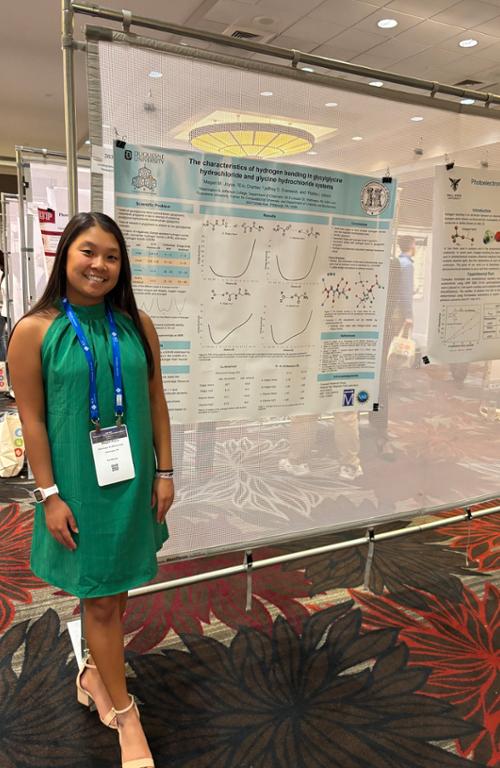
The NSF-REU program provided me with valuable exposure to computational chemistry.
I gained insight into its growing significance and diverse applications across STEM
fields, as well as a clearer understanding of the daily responsibilities of professors
and graduate students. Additionally, I had the opportunity to build strong connections
with my research group.
We have an exceptional team of research-active faculty. Explore their work to see
how your interests might align with their research. Theoretical and Computational Organic and Biophysical Chemistry Surface Chemistry Biochemistry of Cholesterol Related Pathways Inorganic Chemistry of Environmental and Energy Related Sciences Biophysics and Biochemistry of RNA Neurological Diseases Synthetic Organic Chemistry Mass Spectrometry of Lanthanides We are proud to partner with outstanding faculty from other institutions. Their diverse
research areas provide additional opportunities for collaboration and learning beyond
Duquesne. Organic/Inorganic Synthesis and Spectroscopy Synthetic Organic Chemistry Computational Chemistry and Medicinal Chemistry Biochemistry Nano-tribology Analytical and Physical Chemistry Organic Chemistry Organic Chemistry and Medicinal Chemistry Materials Chemistry Inorganic Chemistry and Environmental Chemistry Computational Chemistry, Medicinal Chemistry and Materials ChemistryHear From A Participant
Participating Duquesne REU Faculty

Jeffrey Evanseck, Ph.D.

Ellen Gawalt, Ph.D.

David Heisler, Ph.D.

Paul Lummis, Ph.D.

Mihaela Rita Mihailescu, Ph.D.

Thomas Montgomery, Ph.D.

Michael Van Stipdonk, Ph.D.
Participating External Faculty

Dani Arias-Rotondo, Ph.D.

Daniel Chase, Ph.D.

Evangelia Kotsikorou, Ph.D.

Patrick Lackey, Ph.D.

Min-Soo Lim, Ph.D.

Robbie Luliucci, Ph.D.

Jonathan Moerdyk, Ph.D.

Jeffrey Rohde, Ph.D.

Allison Roessler, Ph.D.
Alexander Rupprecht, Ph.D.
Brandon Vernier, Ph.D.
Questions? Contact Us!
Questions about the REU program? Contact Dr. Jeffrey Evanseck or Dr. Thomas Montgomery.
Chemistry REU Program Highlights