

Snapchat messages are deleted immediately. Instagram stories disappear after 24 hours. Their impact, however, can affect a child’s confidence and behavior for much longer.
Decoding how kids think
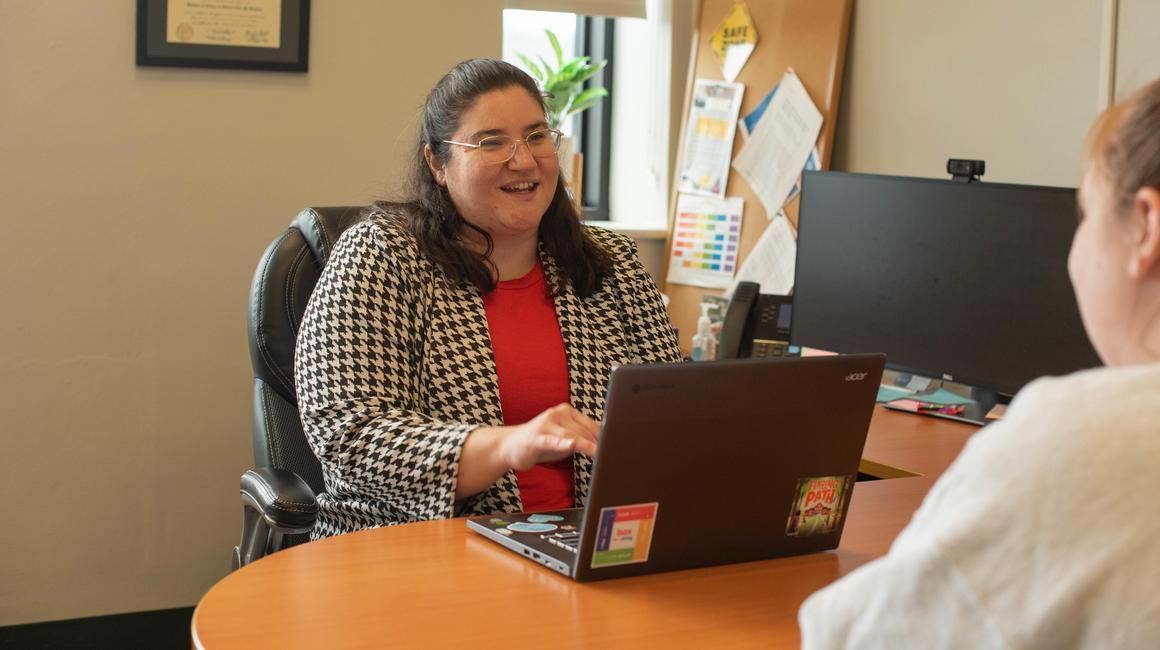
Fourth-year school psychology PhD student Athena Vafiadis, GE’27, hopes to minimize risks and consequences associated with youth social media use and help parents and educators understand how they can play a part.
From Philadelphia, Pa., Athena earned undergraduate and master’s degrees in neuroscience
close to home. Her goal? To understand how the brain works.
“My brother has autism,” said Athena. “That really guided my early career—trying to
understand what it was that made him different than me."
During her graduate studies, Athena worked in a research lab examining social development
and neuroscience, namely how the brain looks in kids that have social anxiety and
social aggression. She came to understand how the brain functioned; she then wanted
to understand how to help.
“My supervisor at the time reminded me that school is where kids spend the majority
of their day, and that’s where you can see them in action and help in different environments,”
said Athena.
As she was researching doctoral programs, Athena learned about Dr. Laura Crothers,
school psychology program director in Duquesne’s School of Education.
“She’s the resident expert in bullying behaviors, and her knowledge encouraged me
to apply and commit,” said Athena.
Helping schools and families
Athena’s dissertation looks at how children engage and interact with the online environment
and how it affects their behavior. She’s participated in practicum experiences since
her first year, working in school district, private practice and hospital settings.
An internship in her fifth year will round out her experience in the program.
These practicum experiences complement classroom learning to create a holistic education
experience and encourage students to confidently address systemic challenges in education.
“In class, we learn about best practices for school psychology, for example the psychology
of how people learn and how to write education reports and evaluations,” said Athena.
“Then the hands-on experience is great because you see how that best practice translates
to day-to-day work.”
“I reached out to his parents and teacher to get a whole community support around
his care, and we worked together over the course of the entire school year,” she said.
“We practiced scenarios of how to act in class, and we started to see an increase
in pro-social behaviors.”
Athena and her student were thrilled with the improvement. She notes that he was moving
toward being “the hero” in his stories. Her hard work as a trusted partner was recognized
by the boy’s parents, who presented Athena with a bouquet of flowers at the end of
the school year to express their gratitude.
“I wanted him to have a positive experience with therapy because even though my time
with him was ending, it wasn’t the end of his therapy journey,” she said. “We built
a great rapport and that’s hopefully going to help him with therapy in the future.”
An inspired and supported journey
As Athena began her dissertation, the faculty member who inspired her at the onset
of her PhD journey was still walking alongside her, taking the time to mentor her
and trusting in her potential.
“Dr. Crothers has definitely been a huge help in narrowing down what I wanted to do,”
said Athena. “I'm very independent, but I can overthink. She has a lot of personal
experiences with this topic, and she’s been my sounding board and helping to guide
my research questions.”
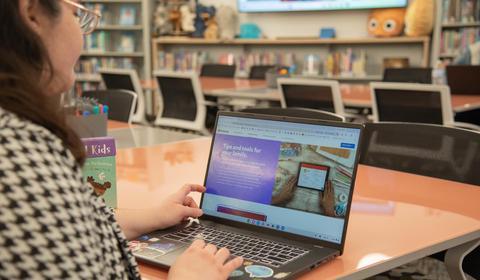
“It's been really exciting,” said Athena. “I created resources for parents about what
these different social media apps are and where they can go for parent controls and
general information about how they should monitor their kids online. I want to make
sure that we're also spreading knowledge about social media while I'm trying to study
it.”
As she wraps up her studies, Athena can keep her options open. She’s prepared for
anything thanks to the experience she gained through a variety of practicum settings,
and she has a good sense of what she wants to achieve.
“I see myself working with communities in need, and maybe in the longer term coming
back to academia,” said Athena. “Research is something I can’t give up.”
News Information