

Duquesne’s School of Nursing was founded on the ideal of giving back. From the beginning, the mission has been simple but profound: serve God by serving students, so they may, in turn, serve others — building a healthier, more compassionate world, one patient and one community at a time.
That mission doesn’t end at graduation. In many ways, it becomes even more powerful as alumni step into their careers and carry Duquesne’s values into hospitals, clinics and communities across the country. And for some, those footsteps eventually circle back home — when giving back takes on a new and deeply personal meaning.
There are a number of ways alumni can — and have — shown up for their alma mater, but one of the most impactful ways alumni give back is through precepting. While mentoring the next generation of nurses may not come with fanfare, it may be one of the most valuable gifts alumni can offer—time, experience and guidance at the very moment students need it most.
Many graduate nursing programs at Duquesne require students to complete clinical hours under the supervision of a preceptor. With enrollment on the rise, the need for more alumni to step into this role has never been greater. And while it can be admittedly hard to find enough preceptors for the job, and the responsibility can sound daunting, those who take it on describe it as not just manageable but deeply rewarding — for both student and preceptor alike.
What it Means to Give
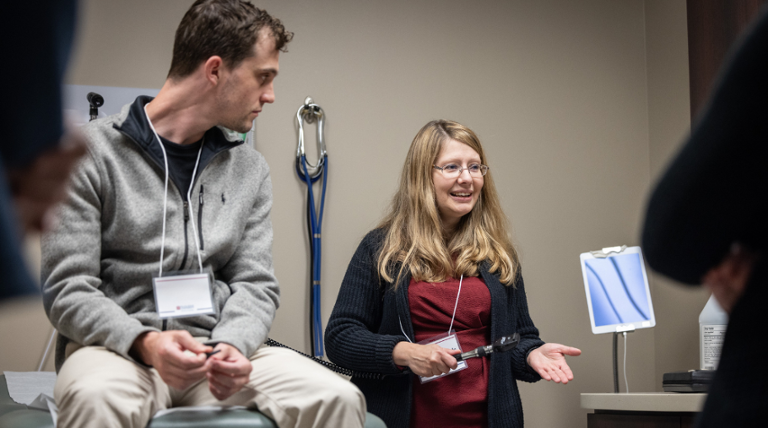
Molly Garver, BSN, RN, CCRN, a master’s student in the Family Nurse Practitioner track, currently works in the cardiac ICU at UPMC Children’s Hospital of Pittsburgh. Last summer, she was paired with alumna Dr. Justine Sicari, DNP, FNP-C, MSNed, RN, for her clinical hours at Allegheny Pulmonary and Critical Care Medicine, Allegheny Health Network in Pittsburgh. Garver found the shift from bedside nursing to a new specialty overwhelming at first.
“I had no idea what to expect,” Garver recalls. “You’re nervous. You’re in this new environment, working with patients you do not really know. There are a lot of fine details you have to deal with that just do not show up in your experience as a bedside nurse.”
With Sicari’s encouragement and guidance, Garver quickly found her footing.
She definitely helped me feel more comfortable, encouraged me to ask questions and really supported my learning,” she says. “Dr. Sicari is so knowledgeable and shared not only clinical skills, but also how to communicate with patients and physicians, and how to find your flow as a nurse practitioner.”
That support, Garver says, made the difference between uncertainty and confidence. “I obviously got a great education in undergrad, but so much of what I do, even as a bedside nurse, I learned at work,” Garver says. “It’s helpful to be able to learn hands-on in this way — it makes a world of difference.”
“My goal as I move forward in my career as a nurse practitioner is to provide the highest quality of care while ensuring that every interaction reflects dignity, humility and respect,” she says. “I’m still exploring where I’ll ultimately focus, but I’m committed to growing into a well-rounded, compassionate clinician. Each new rotation helps me deepen my interests, strengthen patient relationships and continue learning so I can meet the diverse needs of individuals and communities throughout Pittsburgh.”
Learning under the guidance of a preceptor is not just a good way to ascend the nursing ladder. For some students, it’s an opportunity to explore a whole new realm of care. For alumna and forensic nurse Jessica Dick, MSN, RN, SANE-A, SANE-P, precepting offers something equally powerful: the chance to expand access to a field she loves.
“I would not be where I am today if I did not have mentorship throughout my career,” says Dick, who works as a preceptor in Arlington, Va., and holds the position of associate director of nursing and forensic nurse examiner for DC Forensic Nurse Examiners in Washington, D.C. “In my specialty especially, forensic nursing, it can be so difficult to find preceptors.”
Small and specialized as her field is, Dick is abundantly passionate about what she does, which makes the chance to grow the field, and teach others through precepting, even more important. “For me, teaching is something that fills my cup,” she says. “I love sharing what I do, and if I can contribute to the future of nursing while furthering the field, that feels so important.”
What it Takes to Give
Time is the most common concern that holds nurses back from precepting. But according to Sicari, who has mentored Duquesne students for five years, it’s easier to manage than it seems.
“When I have a student in a clinic, it can feel like a lot,” she admits. “But it just comes down to staying organized. I’m going to be at work seeing patients anyway. Mentoring just becomes another part of my day.” She’s also learned through her experience how to balance her duties as an outpatient pulmonary nurse practitioner and mentor and keep things moving. Even challenging clinic days, she notes, provide meaningful lessons for students.
“I have been in situations that maybe do not feel like the best learning environment,” she says. “If it is a hectic day, I still make sure they’re learning something, whether that’s clinical knowledge or how to navigate the realities of practice.”
Sicari shares that she holds space to connect with students to ensure they are gaining the skills and knowledge that they need. “And,” she notes, “I have some things in my back pocket that I can offer them if the day gets kind of congested.”
But what really energizes her through preceptorship experiences, Sicari says, is not just the passion for what she does, but passion about the future of nursing as a whole.
“It is rewarding for us, as experts in our fields, to give back and prepare students to do a good job. Who knows? They may be taking care of you or your family someday. We want a health care system that is compassionate, knowledgeable and capable of providing quality care. That starts with how we educate and mentor our future nurses.”
Full Circle
Precepting isn’t just about checking boxes or clocking hours. It’s about giving a student what every nurse remembers needing most: someone who believes in them, pushes them and shows them what’s possible. For Duquesne alumni, it often feels like coming full circle. The same doors once opened for them — doors that led to confidence, purpose and a calling — can now be opened for the next nurse in line.
“Each of us is here because someone took the time to mentor us,” says Dick. “Eventually, it becomes our turn.” That is the heart of Duquesne’s mission — preparing nurses who serve, who lead and who give back. Each time an alumna or alumnus steps forward as a preceptor, that mission carries forward in the most personal way: by shaping the future of nursing, one student at a time. And that may be the most precious gift of all.
How to Get Involved
For Duquesne graduate nursing students, working with a preceptor is required. But finding enough preceptors to meet the need is an ongoing challenge. Preceptors are especially needed in the following graduate programs:
- Family Nurse Practitioner
- Psychiatric/Mental Health Nurse Practitioner
- Adult-Gerontology Acute Care Nurse Practitioner
- Forensic Nursing
- Nursing Education and Faculty Role
Anyone interested in serving in this meaningful role can contact Leigh Anne Rethage at (412) 396-1481 or%20rethagelFREEDUQUESNE.
As Dick reminds us: “None of us got our first job without a preceptor. Every step in a nurse’s career depends on someone willing to teach, to guide and to believe in us. Would any of us have the career we have today if it was not for the people taking us under their wings?”
News Information