
Chemistry Ph.D.
The Doctor of Philosophy (Ph.D.) in Chemistry program provides you with the knowledge and skills to address complex biological problems at the molecular level and to grow into an independent scientist capable of advancing solutions to today’s societal challenges. Through rigorous coursework and faculty-mentored research, you’ll build a strong theoretical foundation across organic, inorganic, physical, analytical and biochemistry while deepening your understanding of topics such as biomolecular structure and function, enzyme kinetics, metabolic pathways, nucleic acid chemistry and molecular biology. You’ll also learn to critically analyze and communicate scientific discoveries—both orally and in writing—and to synthesize your chemical knowledge to design, defend and execute original research with integrity and purpose.
Application fee waivers are available for the Chemistry PhD application. Please contact Kelci%20Sopko to obtain a waiver code before you begin your Graduate CAS application.
Program Information
The Ph.D. in Chemistry program will prepare you for leadership roles in scientific research and development while equipping you with advanced research skills and expertise sought after by academia, industry, and government sectors.
Program Type
Major
Degree
Doctorate
Academic Department
Chemistry and Biochemistry
Required Credit Hours
Structured around variable credits for coursework, research and dissertation
Modality
In-Person
Our Ph.D. program is nationally ranked #6 in “Student Support and Outcomes” by College
Factual. secured annually by Duquesne University. for chemistry Ph.D. graduates. Undergraduates share how graduate students helped them grow in the lab and beyond. You will conduct original research under the guidance of our faculty who bring expertise
across a wide range of fields, including analytical chemistry, biochemistry, inorganic
chemistry, organometallic chemistry, organic chemistry, physical chemistry and theoretical
chemistry. This research will demonstrate your ability to independently design, execute,
and analyze complex experiments. Inorganic Chemistry and Organometallic Chemistry Biochemistry Physical Chemistry, Theoretical Chemistry and Organic Chemistry Biochemistry Inorganic Chemistry and Organometallic Chemistry Biochemistry Organic Chemistry Analytical Chemistry To support your research endeavors, our program provides access to state-of-the-art
laboratory facilities and research funding opportunities. Collaboration and engagement
with the wider chemistry and biochemistry academic community are encouraged, allowing
you to present your research at prestigious conferences and publish your findings
in renowned scientific journals. Duquesne offers graduate students full access to campus resources—from fitness and
wellness services to library study spaces and career development. Live just steps
from your classes in Brottier Hall (apartment style), Des Places Hall (suite style),
or our newest graduate student apartment building, McGinley Hall.Empower. Collaborate. Innovate.
#6 Nationally Ranked PH.D. Program
$3.2 million in NIH funding
$95K average annual salary
Questions? Contact us!
Kelci Sopko

See the Duquesne Difference
Research Faculty

Jennifer Aitken, Ph.D.
Michael Cascio, Ph.D.

Jeffrey Evanseck, Ph.D.
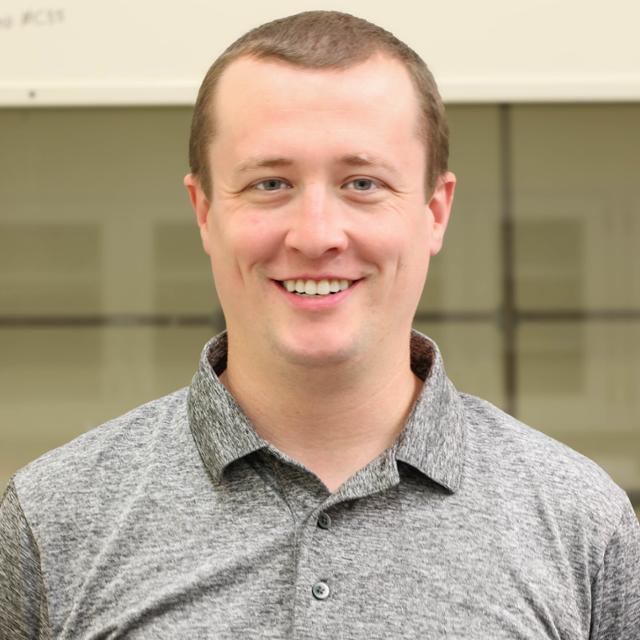
David Heisler, Ph.D.

Paul Lummis, Ph.D.

Mihaela Rita Mihailescu, Ph.D.

Thomas Montgomery, Ph.D.

Michael Van Stipdonk, Ph.D.
Recent Student Publications
Advance Your Research Potential
Step Into Your Graduate Experience
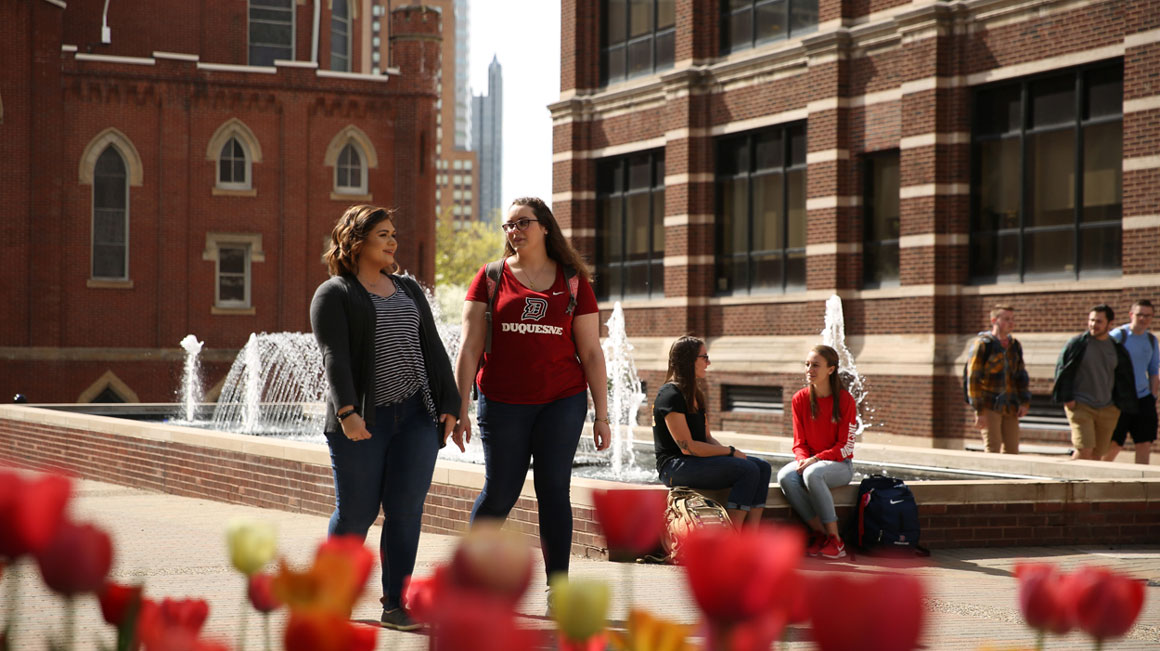
Graduate Student Life
Application Requirements & Financial Assistance
Financial Support for Graduate Students
As a Ph.D. student, you'll receive financial support to ensure you can focus on your research. Our financial support includes:
-
Assistantships: All students receive support in the form of a Teaching Assistantship (TA) or a Research Assistantship (RA) in addition to a tuition waver.
-
Stipend: Currently set at $28,000 per year (2024-25).
-
Additional Benefits: In addition to the stipend, we offer subsidies for health insurance and parking permits.
-
Duration of Support: Students in good standing typically receive financial support for five years, and you can also apply for one year of additional support.
Research assistantships (RA) are offered by labs that have external grant support that includes RA funding. More senior graduate students may apply for the prestigious Bayer Fellowship, a competitive RA stipend that recognizes exceptional accomplishments in the field.
Teaching Assistants (TA): As a Teaching Assistant, you'll play a pivotal role in supporting undergraduate education. This includes responsibilities such as managing laboratory sections, presenting pre-lab instructions, supervising lab activities, creating test materials, and conducting examinations. You'll be under the guidance of the faculty member leading the course, ensuring you gain valuable teaching experience.
Application Requirements
General Requirements:
- Undergraduate Transcript
- Personal Statement
- Three Letters of Recommendation
- No GRE Required
Requirements for International Students:
- TOEFL Score of 100, equivalent IELTS or DuoLingo scores are accepted
- Transcript Evaluation (WES, others)
Learning Outcomes
- Achieve a Strong Theoretical Foundation in Advanced Chemistry - Students will acquire a deep understanding of advanced concepts of Organic, Inorganic, Physical and Analytical Chemistry and Biochemistry, preparing them for diverse applications of chemistry in academia, industry, and professional fields.
- Communicate Scientific Outcomes Effectively Through Oral and Written Methods – Students will be able to effectively disseminate their chemistry experimental results or those from the chemistry literature, both through oral presentations and written documents.
- Synthesize Chemical Knowledge for the Purpose of Scientific Discovery – Students will be able to synthesize chemistry knowledge to solve complex research problems. They will be able to independently conceptualize, defend and execute research plans to answer scientific questions. They will understand the role of integrity and ethics in science.
Accreditation
ACS accreditation ensures our undergraduate chemistry program meets rigorous national standards, equipping students with the knowledge, skills, and experience to excel as scientific professionals. It also enhances the program’s reputation, attracts top students and faculty, and prepares graduates for technical careers.