
Biological Sciences
Your learning experience will thrive on our comprehensive approach to the life sciences. Our interdisciplinary curriculum is designed to provide you with a well-rounded education, starting with foundational courses in biology, chemistry, physics, and statistics. These courses lay the groundwork for more advanced biology subjects that will deepen your understanding of the field.
You will engage in inquiry-based scientific exploration through our capstone course. This hands-on experience allows you to apply your knowledge and develop critical thinking skills. Additionally, we offer various faculty-led research projects, giving you opportunities to participate in scientific discovery.
For those aspiring to pursue medical school or other healthcare-related graduate programs, our program offers comprehensive pre-med/pre-health preparation. We provide the necessary resources and guidance to support your ambitions in these fields.
To cater to your specific interests and career goals, we offer four concentrations within the program: General Biology, Molecular Biology, Physiology, and Evolution & Organismal Biology.
- With the General Biology concentration, you have the flexibility to personalize your coursework according to your specific interests and academic pursuits.
- Our Molecular Biology concentration holds accreditation from the ASBMB and is an ideal choice for those interested in medicine, public health, or genetic counseling. The specialized curriculum in these areas will provide you with a solid foundation.
- If you're fascinated by the intricacies of human and animal physiology and wish to explore health and disease topics further, the Physiology concentration offers advanced coursework to deepen your knowledge in these areas.
- For students passionate about environmental conservation and sustainability, our Evolution & Organismal Biology concentration focuses on evolution, ecology, and biodiversity. By choosing this concentration, you'll acquire the knowledge and skills needed to address pressing environmental challenges.
To guide you on your academic journey, please refer to the suggested course sequence below.
Program Information
The Bachelor of Science in Biological Sciences program provides students with a strong foundation in the life sciences. Graduates are prepared for a wide range of career paths in research, healthcare, environmental sciences, biotechnology, education and beyond.
Program Type
Major
Degree
Bachelor's
Academic Department
Biological Sciences
Duration
4-years
Required Credit Hours
122
Modality
In-Person
Across the program, you’ll have opportunities to work alongside faculty whose research
is actively shaping how we understand the living world—and you’ll see how that same
research can become part of your own academic path. In virology, research in the Dembowski Lab examines how herpes simplex virus type 1 (HSV-1) relies on both viral factors and
host cell processes to support infection. By defining how HSV-1 engages the cellular
environment to enable viral gene expression and DNA replication, this work advances
our understanding of virus–host interactions and informs the development of antiviral
strategies. At the intersection of ecology and genetics, the Janecka Lab uses landscape genetics to understand how habitat and geography influence gene flow
in wildlife populations like bobcats. This research shows how even wide-ranging species
are shaped by environmental patterns across multiple spatial scales. In microbiology, the Kim Lab explores the mechanisms of microbial interaction by studying multicellular behaviors
that manifest via pre-wired genetic circuits and de novo mutations that forge new
interactions. A multidisciplinary approach is employed, exploring diverse questions
ranging from evolution and ecology down to molecular structure and function. In disease prevention and global health, the Lampe Lab develops innovative strategies to combat malaria by engineering symbiotic bacteria
inside mosquitoes to disrupt parasite development. This research introduces you to
cutting-edge approaches in vector biology and infectious disease control. In microbiology and bacterial development, the McCormick Lab studies how bacteria regulate cell division and form spores, uncovering unexpected
flexibility in microbial machinery that produces antibiotics and shapes bacterial
survival. This type of research gives you experience with advanced microscopy and
molecular genetics while addressing fundamental questions in cell biology. Using a molecular genetic approach, the Patton-Vogt Lab studies how cellular membranes are synthesized and degraded, and how the resulting
metabolites are utilized by the cell. Because cells and their organelles constantly
change during growth, division, and secretion, lipid metabolism must be tightly regulated
to maintain proper membrane structure and function. Disruptions in lipid homeostasis
can contribute to diseases such as cancer and diabetes. If you’re interested in neuroscience, inflammation, and translational medicine, research
in the Pollock Lab investigates how male and female nervous systems respond differently to peripheral
neuropathic pain, even when symptoms appear similar. Using a chronic constriction
injury model and RNA sequencing of dorsal root ganglia neurons, the lab has shown
that both sexes can experience comparable pain relief from a COX-2–inhibiting nanoemulsion
treatment, yet the underlying gene expression patterns differ significantly. These
findings highlight that similar pain behavior can arise from distinct molecular pathways,
underscoring the importance of sex as a biological variable in neuroinflammation and
pain research. If you’re drawn to conservation technology, the Porter Lab conducts surveys of aquatic organisms through electrofishing, DNA metabarcoding and
CRISPR-based detection tools. This research enables rapid detection of threatened
and endangered species, invasive species, and pathogens, expanding access to molecular
diagnostics for conservation biology, disease monitoring, and biodiversity research. For those interested in molecular evolution and genome evolution, the Seaman Lab seeks to understand how adaptation works at the molecular level, with a focus on
the reproductive biology of humans and other primates, using both empirical and computational
approaches. Finally, at the organismal level, the Woodley Lab explores how environmental contaminants including microplastics and altered microbial
environments influence brain development, behavior, and stress responses in amphibians—showing
how microbiomes can shape how animals respond to their world. The lab also studies
the fascinating properties of salamander skin secretions, including whether salamander
secretions can combat antimicrobial-resistant pathogens. If you’re looking for a molecular biology program recognized for excellence and built
for your future, Duquesne’s School of Science and Engineering is the place for you.
Our Molecular Biology concentration has been re-accredited by the American Society
for Biochemistry and Molecular Biology (ASBMB) through 2032—a mark of excellence recognized
nationwide.
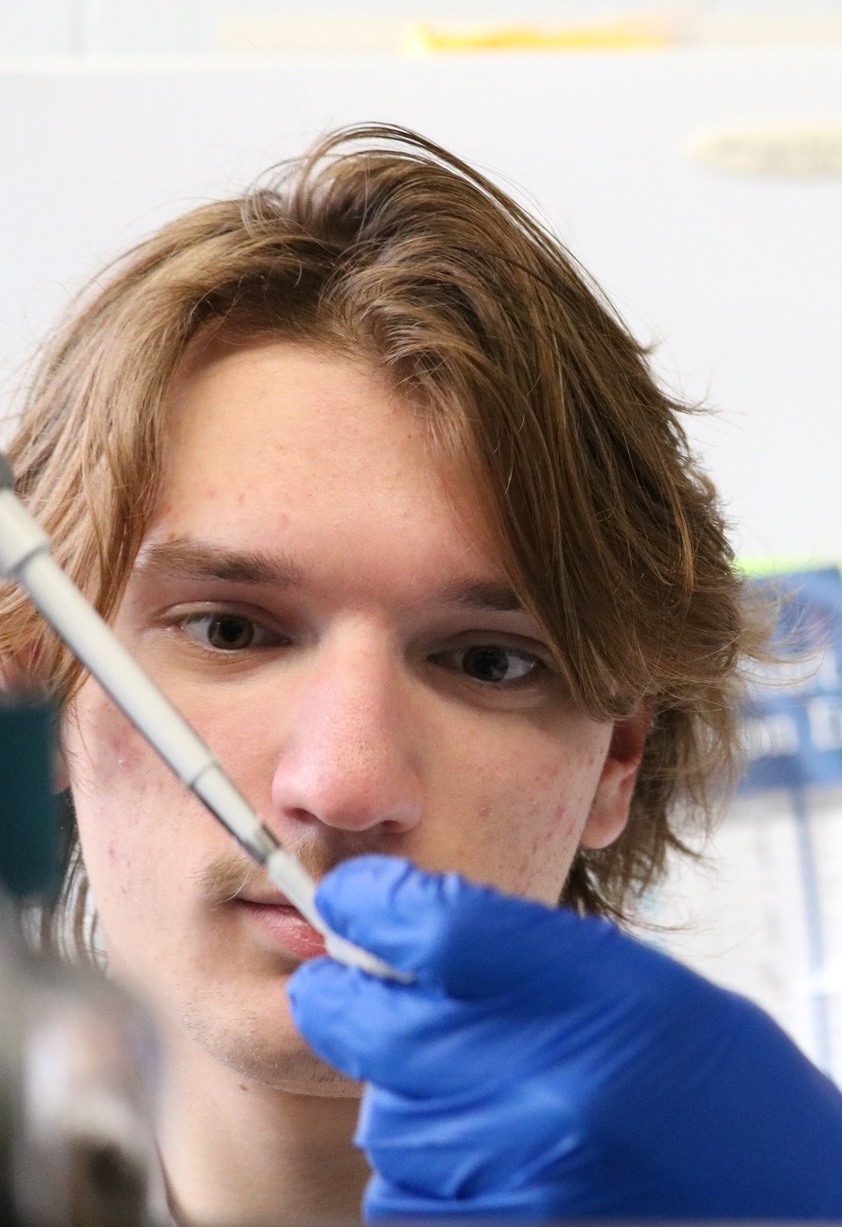
The capstone course teaches you so many laboratory techniques and allows you
to pursue a research project that interests you. Joining a laboratory can be hard
and time-consuming, but this course allows us to build necessary bench skills and
gain experience that helps students excel in the lab.
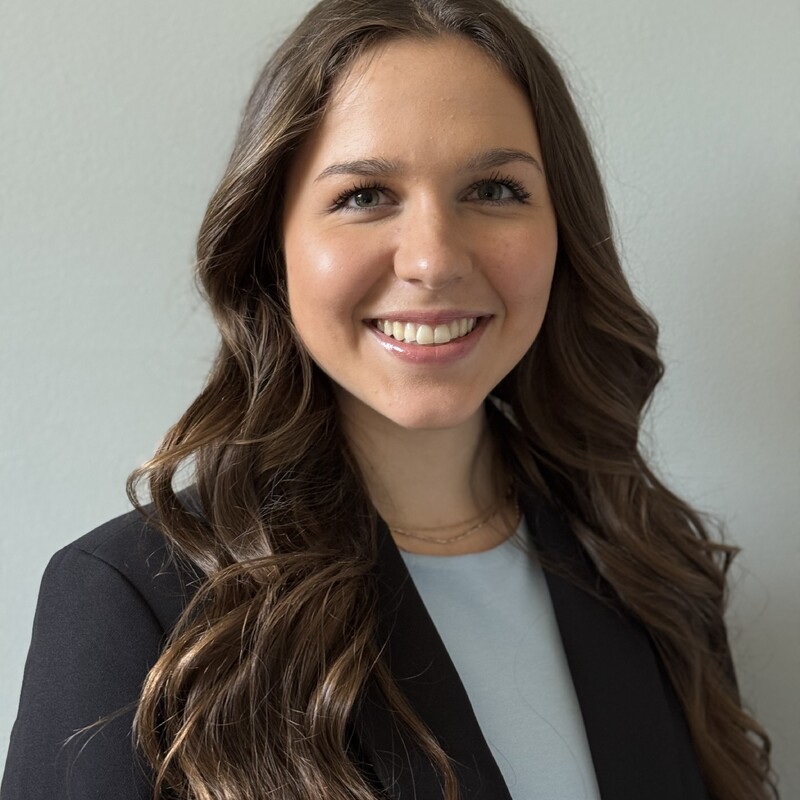
Duquesne really gave me the confidence to take on new challenges and explore
opportunities I may never have thought about.
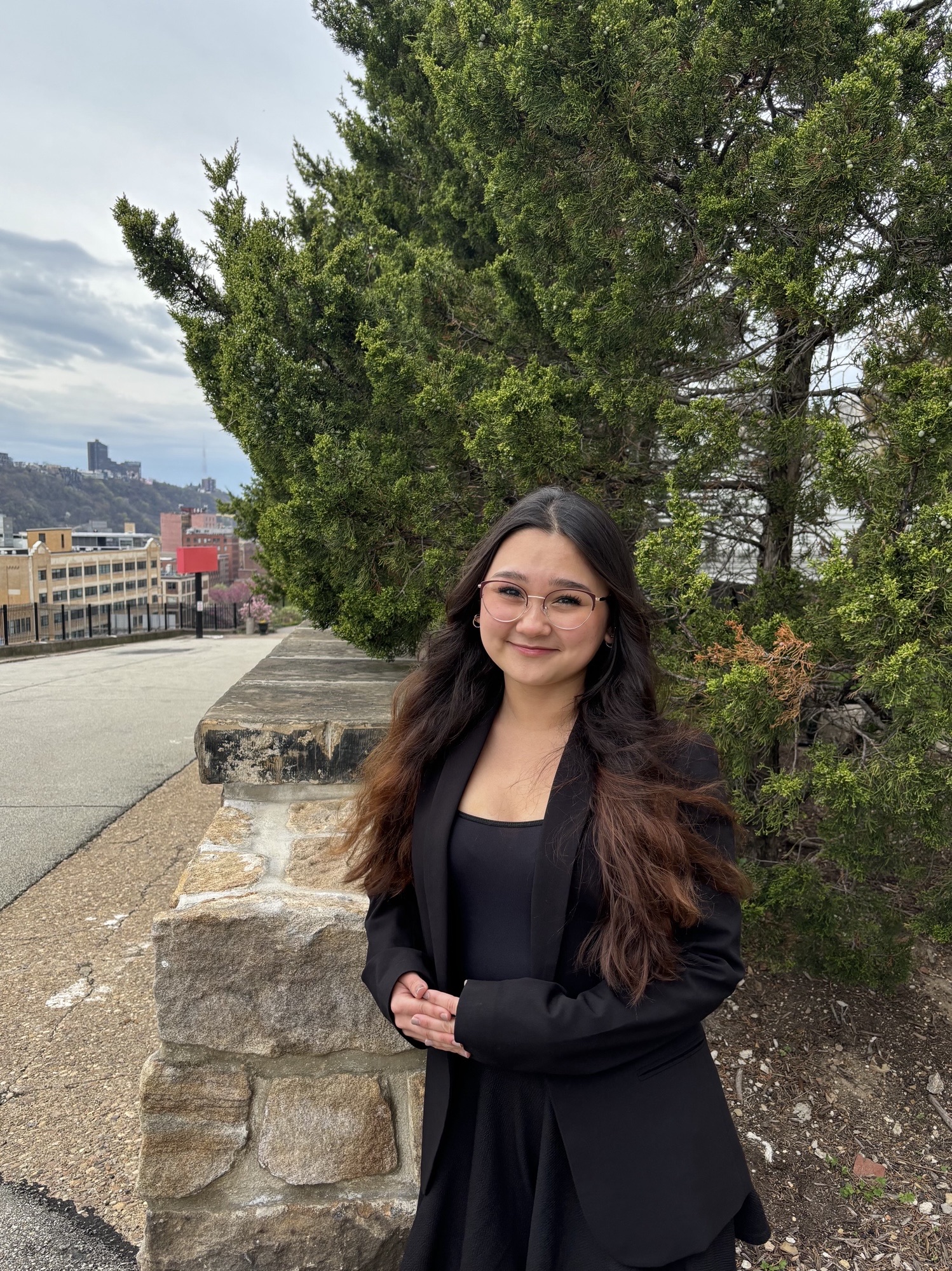
Having friends in the same classes gave me stability and motivation. And professors
who were willing to help made it possible to push through more challenging courses.
My experience in the Pollock lab has paved the way for me to participate in amazing
internships at other universities, where I gained hands-on experience and learned
a variety of unique techniques I hope to use for my own research one day.
My biology degree prepared me to pursue a PhD program through relevant coursework,
organizations, and graduate/faculty mentors. The structure of the degree grants flexibility
to explore different subjects. I was able to fit in many additional courses in math,
chemistry and engineering.
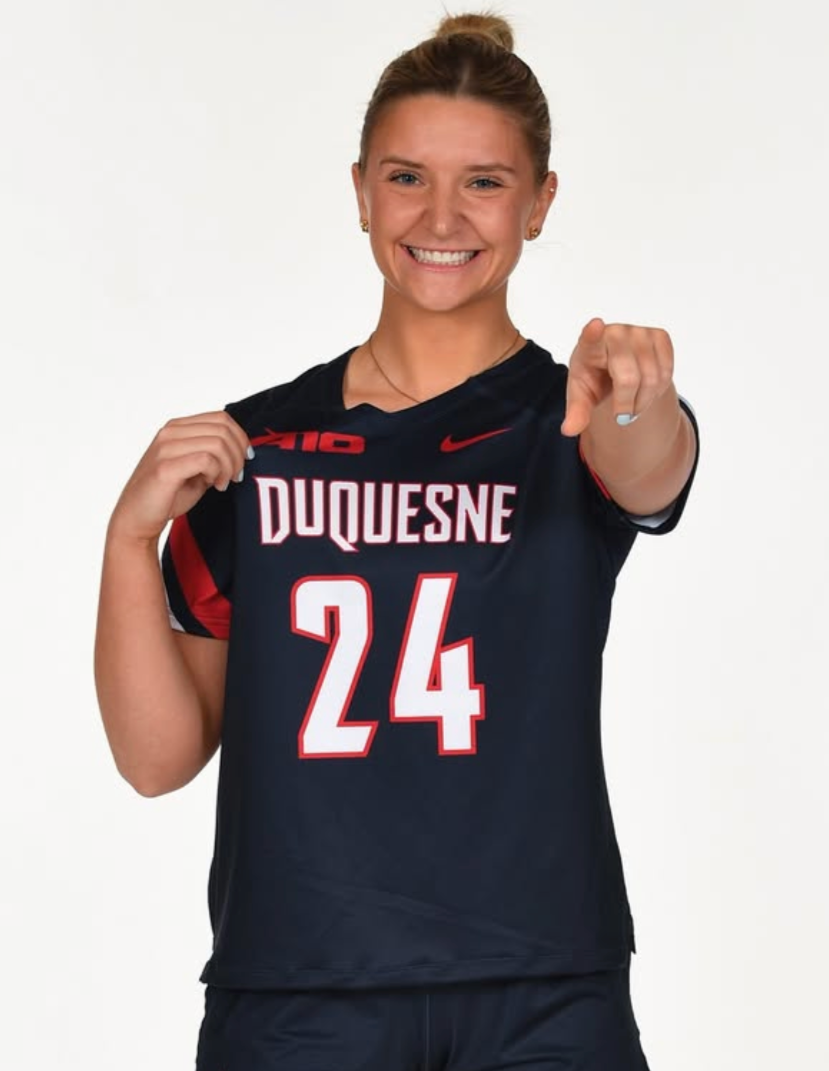
The research opportunities at the School of Science and Engineering are outstanding
and have provided me with opportunities to learn and understand biology from a whole
new perspective.
Research Opportunities
ACCREDITED. BUILT FOR YOUR FUTURE.
Student Outcomes
Questions? Contact Us!
Dr. Phillip Palmer
Straight From Students

Prepared For Anything
Student Outcomes
As an undergraduate student in the Bachelor of Science in Biological Sciences program, you can expect to achieve a wide range of impactful outcomes. Recent graduates have continued their education through programs including:
Health Professions
- Doctor of Dental Medicine (DMD) — University at Buffalo and University of Pittsburgh
- Doctor of Osteopathic Medicine (DO) — Lake Erie College of Osteopathic Medicine (LECOM) and Duquesne University College of Osteopathic Medicine
- Bachelor of Science in Nursing (BSN) — University of Pittsburgh, Wilkes University and York College
Graduate Research & Science
- PhD in Microbiology and Immunology — Dartmouth College
- Master’s in Biomedical Engineering — University of Pittsburgh, Duquesne University and Johns Hopkins University
- Master’s in Genetic Counseling — Geisinger
- Master’s in Prosthetics and Orthotics — University of Pittsburgh School of Rehabilitation Sciences
- Master of Public Health (MPH) in Human Genetics — University of Pittsburgh
- Master of Public Health (MPH) — Cornell University
Education
- Master’s in Secondary Education — Duquesne University
Additional Graduate Study
- Graduate program — Sorbonne Paris Panthéon
- Master’s program — West Liberty University
Research Opportunities
In the Bachelor of Science in Biological Sciences program, you will gain proficiency in scientific research through coursework and research experiences. You will learn research methodologies, experimental design, data analysis, and interpretation, honing your critical thinking and creative skills. The program offers valuable opportunities for hands-on undergraduate research, allowing you to collaborate closely with faculty mentors, contribute to scientific investigations, and gain practical research experience. These experiences will prepare you for further research pursuits, graduate studies, and diverse professional paths, including medical and research-related graduate programs.
Capstone Courses
Our inquiry-based capstone course will enhance your scientific writing and communication abilities, mastering the art of presenting research findings and concepts with clarity and precision. You will gain expertise in writing research papers, lab reports, and delivering scientific information to diverse audiences. By developing strong critical thinking skills, you will excel in analyzing intricate biological phenomena, identifying research gaps, and proposing innovative solutions. These skills will empower you to tackle real-world challenges in Biological Sciences effectively.
Pre-Med/Pre-Health Preparation
For those aspiring to pursue medical school or other healthcare-related graduate programs, our comprehensive curriculum offers thorough pre-med/pre-health preparation to equip you with the necessary knowledge and skills for these pursuits. Throughout the program, you will engage in foundational courses in the life sciences, including subjects such as anatomy, physiology, genetics, and biochemistry. These courses provide you with a solid understanding of the fundamental concepts and principles that are essential for medical and healthcare professions. We are committed to helping you achieve your goals and make a positive impact in the field of healthcare.
Graduate Studies
The program will empower you to build a solid foundation for your future endeavors
in Biological Sciences, Biotechnology, Medicine, Healthcare, or related fields. You
will acquire the essential qualifications to pursue advanced degrees, including Master's,
Ph.D., or MD degrees, as well as other healthcare-related programs, allowing you to
deepen your knowledge and specialize in your specific areas of interest. This comprehensive
preparation will enable you to excel in your chosen path and advance your expertise
through further research and advanced studies.
Careers In Biological Sciences
As a graduate of our program, you will be equipped with the expertise and practical experience needed to embark on a variety of rewarding careers in the dynamic field of Biological Sciences. Your comprehensive knowledge, advanced skills, and research experience will open doors to diverse opportunities in academia, research, biotechnology, medicine, dentistry, veterinary medicine, healthcare, environmental conservation, government agencies, and other related industries. With a range of career paths available to you, you'll have the flexibility to pursue your passion and make a significant impact in your chosen area of specialization.
Suggested Course Sequence
To assist students in achieving their academic goals within the B.S. in Biological Sciences program, we recommend the following course sequence. It is important to note that BRDG courses can be completed in any order throughout the undergraduate curriculum, allowing for greater flexibility in scheduling.
Undergraduate research is highly encouraged. Our department recognizes the value of research and the significant contributions it can make to the scientific community. Therefore, we provide ample opportunities for students to engage in research projects with our esteemed faculty.
- CHEM 121/R Chemistry I/Recitation (4 credits)
- CHEM 121L Chemistry I Lab (1 credit)
- BIOL 115 / 115L Adv. Biology I / Lab/Recitation (5 credits)
- BRDG 101 Writing and Analysis (3 credits)
- MATH 115 Calculus I (4 credits)
- BIOL 100 - Biology Major Exploration (1 credit)
Spring Semester
- CHEM 122/R Chemistry II/Recitation (4 credits)
- CHEM 122L Chemistry II Lab (1 credit)
- BIOL 117 / 117L Adv. Biology II / Lab (5 credits)
- BRDG 102 Writing and Literature (3 credits)
- General Elective (3 credits)
- BRDG 100 Research & Info Skills (1 credit)
- CHEM 211 Organic Chemistry I (3 credits)
- CHEM 211L Org. Chem I Lab (1 credit)
- BIOL 212 Cell and Molecular Biology (4 credits)
- MATH 225 Intro to Biostatistics (3 credits)
- EQ XXX Essential Questions Seminar (3 credits)
- ENGL 302W Scientific Writing (3 credits)
Spring Semester
- CHEM 212 Organic Chemistry II (3 credits)
- CHEM 212L Org. Chem II Lab (1 credit)
- BIOL ______ Genetics/Mol Bio Topic (3 credits)
- MATH 335 Biostats II - OR - MATH 116 Calculus II (3/4 credits)
- Bridges course - Cultural Fluency (3 credits)
- BIOL 105 Biological Sciences Career Dev (1 credit)
- BIOL ________ Capstone I (4 credits)
- PHYS 201/R Phys for Life Sci I/Recitation (3 credits)
- PHYS 201L Phys for Life Sci I Lab (1 credit)
- BRDG 105 Intro to Ethical Reasoning (3 credits)
- General Elective (3 credits)
- SPRG 108 Service Learning (0/1 credit)
Spring Semester
- BIOL ________ Capstone II (4 credits)
- BIOL ________ Supra-Organismal Topic (3 credits)
- PHYS 202/R Phys for Life Sci II/Recitation (3 credits)
- PHYS 202L Phys for Life Sci II Lab (1 credit)
- Bridges course - Critical Thinking (3 credits)
- BIOL 490 Biology Seminar (1 credit)
Please note: Science/Service Learning (SPRG 108) can be taken for 1 credit anytime during junior/senior year.
- BIOL _______ Organismal Topic (3 credits)
- BIOL _______ Biology Elective (3 credits)
- BIOL _______ Biology Elective (3 credits)
- General Elective (Theology) (3 credits)
- Bridges course - Social & Historical Reasoning (3 credits)
Spring Semester
- BIOL _______ Biology Elective (3 credits)
- BIOL _______ Biology Elective (3 credits)
- Bridges course - Ethical Reasoning (3 credits)
- General Elective (Philosophy) (3 credits)
Biology Topic Areas include one course from Genetics, Supra-Organismal and Organismal
topics. ASBMB accreditation recognizes excellence in biochemistry and molecular biology education,
ensuring our programs meet the highest national standards for quality, innovation
and student achievement. It also strengthens our competitiveness in attracting top
students, faculty and institutional support.Biology Topic Areas
Please note: Supra-Organismal Topic area is not needed for Molecular Biology Concentration.
Learning Outcomes
Accreditation