

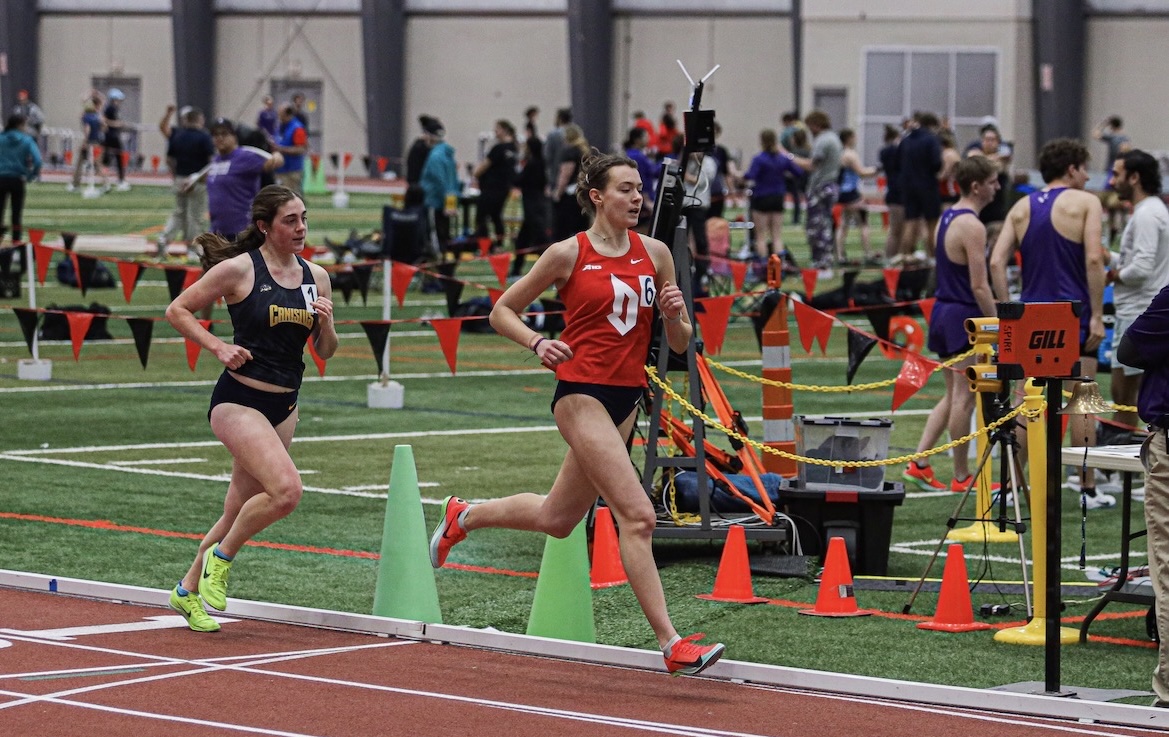
For Morgan Roemer, a junior Biology major from DuBois, Pennsylvania, success means pursuing her passions, embracing challenges and finding opportunities to make a difference in the lives of others.
A member of Duquesne University's cross country and track and field teams, Morgan balances the demands of collegiate athletics with undergraduate research and the pre-medical track. Her experience in the School of Science and Engineering has allowed her to explore her interest in medicine, develop as a researcher and build relationships with mentors and classmates who encourage her growth.
Morgan chose Duquesne after being recruited for cross country and track. She was drawn to the university's athletic facilities and team environment, along with its city campus, small class sizes and opportunities to gain clinical experience at Pittsburgh's many hospitals.
Her interest in medicine also has a personal foundation. Growing up with a father who practices internal medicine and specializes in drug and alcohol rehabilitation, Morgan saw firsthand how a physician can make a lasting difference in a community.
"Seeing his patients come up to him or recognize me in public and tell us how much his care has meant to them is something that I also want to be able to do for people someday," she said. "If I can help improve even just one person's quality of life by practicing medicine, that means that I have made a difference."
Empowering Curiosity Through Research
Morgan's passion for understanding the human body extends beyond her Biology coursework. As an undergraduate researcher in Dr. John Pollock's lab, she is exploring the neuroscience and gene expression behind chronic pain and pain relief.
The lab investigates how the mechanisms behind pain and pain relief differ between males and females. Morgan contributes to an ongoing project involving an NSAID-based nanotherapeutic medicine developed by Dr. Jelena Janjic of Duquesne's School of Pharmacy. Her responsibilities include assisting with daily experiments, microscopy and animal behavior observations.
Morgan first became interested in Dr. Pollock's research after hearing him speak during one of her freshman Biology classes. Intrigued by the lab's focus on neuroscience, a potential area of specialization for her, she reached out to him during her sophomore year to express her interest.
That decision opened the door to an experience that has strengthened her scientific knowledge and introduced her to the possibilities of a research career.
"Not only is Dr. Pollock a spectacular PI and mentor, but his research has helped me gain valuable lab experience that applies both inside and outside the lab and my classes."
"Our work has huge implications, so it's extremely special to be a part of it," she said.
Through research, Morgan has discovered that she enjoys investigating scientific questions as much as learning about them. The experience has even led her to consider pursuing a Ph.D. alongside her medical degree.
Her work reflects the School of Science and Engineering's commitment to empowering students to pursue their curiosity, engage in meaningful research and discover how scientific innovation can improve lives.
Learning Together Through Mentorship and Community
For Morgan, one of the most meaningful parts of her Duquesne experience has been the people who have supported her along the way.
The Biology program's smaller class sizes have helped her build close relationships with classmates and professors. She appreciates seeing familiar faces around Mellon Hall, studying alongside her cohort and connecting with students in other class years to exchange advice and encouragement.
"Overall I just really enjoy the connected and supportive environment we have in the program," she said.
Two mentors have played particularly important roles in her academic and personal development: Dr. Pollock and her pre-med professor, Mr. Brian Dankis.
Morgan credits Dr. Pollock with providing valuable guidance in both research and career planning. She also appreciates Mr. Dankis for generously allowing her to shadow him on several occasions, providing firsthand exposure to clinical settings and the opportunity to learn from his experience as a skilled medic. Beyond the knowledge she has gained, Morgan admires Mr. Dankis's kindness and compassion, qualities she hopes to carry into her own future career in healthcare. She is grateful for the time, mentorship and encouragement both professors have provided along her journey.
Through these relationships, Morgan has gained insight into the responsibilities of a medical professional and the importance of compassion in patient care.
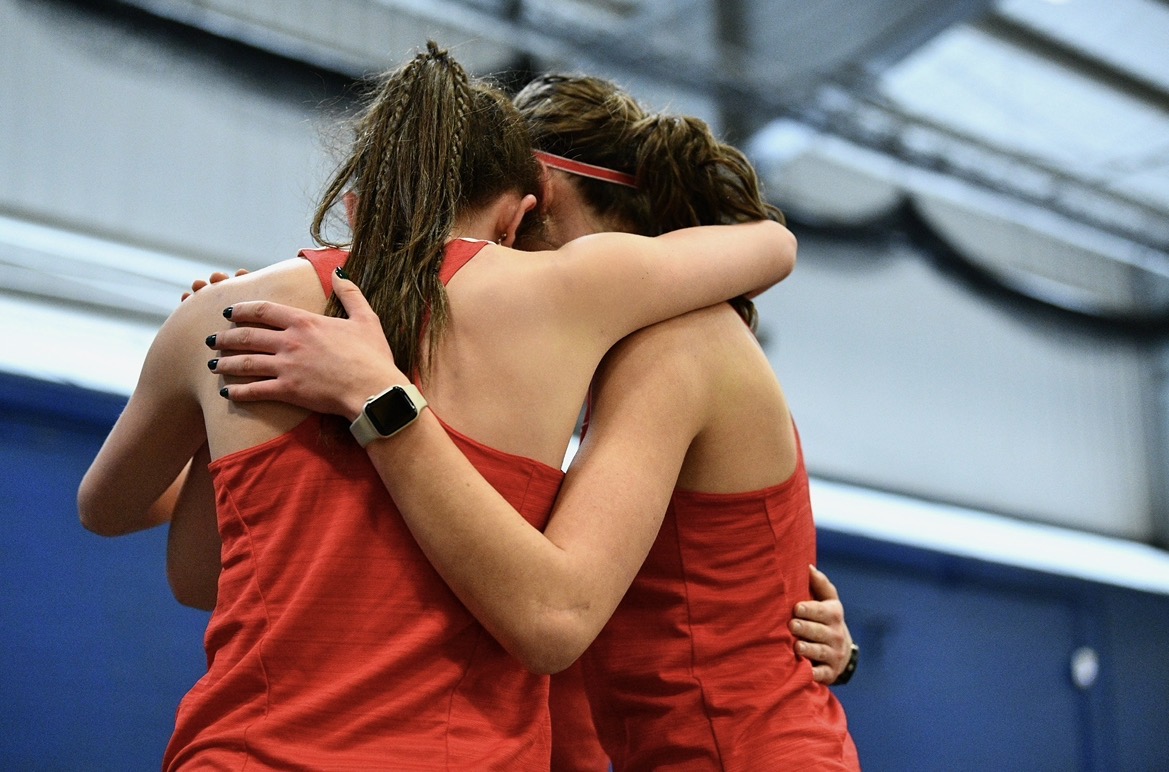
Her teammates and classmates have also become an essential part of her support system. Whether navigating the challenges of being a student-athlete, studying for exams or simply spending time together, Morgan values the encouragement and friendships that make her college experience meaningful.
For Morgan, collaboration is more than working together toward a shared academic or athletic goal. It is about learning from others, building relationships and recognizing the impact a supportive community can have on personal growth.
Building Resilience On and Off the Track
Morgan's path as a collegiate athlete has not been without challenges.
During her first two years at Duquesne, she experienced two grade 3 femoral shaft stress reactions. Having never dealt with an injury during high school, the recovery process was difficult both physically and mentally. Each injury required months of recovery followed by additional time to rebuild her strength and fitness.
The experience taught Morgan important lessons about listening to her body, recognizing her limits and understanding the value of rest.
She has since returned to competition and completed her first full cross country season since her freshman year without injury. She looks forward to continuing to compete in the upcoming track seasons.

Morgan participates in middle-distance and distance events, including the 800-meter, mile, 3,000-meter and 5,000-meter races. Although running is an individual sport, she values the camaraderie and shared commitment that make it a team experience.
"It's truly the best of both worlds to work towards bettering yourself individually to also help your team," she said.
The resilience she has developed through athletics carries into her academic and research responsibilities. She has learned to stay motivated through difficult periods, celebrate small milestones and view challenges as opportunities for growth.
"Surrounding yourself with people who are better than you shouldn't be discouraging, but rather motivating, because this will push you to be better, and this is how growth happens," she said.
Finding Balance While Pursuing Bigger Goals
A typical day for Morgan begins early. She wakes up around 6:30 a.m. for a 7 a.m. practice, where she may run four to eight miles before heading to the training room for recovery.
The rest of her day often involves moving between classes and Dr. Pollock's lab. After afternoon classes, she may attend a strength-training session, have dinner with teammates and spend the evening studying in the library or working in the lab.
Balancing athletics, academics and research requires careful planning. Morgan uses a planner to organize her schedule and make sure she can keep up with her responsibilities.
She has also learned that taking time to recharge is just as important as staying productive. She tries to set aside time before bed to relax and plans at least one fun activity each week, often off campus.
Although finding that balance is something she continues to work on, Morgan says enjoying the activities she has chosen makes the busy schedule more manageable.
Her experience has reinforced the importance of recognizing when to push forward and when to give herself time to rest. These lessons will serve her well as she continues preparing for the demands of medical school and a future career in healthcare.
Preparing to Make a Difference Through Medicine
Morgan plans to remain at Duquesne for a fifth year, earning her master's degree in Biotechnology while using her remaining year of athletic eligibility in cross country and track.
After completing her graduate studies, she hopes to attend medical school and pursue a career as a physician.
Her experiences in the classroom, research lab and athletic community have helped her discover new interests and develop the skills needed to take the next steps toward that goal.
For students considering a pre-medical path while competing in college athletics, Morgan encourages them to trust their interests, take advantage of opportunities and remember the importance of personal well-being.
"There will be days where things feel hard or even impossible, but if you have the desire, you can make it happen," she said.
"Most importantly, don't forget who you are as a person, outside of both athletics and medicine. Be kind to yourself and others, and recognize how hard you are working and be proud of yourself."
News Information