Carl G. Grefenstette Center for Ethics in Science, Technology and Law
What does it mean to be ethical in a world of AI?
The Grefenstette Center for Ethics leverages Duquesne University’s commitment to ethics in order to promote partnerships
with leading institutions and to become a transformational force for both Duquesne
and the global community. The Grefenstette Center is the first in the world to bring
Catholic, Spiritan values and ideals in an ecumenical framework to grapple with the growing challenges
presented by science and technology in society. Our vision is to enrich the conversations
and practical implementations of ethics in digital technology by incorporating religious
ethics into future discussion and development. The Grefenstette Center for Ethics
holds an annual Tech Ethics Symposium each fall, a student-focused hackathon - Hacking4Humanity - every spring, and regularly hosts scholars at the intersection of ethics, technology
and faith on campus.
Stay up to date on all programs, events, and courses by signing up for our email list!
There are many ways to connect with the Grefenstette Center throughout the year, whether
you're a student, faculty, or member of the public!
The Grefenstette Center for Ethics invites all high school students in the Commonwealth
of Pennsylvania to participate in the third annual Young Ethicist Competition. This
year's theme is AI, Sustainability, and Community. How is AI changing the earth? How is AI changing our communities? For this challenge,
choose one or more of the three prompts below to explore the various ways AI will
impact our lives far into the future! Educate: What is happening with AI? Respond: How can we respond individually and as communities? Reimagine: What could the future entail? First prize in each category will receive $300, second $200, and third $100. In addition to cash prizes, all winners will be featured guests at Duquesne University
in Spring 2026, where they will participate in a half-day seminar on the future of
ethics and technology with students and faculty! Prize winning essays and one-pagers
will be published online through Duquesne University.
This competition is open to all students enrolled in 9th-12 grade in PA during the
2026-27 school year.
Interested in how AI is changing the world? Want to learn more about the ethical use
of AI? Want to gain real-world research experience outside of a classroom setting?
Apply to be an Undergraduate Research Scholar in the Grefenstette Center for Ethics
for the 2026-2027 academic year!
Undergraduate Research Scholars work closely with Grefenstette Center staff and affiliated
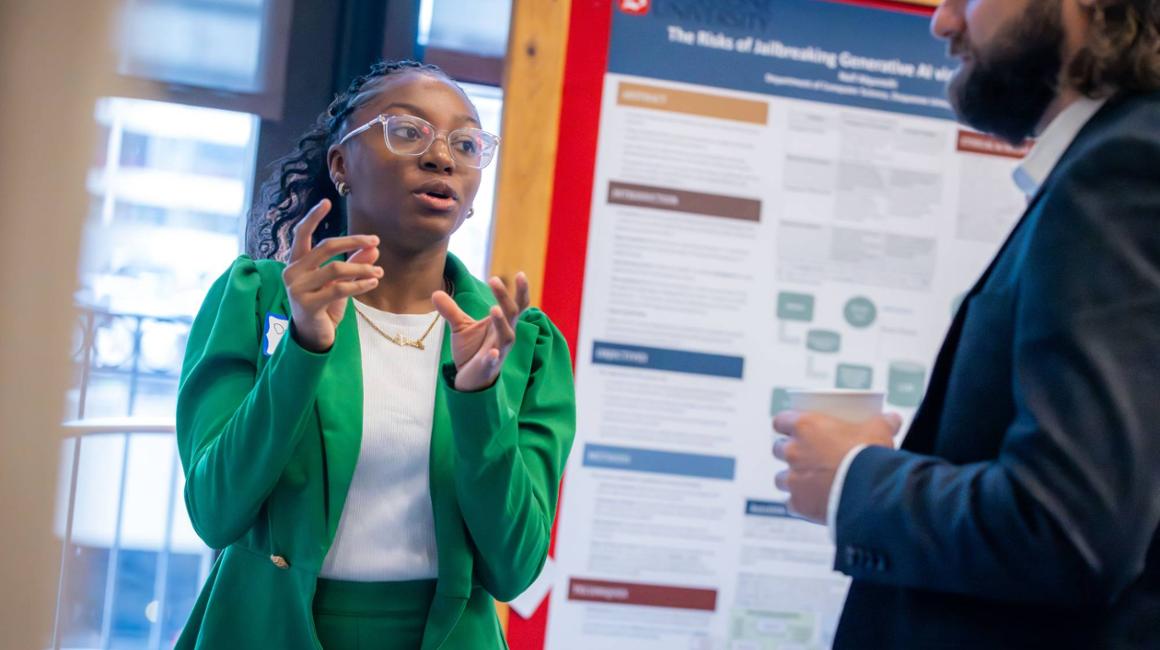
faculty to develop their research interests, present a poster at the fall Tech Ethics
Symposium, participate in the spring hackathon, and engage in weekly conversations
on tech ethics throughout the year! No previous experience with tech or tech ethics
necessary. Duquesne University students from ALL disciplines are welcome!
Applications for the 2026-2027 Undergraduate Research Scholars program are closed.
Stay tuned for next year's call for applications!
The Carl G. Grefenstette Center for Ethics in Science, Technology, and Law at Duquesne
University invites scholars and researchers in the United States to apply for the
Grefenstette National Research Scholars program for Academic Year 2026-2027. The National
Research Scholars program is a small community of scholars from all backgrounds and
traditions who come together monthly and discuss their research on the intersections
of technology, society, and faith, broadly construed.
We seek seven scholars from all research areas to contribute to the conversation around
the responsible use of digital technology and its intersection with religious and/or
theological studies. Scholars may come from the academy or from industry (including
tech and religious ministry), as long as the individual has a research interest and
a plan to develop their research. PhD or terminal degree in one’s field is preferred
but not required. Areas of study include but are not limited to critical AI/critical
technology studies, responsible AI studies, ethics, religious studies, sociology of
religion, intersectional approaches to technology and society, and theology.
The goal of the program is to cultivate a research cohort, to provide peer support,
and to generate new and innovative research paths in the intersection of technology
and religious studies, especially given the recent development of generative AI. All
Scholars receive a stipend, participate in monthly discussions, and contribute their
unique perspectives to a year-end virtual public roundtable.
Applications for the 2026-2027 National Research Scholars program are closed. Stay
tuned for next year's call for applications!
The Mosaic Storytelling Lab is an initiative of the Grefenstette Center for Ethics
at Duquesne University and is funded by a grant from the Lilly Endowment’s National
Storytelling Initiative on Christian Faith and Life. The goal of Mosaic is to explore
the role of technology in contemporary life by empowering young people to share their personal experiences of
faith and spirituality, especially as those experiences intersect with emerging technologies. These
narratives will be disseminated via Mosaic's digital platforms, creating a wide-ranging
and nuanced vision of human relationships with technology and faith.
The Mosaic Storytelling Lab Student Fellowship position is open to all Duquesne University undergraduate
and graduate students. In this project-based role, Student Fellows will support the
work of Mosaic by planning and carrying out in-person storytelling events, producing
multimedia storytelling content, and regularly meeting with their Mosaic Staff Mentor
throughout the year. Read the full call. To apply to be a Fall 2026 Mosaic Storytelling Lab Student Fellow, complete this form and upload the required application materials byFriday, September 4, 2026.
Duquesne Receives $5 Million Grant from Lilly Endowment
Duquesne University’s Carl G. Grefenstette Center for Ethics in Science, Technology
and Law has received a grant of $5 million from Lilly Endowment Inc. through its National
Storytelling Initiative on Christian Faith and Life 2025. The grant will support the
creation of a Digital Storytelling Lab (DSL) to empower young people to share their
life experiences.
Senior Research Fellow, Vernon F. Gallagher Chair & Professor, Center for Global Health
Ethics
About Us
The Grefenstette Center takes an unflinching look at the ethical intersections of
science and technology by working with partners at Duquesne, in Pittsburgh, and across
the world.
Carl G. Grefenstette Center for Ethics in Science, Technology, and Law