

Duquesne Nursing prepares for its next chapter.
Walk into the Duquesne University School of Nursing Learning and Simulation Center on any given day, and you’ll witness the making of a nurse. You may see a Duquesne nursing student practicing their first injection on a mannequin, hands steady but hearts racing. A senior navigating a complex cardiac emergency, or a graduate student learning compassionate communication with a consultant with disabilities.
“The center is where students learn, make mistakes and try again — without fear of harming a patient,” says Susan Williams, MSN, RN, CHSE, assistant dean for clinical skills and simulation education. That safe space is more important than ever. Patients today are more acutely ill, and hospital stays are shorter than ever before. “When I was in nursing school, hospital stays were longer. We had time to really get to know the patients we were caring for,” Williams says. “Now, students must be ready to act from day one. The center bridges that gap, turning classroom knowledge into confident, capable action.”
Meeting Growing Demand
What began in 2015 as a one-floor lab in Libermann Hall has since grown to span multiple levels. The center has expanded to include specialized pediatric and high-fidelity simulation areas, standardized patient rooms, and extra classrooms.
The numbers tell the story of this success: In the last academic year alone, the center hosted more than 6,400 student encounters and conducted more than 350 simulations across undergraduate and graduate programs.
This growth reflects the center’s success, Duquesne’s expanding programs and health care’s reliance on simulation. As enrollment has grown and clinical sites have become more competitive, the demand for on-campus simulation experiences has intensified.
Where Technology Meets Humanity
Inside the simulation rooms, technology blends with teaching. High- and low-fidelity mannequins respond to interventions, wearable simulators let students feel what it’s like to undergo suctioning or catheterization, and augmented reality systems now allow for complex emergency medication scenarios.
Students practice CPR with real-time feedback, use stethoscopes that display EKG patterns, and work with hospital equipment like defibrillators, IV pumps and bladder scanners.
“We try to use the same equipment and supplies they’ll encounter in the clinical setting so it’s not so daunting when they go out there,” notes Williams.
“The School of Nursing is fully committed to providing a high-tech, comprehensive
education that prepares students to lead from their very first day in practice. That
commitment allows students to gain the confidence they need to deliver excellent care
— with compassion, and with respect for every individual they serve.”
Health assessment students use the lab daily; fundamentals students rotate through
four separate lab sessions to learn and test skills; and every clinical course incorporates
targeted simulations aligned with its objectives. Williams says open lab sessions
often spark “light bulb” moments.
“The instant they connect memorized steps to genuine understanding is incredible,” she shares. “This approach represents a significant evolution from traditional nursing education, where students often encountered complex procedures for the first time in high-pressure clinical settings.”
Simulations focus on case studies that incorporate what students have learned in the classroom and align with course objectives. Debriefings following these simulations help students make connections and consolidate their learning.
“We give them a case study that pulls together what they’ve learned,” explains Williams. “Sometimes they think of something I never even considered.”
These moments show how the lab not only reinforces knowledge but also sparks fresh insights, preparing students for real-world challenges.
A Standout Innovation: The Consultant With Disability Simulation Program
Among all the changes and advancements that have occurred in the center over the years, one program stands out to Williams as a hallmark of Duquesne’s commitment to both skill and empathy: the Consultant with Disability Simulation Program (CDSP). Launched in 2019, it partners with community members who live with disabilities to serve as standardized patient consultants.
These consultants work directly with nursing students, providing an authentic look at navigating health care with a disability. The initiative not only elevates the voices of people with disabilities but also gives future nurses an invaluable, first-hand education on how to provide more effective, empathetic and inclusive patient care.
According to Williams, nearly 1,500 authentic interactions have occurred since the start of the program. “Students have learned the importance of maintaining dignity, person-centered care and how to truly listen,” she says. “It’s authentic encounters with someone that has a disability. Based on feedback we’ve received from students and faculty, it’s really effective for learning.”
The CDSP reflects the very heart of the school’s mission — combining clinical expertise with deep humanity — and demonstrates one of the many amazing moments that can occur there on any given day. Students consistently report that these interactions fundamentally change how they approach patient care, teaching them to see beyond diagnoses to the whole person.
A Transformative Gift Opens New Possibilities
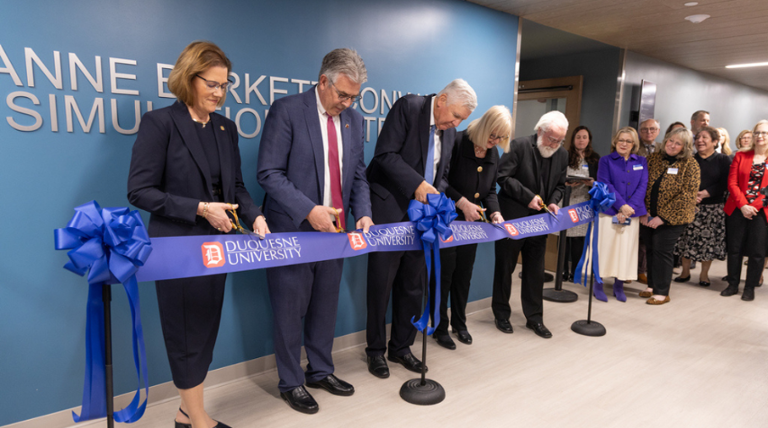
An incredible opportunity to further strengthen hands-on clinical training at the School of Nursing emerged in 2023, when William Conway Jr. stepped forward with a truly transformative $3.8 million gift in memory of his late wife, Joanne. His generosity made possible the new Joanne Barkett Conway Simulation Center, an 8,600-square-foot, state-of-the-art facility on the sixth floor of Fisher Hall that opened this spring. The new space, named in memory of Joanne, who sadly passed away in 2024, honors her legacy of compassion.
The Joanne Barkett Conway Simulation Center will focus on the field of advanced practice nursing such as nurse practitioner and nurse anesthesia clinical education, in addition to advanced skills in specialties such as critical care, primary care, disability health care, and forensic and sexual assault care. This new lab will complement the existing simulation center in Libermann Hall which addresses clinical skills throughout the life span. The Joanne Barkett Conway Simulation Center includes a wide range of high-fidelity learning environments — including a simulated operating room, critical care room, recovery room, primary care office suites and spaces for simulated therapy experiences. These areas allow students to hone both routine and complex skills in settings that mirror real-world clinical environments.
“Mrs. Conway’s legacy will live on through generations of advanced practice nurses,” says Clinical Associate Professor and Chair of Advanced Practice Programs Denise Lucas, PhD, FNP-BC, CRNP, FAANP. “They’ll learn in a high-tech, compassionate environment, mentored by expert faculty, and return to their communities equipped and inspired as Duquesne nurses.”
The new center will serve students from across Duquesne’s nursing programs — including Family Nurse Practitioner, Adult-Gerontology Acute Care, Psychiatricmental Health Nurse Practitioner, Nurse Anesthesia, and Forensic Nursing tracks, as well as other specialty courses. It also opens the door for interdisciplinary learning, with collaborative simulations involving students from Duquesne’s osteopathic medicine, pharmacy, physician assistant studies and physical therapy programs.
One such collaboration, led by Clinical Associate Professor and Director of the Adult-Gerontology
Acute Care Nurse Practitioner Program Deborah Dillon, DNP, RN, CRNP, ACNP-BC, CCRN, CHFN, FAANP, FAAN, CHSE — a recipient of the Duquesne
University Eugene P. Beard Award for innovation and distinction — brings together
undergraduate nursing, nurse practitioner, physician assistant and osteopathic medical
students for integrated learning scenarios that reflect the interdisciplinary nature
of modern health care.
For the expanding nurse anesthesia program, the new center is especially impactful. Students now have the ability to train on campus with flexible scheduling and tailored clinical experiences, reducing the need for off-site placements and allowing more focused, immersive preparation.
The timing of this expansion could not be more critical. As health care systems across the country face severe nursing shortages and the increasing complexity of patient care, the need for highly trained, practice-ready advanced practice nurses continues to grow. “This gift enables us to meet that demand without compromise,” says Lucas. “Students gain high-tech, real-life experiences that involve critical decision-making in a safe, supportive environment. They graduate ready — confident in their knowledge, their skills and their ability to lead with compassion from day one.”
Williams stresses that students no longer have the luxury of easing into patient care — they need to be ready from the start. Lucas echoes that reality, noting, “Patients are sicker. More care is being delivered in the community. Advanced practice nurses must be equipped to handle these challenges the moment they step into their roles. The Joanne Barkett Conway Simulation Center ensures Duquesne students are prepared — clinically, emotionally and intellectually — for that transition.”
Two Labs, One Mission
From Libermann Hall to Fisher Hall, Duquesne’s simulation spaces share a single, powerful purpose: to prepare students not only to perform at the highest level, but to care at the deepest level.
The Joanne Barkett Conway and Libermann Simulations Centers continue the work of building foundational and advanced skills through immersive simulation experiences.
Together, these facilities represent more than just technological advancement — they embody Duquesne’s unwavering commitment to producing nurses who combine clinical excellence with genuine compassion, ready to meet the demands of modern health care with both skill and heart.
“The School of Nursing is fully committed to providing a high-tech, comprehensive education that prepares students to lead from their very first day in practice,” Lucas says. “That commitment allows students to gain the confidence they need to deliver excellent care — with compassion, and with respect for every individual they serve.”
At Duquesne, simulation is more than practice — it’s a promise. A promise to graduate nurses who are not only technically prepared but also deeply attuned to the dignity and humanity of those they serve. From their very first day in practice to the countless lives they will touch, Duquesne nurses carry forward the School of Nursing’s mission: to make a difference in health care, in their communities and in the world.
News Information
Images of the Joanne Barkett Conway Simulation Center
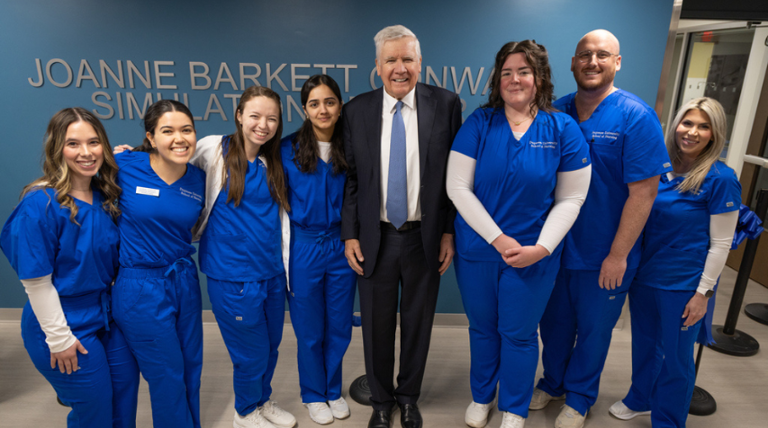
Bill Conway and Second Degree Nursing students at the ribbon-cutting event.
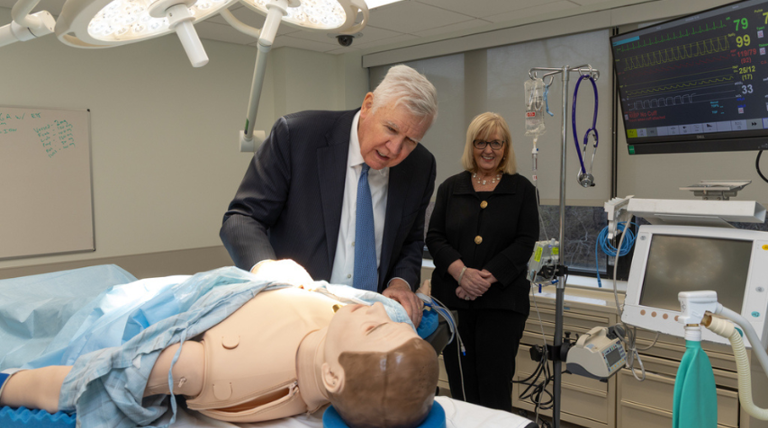
Bill Conway in the OR room with Dean Mary Ellen Smith Glasgow
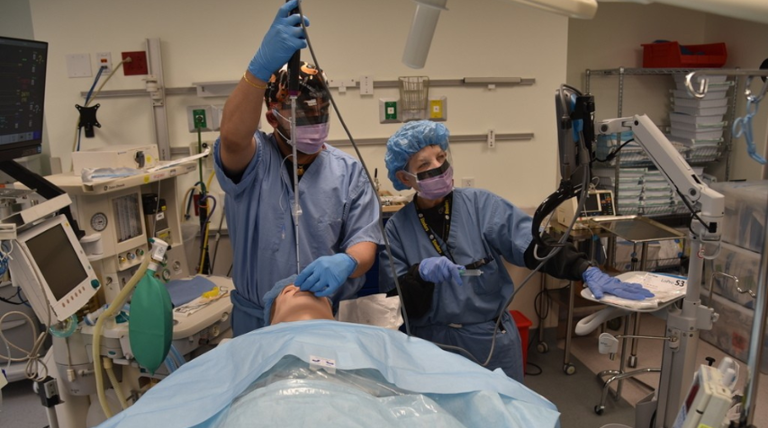
Dr. Garalynn Tomas working Nurse Anesthesia student Jay Patel in the OR.
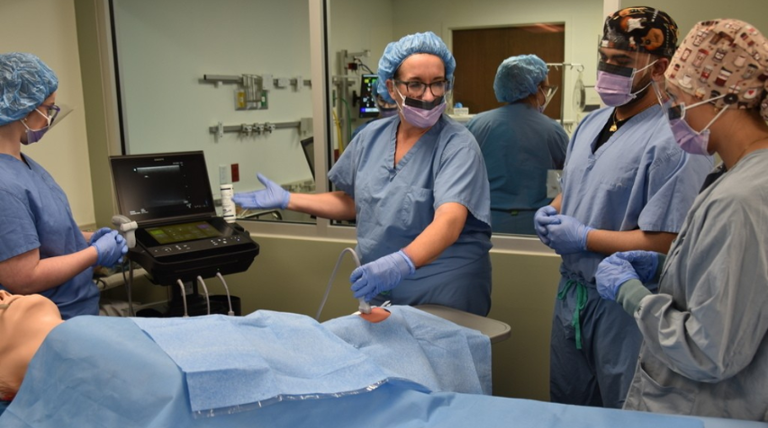
Dr. Rebecca Vrescak working with Nurse Anesthesia students Lauren Olson, Ashley Dogan and Jay Patel.
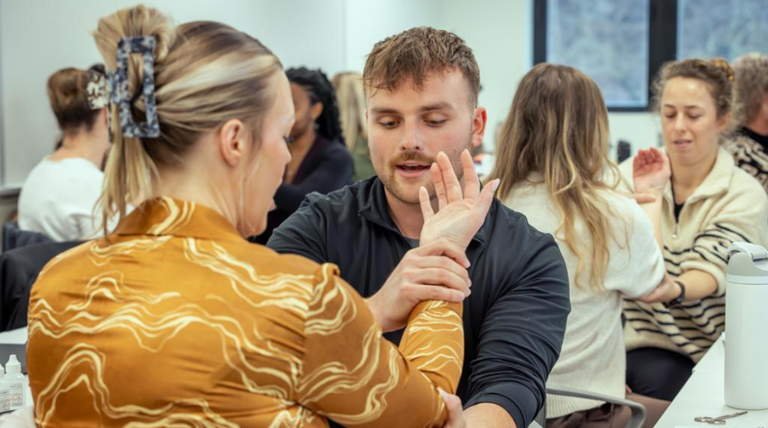
Students in the Family Nurse Practitioner program working on procedures and suturing.
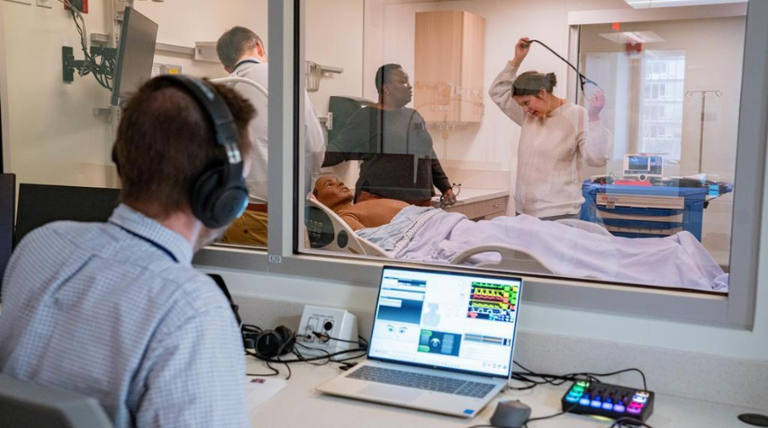
Students practicing procedures on the SimMan 3g Plus while being observed by faculty in from the control room.
Honoring the Conway Family
Through their vision and generosity, the Conways have provided thousands of nursing students with scholarships and supported many nursing schools, including Duquesne University’s School of Nursing. We celebrate the Conways’ lasting impact on nursing education and will continue to honor their legacy by shaping the next generation of compassionate, skilled nursing professionals.
University leaders, faculty and students gathered to celebrate the milestone and its role in expanding access to advanced simulation technologies that mirror real-world health care settings. Conway says his continued support is driven by the urgent need for nurses and the fulfillment he gains from seeing their impact. Designed to reflect modern care environments, the center features advanced simulation bays and a fully equipped operating room suite supporting nurse anesthesia and other specialized programs.