


School Psychology
APA-Approved and NASP-Accredited Psy.D. Program
Accredited by the American Psychological Association (APA) and approved by the National Association of School Psychologists (NASP), our 91-credit Psy.D. in School Psychology program at Duquesne University is designed to be consistent with the local-clinical scientist model of training. Upon completing the first 30 credits in the Psy.D. program, students will be awarded our M.S.Ed. in Child Psychology.
Career Opportunities with a Psy.D. in School Psychology
As a graduate of our doctoral program, you will be license-eligible for independent practice and will be prepared to make an impact in the field in so many ways. You will be equipped to work as a:
- School psychologist in schools, hospitals, and child agencies and clinics.
- Licensed psychologist in independent practice
Program Information
Accredited by the American Psychological Association (APA) and approved by the National Association of School Psychologists (NASP), our 91-credit Psy.D. in School Psychology program at Duquesne University is designed to be consistent with the local-clinical scientist model of training.
Degree
Master's, Doctorate
School
Academic Department
Counselor Education and School Psychology
Duration
4 years
Required Credit Hours
91
Modality
Hybrid
Program Credentials and Internship Placement
Curriculum
Discover course descriptions in the University Catalog. Select this year's Graduate Catalog and navigate to course descriptions section.
Accredited by the American Psychological Association (APA) and approved by the National Association of School Psychologists (NASP), the 91-credit Psy.D. in School Psychology program at Duquesne University is designed to be consistent with the local-clinical scientist model of training. Students are trained in evidence-based practices founded in scientific literature and theory, and are additionally trained to consider local contextual variables when implementing these practices. Students learn to adapt empirically-validated research programs and interventions for use in unique practice settings, and with unique individuals and communities. Consistent with this model of training, each student intensively studies and addresses a problem of applied practice identified by a practice site in the year-long Applied Project. Graduates are license eligible for independent practice and are prepared to work in schools, hospitals, and child agencies and clinics. The modern curriculum employs aspects of multiculturalism and diversity, examining emerging trends in the profession, conducting continuous outcomes assessments for program improvement, and providing support to our students and alumni.
Note:
Upon completing the first 30 credits in the Psy.D. program, students will be awarded a Master's of Science in Education (M.S.Ed.) degree in Child Psychology. It is the student's responsibility to obtain, complete and submit the degree application form to obtain the M.S.Ed. in Child Psychology.
- Fall
- GPSY 505 Role and Function of School Psychologists (3 credits)
- GPSY 512 Psychological Testing (3 credits)
- GPSY 619 Child and Adolescent Development (3 credits)
- GPSY 625 Academic Interventions (3 credits)
- Spring
- GPSY 623 Behavioral Interventions (3 credits)
- GPSY 692 Individual Testing (3 credits)
- GREV 610 Educational Statistics II (3 credits)
- GPSY 511 Psychology of Learning (3 credits)
- Summer
- GPSY 850 History and Systems of Psychology (3 credits)
- GPSY 575 Counseling Children, Adolescents and Emerging Adults (3 credits)
Year 2
- Fall
- GPSY 680 Consultation and Program Evaluation (3 credits)
- GPSY 618 Personality Assessment for Intervention (3 credits)
- GPSY 691 Psychotherapy with Child and Adolescents (3 credits)
- GPSY 689 School Psychology Practicum I (1 credit)
- Spring
- GPSY 695 Child Neuropsychology (3 credits)
- GPSY 690 Child and Adolescent Psychopathology (3 credits)
- GREV 701 Research Methods and Design (3 credits)
- GPSY 807 Multicultural Psychology (3 credits)
- GPSY 693 School Psychology Practicum II (1 credit)
- Summer
- GPSY 815 Ethics in School Psychology (3 credits)
- GESL 501 Helping English Language Learners in Mainstream Classes (3 credits)
Year 3
- Fall
- GPSY 705 Single Subject Methods for School Psychologists (3 credits)
- GPSY 614 Organizational Consultation and Supervision for School Psychologists (3 credits)
- GPSY 808 Early Childhood: Assessment and Intervention (3 credits)
- GPSY 812 Advanced Doctoral Practicum I (2 credits)
- GPSY 905 Applied Project (1 credit)
- Spring
- GPSY 811 Biological Basis of Behavior (3 credits)
- GPSY 612 Social Psychology (3 credits)
- GPSY 804 Child Violence in Schools (3 credits)
- GPSY 812 Advanced Doctoral Practicum II (2 credits)
- GPSY 905 Applied Project (1 credit)
Year 4
- Fall
- GPSY 903 School Psychology Doctoral Internship Seminar I (3 credits)
- GPSY 901 School Psychology Doctoral Internship I (1 credit)
- Spring
- GPSY 904 School Psychology Doctoral Internship Seminar II (3 credits)
- GPSY 902 School Psychology Doctoral Internship II (1 credit)
Total Psy.D. School Psychology Credits = 91 Credit Hours
Graduate Student Experience

The Psy.D. provided me with a strong foundation in psychological assessment, multidisciplinary collaboration & evidence-based practice. Through hands-on experiences & mentorship, I developed the skills to navigate complex evaluations & make meaningful recommendations for my patients.
Application Process
All Applicants
- 3.0 GPA*
*Applicants are customarily expected to have a 3.0 grade point average, based on a four-point scale, in their undergraduate work. However, exceptions may be granted on a limited basis, in which there is substantial additional evidence of a student's academic competency. - Bachelor’s Degree
All majors welcome to apply
International Applicants
Transcript Credit Evaluation
If your transcript(s) is from an institution located outside of the United States, you must use a transcript credential evaluation service to obtain a course-by-course report.
The official reports must be sent directly to Duquesne University from the organization you order through and will qualify as official transcripts.
You may use the following services to request official foreign credential evaluations: World Education Services (WES) or Educational Credential Evaluators (ECE).
Visit International Admissions for additional information and requirements.
All Applicants
- Graduate Application
- Letter of Interest
- Curriculum vitae/resume
- Three letters of recommendation
- GRE scores (strongly recommended)
- Official undergraduate and graduate transcripts
- A 3.0 GPA is required*
*Applicants are customarily expected to have a 3.0 grade point average, based on a four-point scale, in their undergraduate work. However, exceptions may be granted on a limited basis, in which there is substantial additional evidence of a student's academic competency. - If your transcripts are from an institution located outside of the United States, you must use a transcript credential evaluation service to obtain a course-by-course report. The official reports must be sent directly to Duquesne University from the organization you order through and will qualify as official transcripts. Please see Transcript Credit Evaluation section below.
- A 3.0 GPA is required*
- Although not required, applicants are permitted to upload additional materials that demonstrate potential for success and fit with the aims of the program.
Faculty members review all Psy.D. application materials and identify applicants who are judged to have a high likelihood of success in graduate studies, and have professional goals and interests that align with obtaining a doctoral degree in school psychology, the Psy.D. as a research-oriented degree, and the local clinical scientist model of training. Successful applicants are invited to an interview.
Faculty members then consider all application materials and interview information to make admission offers. With an admissions offer, the student will then enroll in classes for the upcoming fall semester. The Program does not engage in "rolling admissions."
Application Procedure
To be considered for admission, applicants must complete the following steps.
- Prepare a letter of interest to upload into the online application. A letter of intent describes educational, professional, research and personal experiences that have resulted in an applicant's interests to pursue a career in school psychology, specifically pursue a Psy.D. in school psychology, and consider the Duquesne University Psy.D. School Psychology program in particular. The letter of interest should also outline an applicant's career goals so that the faculty may judge the match between the applicant's goals and the stated goals and competencies of the Psy.D. program . Applicants should be certain to cover his or her research experience and research interests as these are carefully evaluated by the program faculty when reviewing applications for the Psy.D. program as it is in part a research-oriented degree.
- Prepare a curriculum vita/resume to upload into the online application.
- Official undergraduate and graduate transcripts from all institutions of higher learning attended, sent directly from the institution. We are unable to accept transcripts sent directly from applicants. Please see Transcript Credential Evaluation section in the above section.
- The submission of GRE scores is strongly recommended. GRE scores obtained within 5 years of the date of application can be sent to Duquesne University. Please contact ETS to have your official GRE scores sent to Duquesne University- Institutional Code #2196. Note it takes 7-10 days for Duquesne University to receive your score after your order from ETS.
- Duquesne University requires submission of TOEFL or IELTS scores for all non-native English-speaking applicants. Additionally, the English as a Second Language Program conducts a review of each matriculated student upon arrival to determine individual needs for English instruction to support success in his/her degree program. The University requires the following minimum scores in each area to be considered for admission: TOEFL minimum of 80 (internet based) with no sub-score less than 17, or 550 on the paper-based test; IELTS minimum score of 6.5 with no sub-score below 6.5 for Reading, 5.5 for Writing, 5.5 for Speaking and 6.0 for Listening. Have these scores ready to insert into the online application.
- The online application will ask the applicant to supply the names and email addresses of three persons who are willing to write a letter of reference. The online application process will then email each letter writer and ask them to upload a letter of reference regarding your application to the program. Please inform your letter writers to expect an automated email.
- When all of the above are ready, applicants must complete Duquesne University's online application. This application requires you to upload the documents above.
Faculty members will review all completed applications and rate each according to the quality of submitted materials (letter of intent, transcripts, test scores and references) and match with the stated goals and competencies associated with the Ph.D. program. Successful applicants will then be selected for an interview. Applicants will be notified by email or telephone of an interview invitation, as well as the time of the video conference interview. After final admissions decisions have been made, letters of acceptance, rejection or wait list status will be emailed to all of the applicants. The applicant final decision deadline is April 15 of each year.
Change of Degree Programs
If a student would like to change degree sequences, the student must complete a new application and follow all application guidelines for the desired degree program. It is not permissible for students simply to elect to change or migrate between School Psychology Program degree sequences without making a formal application. In the case where a current student is accepted into a new degree program, the student's program of study will be reviewed with the student's advisor to ensure that the future course of study will meet the requirements of the new degree sequence.
Students are admitted into the Psy.D program once per year with an annual application deadline of January 15.
The applicant final decision deadline is April 15 of each year.
Application FAQs
Is there a different application for those who already have a master's degree or are practicing school psychologists?
No, the application process is the same. Each year, applications are due January 15. Practicing school psychologists often apply to the Psy.D. program, so the faculty are experienced in supporting applicants through that process.
Should I complete my master's degree first? What role does it play in my application?
You do not need to have a master’s degree to apply to either the Psy.D. or Ph.D. programs. Some students have completed a master's program in order to gain experiences useful for doctoral program applications. Having said that, it is important to understand the research priorities of each program you apply to, because priorities vary across programs.
A student’s GPA, GRE scores, research and writing experience, and clinical experience matter.
While in the M.S.Ed. in Child Psychology program at Duquesne, students can join a research lab to gain experience. Take a look at each of the faculty's research to determine where your interests might mesh. As an MSEd student, you can reach out to a faculty member to discuss joining their lab and what projects they are pursuing that may be of interest to you.
Is admission cohort-based or advisor-based?
Students are admitted as a cohort and take classes together each year. Advisors are assigned based on the applicant's professional interests, as described in the letter of intent. We assign advisors so that each incoming first-year student has individual support.
Financing Your Graduate Education
A Duquesne University education is an investment in your future. This investment will prepare you to reach the height of your career and provide a meaningful return on your investment. Financial assistance in the form of aid, assistantships, scholarships and tuition awards are available to help you reach your bigger goals.
Psy.D. in School Psychology Funding FAQs
How common is funding?
The school psychology program has several Graduate Assistant (GA) positions. Many of these positions are held by more advanced students because they involve grading and supporting advanced coursework. Our students also find positions all across the School of Education and the university, and students leaving positions are often replaced by incoming students.
How much of tuition is typically covered?
Tuition remission and hours vary by position. Twenty hours a week is typical, though some positions are 10 hours. Tuition remission may be as much as 15 credits per year. We are not aware of any positions that are fully funded.
Who can I connect with to learn more about degree funding?
We encourage you to ask our Student Affiliates in School Psychology (SASP) co-chairs about funding; they may know more about the range of GA positions students hold.
Learn about the program of study, practicum, internship and in degree outcomes for
the School Psychology program you choose. School of Education doctoral School Psychology students and graduate Child Psychology
students learn from faculty who are shaping conversations beyond the classroom. Recently
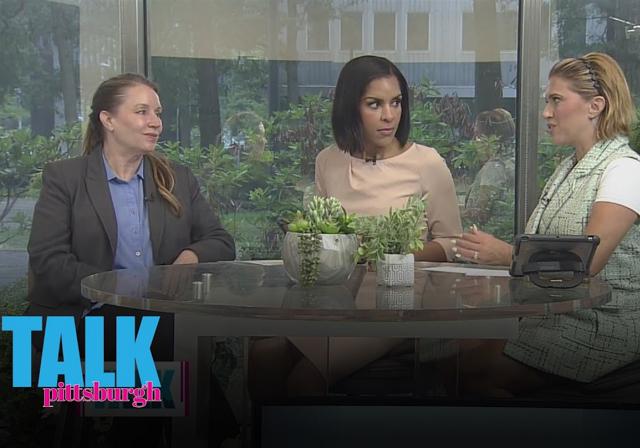
featured on Talk Pittsburgh, board-certified school psychologist and licensed psychologist
Dr. Tammy Hughes shared expert insights on helping children navigate school transitions
and the role routines play in supporting student well-being. Congratulations to School Psychology Professor Dr. Tammy Hughes, Ph.D., ABPP, recipient
of the American Psychological Association's (APA) Jack Bardon Distinguished Service
Award. APA's Division of Psychology (16) presents this award in honor of Jack Bardon's
work advancing the field of school psychology through his teaching, supervision and
advocacy. This national award is APA's highest level of achievement to honor an accomplished
professional and academic school psychologist who has continued to advance the field
through exemplary volunteer professional service and exceptional program service across
their career.School Psychology Degree FAQs
The review may include examining course syllabi and speaking with the Duquesne faculty
member who teaches that subject. This helps determine whether your coursework meets
the program’s required competencies, including the psychological science emphasized
in APA-accredited doctoral training.
Work experience as a school psychologist does not replace supervised doctoral practicum
experience. Practicum may be completed inside or outside a school, based on your interests.
Residency and internship requirements apply to all students as well.
For details on school psychology’s role within health service psychology, see the
faculty co-authored article “Blueprint for Health-Service-Psychology Education and Training: School-Psychology
Response”.
Graduate Study and Student Resources
You'll learn to adapt empirically-validated research programs and interventions for
use in unique practice settings, and with unique individuals and communities. Consistent
with this model of training, each student intensively studies and addresses a problem
of applied practice identified by a practice site in the year-long Applied Project.
Our modern curriculum employs aspects of multiculturalism and diversity, examining
emerging trends in the profession, conducting continuous outcomes assessments for
program improvement, and providing support to our students and alumni.
Learn about the Psy.D. School Psychology Student Admissions, Outcomes and Other Data
NASP - Psy.D. School Psychology Program Annual Report and Student Outcomes Data
Psy.D. Student Handbook

Student Resources
Faculty Research and Expertise
Faculty Shaping Conversations Beyond the Classroom

Dr. Hughes Receives APA's Jack Bardon Distinguished Service Award
Faculty Research Impacts Teacher Preparation & PreK-4 Students
Dr. Reva Mathieu (ABA & BCBA®) & Dr. Kara McGoey (Child & School Psychology) were awarded the Charles Henry Leach II Fund for Duquesne University for their project, "Supporting At-Risk, Marginalized Preschool Children by Training Teachers on Self and Co-Regulation Strategies." Their work will help our graduate students make an impact in the PreK-4 classroom.
Explore the expertise, research and accomplishments of our faculty who will help shape
your Psy.D. School Psychology experience and prepare you for your career goals. Program Director | Professor Associate Clinical Professor Professor Department Chair | Professor Professor Associate Dean for Research & Faculty Advancement | ProfessorMeet Our Faculty

Laura Metz Crothers, D.Ed., NCSP

Jenna Hennessey, Ph.D.

Tammy Hughes, Ph.D.

Elizabeth McCallum, Ph.D.

Kara McGoey, Ph.D.

Dr. Ara Schmitt, Ph.D.
Learning Outcomes
Aim 1: Train health service psychologists (HSPs) to deliver school psychological services.
Aim 2: Train leaders in the field who promote evidence-based practices (EBPs) in the
particular context in which psychology is being practiced.
Accreditation
Our Psy.D. School Psychology program is accredited by APA.
It's Time for Bigger Goals

Our Scholarships & Awards
Explore our scholarships and awards to help fund your degree and achieve your bigger goals.

Graduate Programs
Make an impact as a teacher, administrator school psychologist, counselor, and educator, with our graduate programs and certificates.
Contact Us
School Psychology
Audrey Czwalga
Follow Us!