A Liberal Arts education prepares you for more than the workforce. At Duquesne, it
equips you with the knowledge and skills to become a functional, ethical, and productive
member of society — while giving you the toolset to reimagine the world in positive,
innovative ways.
No matter your academic ambitions, you'll discover new possibilities in Duquesne's
McAnulty College and Graduate School of Liberal Arts. You'll make meaningful connections
outside your major and career path, connections that last well beyond graduation.
Duquesne's Bridges curriculum is inspired by Pittsburgh's 446 iconic bridges. It encourages
students to think beyond disciplinary boundaries and explore ideas outside what's
familiar, building the kind of adaptable thinking employers look for.
Together, we'll help you discover what you're good at, and why that's good for the
world. No matter your background or ambitions, Duquesne has a home for you — an education
that's everything you need, and more than you imagined. It's time for bigger goals.
Benefits of a Liberal Arts education at Duquesne:
Explore 25+ majors and minors across disciplines like international relations, psychology,
sociology, media, and theology
100% of domestic students receive a merit scholarship
Gain adaptability and flexibility, key traits for navigating a changing job market
Build a foundation for lifelong learning, curiosity, and informed citizenship
Join 300+ active student organizations and build relationships with professors who
know you by name
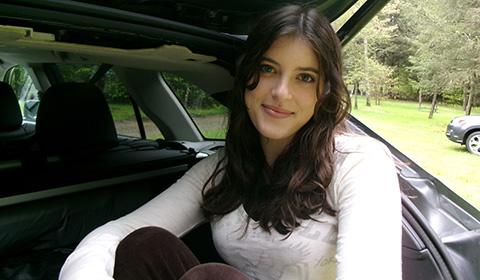
Charlotte Shields-Rossi, A'27, is a multiplatform journalism major with minors in political science and philosophy. That combination isn't unusual here. With 25+ majors and minors in the McAnulty
College and Graduate School of Liberal Arts, students learn to examine issues like
Charlotte's from multiple angles — through international relations, psychology, sociology, media, communication, theology, and more — building the kind of analytical thinking that transfers across any career.
Hailing from Rochester, New York, Charlotte is one of many out-of-state students in
Liberal Arts who quickly found themselves adjusting to a new city. As part of an internship
with Pittsburgh Magazine, she explored that transition in an article that she was
able to add to her portfolio.
“What I came to enjoy most about the city was learning all the little things that
make Pittsburgh stand out,” she wrote.
As a student, Charlotte writes for The Duquesne Duke, gaining newsroom experience before graduation. She's not an exception. 93% of Duquesne
Liberal Arts students earn at least one internship before they graduate, turning classroom
learning into hands-on, career-ready experience.
That head start pays off. Duquesne Liberal Arts graduates go on to work in 55+ industries,
from sports media and journalism to non-profits, government, teaching, research, and
corporate careers. With great professors, active student organizations, and a network
of 58,000 Duquesne alumni on LinkedIn, students graduate prepared for anything.
A Horizon-Expanding Education
Read Charlotte's reflection of her life in Pittsburgh three years into her
degree
How a Debut Novel Earned a Liberal Arts Student His Own Day
Ryan Lestitian, A'28, is a Brookline native who now has his own city-proclaimed day,
honoring six years of work on his debut novel, Cell 900. A political science major,
he's already 70,000 words into novel number two. Proof that Liberal Arts students
pursue bigger goals, on their own terms.
Duquesne University offers numerous resources to help students locate funding opportunities
for their liberal arts education and/or to support scholarly research at both the
undergraduate and graduate level. Offices across the University are available to help
guide students through the application process:
The Office of Research offers information on current competitive Duquesne research
fellowships and grants and research presentation opportunities for undergraduate students as
well as research presentation opportunities for graduate students.
A limited number ofcompetitive graduate assistantships and other forms of employment for graduate students
are available across University departments and offices.
The McAnulty College and Graduate School of Liberal Arts runs the following programs
for high school students. These are Duquesne-approved courses that students take for
college credit in their high schools.
Summer Workshops for High School Students
Information is sent each spring for summer workshop registration.
On-Campus College Courses for High School Students
We offer several college courses that high school students enroll in and attend on
Duquesne's campus. To learn more, please call the Undergraduate Office.
Contact Duquesne Liberal Arts!
Hali Evans, MSOD
Director of Undergraduate Recruitment, Liberal Arts